
Catalogue Search | MBRL


Are you sure you want to remove the book from the shelf?

{{itemTitle}}
1,966
result(s) for
"Rural development Middle East"
Sort by:
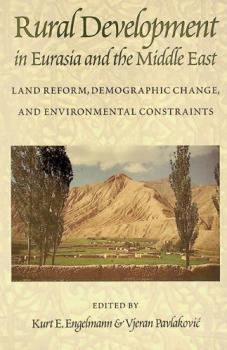
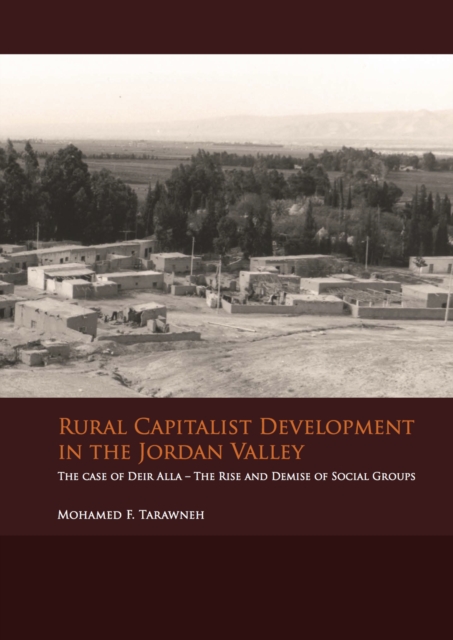
Rural Capitalist Development in The Jordan Valley
The case of Deir Alla is a social and economic case study of developing Third World agriculture. The study is based upon historical sources, contemporary public information with statistics, and field work in the Jordanian village of Deir Alla. This fieldwork took place in 1986 and a report was prepared in 1989. For this publication additional field work in 1997 accounted for the rapidly changing social and economic situation.The Ottoman feudal system, with the local harrath (ploughman) economy, changed gradually to private ownership since 1936, affecting the social relations of production. From 1950 onwards this development was strongly influenced by a sudden population increase (Palestinian refugees), the East Ghor irrigation system, the strong promotion of vegetable production and new technologies and institutions. Share cropping became the dominant feature of agrarian relations, but during the last decades international migrant labour expanded the wage labour system.Some types of production organization, such as the small-owner-family-labour system, proved to be more successful than others, but with the current difficult economic situation the debt trap is felt by many of these small owners.The book is important for the understanding of the social and economic history of the region, showing the dynamics of social change, but also because of its thorough analysis of the current situation, assessing theoretical models and predicting developments in a rapidly changing agricultural world.Mohamed Fayez Tarawneh is Associate Professor at Yarmouk University, specialized in the Anthropology of development and particularly interested in rural development and social change. Furthermore, he is the general manager of the Hashemite Fund for the Development of Jordan Badia. Some of his major publications concern a historical and social geographic study of
the Jordanian town and countryside of Kerak, the participatory development in Wadi Araba and Poverty in Jordan.
eBook

Climate change and migration
Climate change is a major source of concern in the Middle East and North Africa (MENA) region, and migration is often understood as one of several strategies used by households to respond to changes in climate and environmental conditions, including extreme weather events. This study focuses on the link between climate change and migration. Most micro-level studies measure climate change either by the incidences of extreme weather events or by variation in temperature or rainfall. A few studies have found that formal and informal institutions as well as policies also affect migration. Institutions that make government more responsive to households (for example through public spending) discourage both international and domestic migration in the aftermath of extreme weather events. Migration is often an option of last resort after vulnerable rural populations attempting to cope with new and challenging circumstances have exhausted other options such as eating less, selling assets, or removing children from school. This study is based in large part on new data collected in 2011 in Algeria, Egypt, Morocco, Syria, and the Republic of Yemen. The surveys were administered by in-country partners to a randomly selected set of 800 households per country. It is also important to emphasize that neither the household survey results nor the findings from the qualitative focus groups are meant to be representative of the five countries in which the work was carried, since only a few areas were surveyed in each country. This report is organized as follows: section one gives synthesis. Section two discusses household perceptions about climate change and extreme weather events. Section three focuses on migration as a coping mechanisms and income diversification strategy. Section four examines other coping and adaptation strategies. Section five discusses perceptions about government and community programs.
eBook

Arrival of young talent
This paper estimates the effects on rural education of the send-down movement during the Cultural Revolution, when about 16 million urban youth were mandated to resettle in the countryside. Using a county-level dataset compiled from local gazetteers and population censuses, we show that greater exposure to the sent-down youths significantly increased rural children’s educational achievement. This positive effect diminished after the urban youth left the countryside in the late 1970s but never disappeared. Rural children who interacted with the sent-down youths were also more likely to pursue more-skilled occupations, marry later, and have smaller families than those who did not.
Journal Article

The Institutional Causes of China's Great Famine, 1959-1961
This article studies the causes of China's Great Famine, during which 16.5 to 45 million individuals perished in rural areas. We document that average rural food retention during the famine was too high to generate a severe famine without rural inequality in food availability; that there was significant variance in famine mortality rates across rural regions; and that rural mortality rates were positively correlated with per capita food production, a surprising pattern that is unique to the famine years. We provide evidence that an inflexible and progressive government procurement policy (where procurement could not adjust to contemporaneous production and larger shares of expected production were procured from more productive regions) was necessary for generating this pattern and that this policy was a quantitatively important contributor to overall famine mortality.
Journal Article

Diminishing benefits of urban living for children and adolescents’ growth and development
Optimal growth and development in childhood and adolescence is crucial for lifelong health and well-being
1
–
6
. Here we used data from 2,325 population-based studies, with measurements of height and weight from 71 million participants, to report the height and body-mass index (BMI) of children and adolescents aged 5–19 years on the basis of rural and urban place of residence in 200 countries and territories from 1990 to 2020. In 1990, children and adolescents residing in cities were taller than their rural counterparts in all but a few high-income countries. By 2020, the urban height advantage became smaller in most countries, and in many high-income western countries it reversed into a small urban-based disadvantage. The exception was for boys in most countries in sub-Saharan Africa and in some countries in Oceania, south Asia and the region of central Asia, Middle East and north Africa. In these countries, successive cohorts of boys from rural places either did not gain height or possibly became shorter, and hence fell further behind their urban peers. The difference between the age-standardized mean BMI of children in urban and rural areas was <1.1 kg m
–2
in the vast majority of countries. Within this small range, BMI increased slightly more in cities than in rural areas, except in south Asia, sub-Saharan Africa and some countries in central and eastern Europe. Our results show that in much of the world, the growth and developmental advantages of living in cities have diminished in the twenty-first century, whereas in much of sub-Saharan Africa they have amplified.
The advantage of living in cities compared with rural areas with respect to height and BMI in children and adolescents has generally become smaller globally from 1990 to 2020, except in sub-Saharan Africa.
Journal Article

Rebel on the Canal
This paper examines the effects of the abandonment of China’s Grand Canal—the world’s largest and oldest artificial waterway—which served as a disruption to regional trade access. Using an original dataset covering 575 counties over 262 years, we show that the canal’s abandonment contributed to the social turmoil that engulfed North China in the nineteenth century. Counties along the canal experienced an additional 117 percent increase in rebelliousness after the canal’s closure relative to their non-canal counterparts. Our findings highlight the important role that continued access to trade routes plays in reducing conflict.
Journal Article

Measurement of Women’s Agency in Egypt
Despite widespread assumptions about women’s empowerment and agency in the Arab Middle East, psychometric research of these constructs is limited. Using national data from 6214 married women ages 16–49 who took part in the 2006 Egypt Labor Market Panel Survey, we applied factor analysis to explore and then to test the factor structure of women’s agency. We then used multiple indicator multiple cause structural equations models to test for differential item functioning (DIF) by women’s age at first marriage, a potential resource for women’s agency. Our results confirm that women’s agency in Egypt is multi-dimensional and comprised of their (1) influence in family decisions, including those reserved for men, (2) freedom of movement in public spaces, and (3) attitudes about gender, specifically violence against wives. These dimensions confirm those explored previously in selected rural areas of Egypt and South Asia. Yet, three items showed significant uniform DIF by women’s categorical age at first marriage, with and without a control for women’s age in years. Models adjusting for DIF and women’s age in years showed that women’s older age at first marriage was positively associated with the factor means for family decision-making and gender-violence attitudes, but not freedom of movement. Our findings reveal the value of our analytical strategy for research on the dimensions and determinants of women’s agency. Our approach offers a promising model to discern “hierarchies of evidence” for social policies and programs to enhance women’s empowerment.
Journal Article