
Catalogue Search | MBRL


Are you sure you want to remove the book from the shelf?

{{itemTitle}}
579
result(s) for
"Rural development Middle West."
Sort by:

Suprarural : architectural atlas of rural protocols of the American Midwest and the Argentine Pampas
The Atlas of rural protocols in the American Midwest and the Argentine Pampas is structured along eight systems of organization: transport and infrastructure, land subdivision, agricultural production, water management, storage and maintenance, human habitation, animal management, land management. Each of these systems possesses a number of organizational types, material components, normative relationships, and spectra of performance, which become available through a manual of instructions for a Suprarural architectural environment. The research is based on a realistic-overriding ethics towards design that operates by abstracting and intensifying unexplored territorial phenomena.
Book

Sweet tyranny
In this innovative grassroots to global study, Kathleen Mapes explores how the sugar beet industry transformed the rural Midwest through the introduction of large factories, contract farming, and foreign migrant labor. Sweet Tyranny calls into question the traditional portrait of the rural Midwest as a classless and homogenous place untouched by industrialization and imperialism. Identifying rural areas as centers for modern American industrialism, Mapes contributes to the ongoing expansion of labor history from urban factory workers to rural migrant workers. She engages with a full range of people involved in this industry, including midwestern family farmers, industrialists, eastern European and Mexican immigrants, child laborers, rural reformers, Washington politicos, and colonial interests. _x000B__x000B_Engagingly written, this book demonstrates that capitalism was not solely a force from above but was influenced by the people below who defended their interests in an ever-expanding market of imperialist capitalism. The fact that the United States acquired its own sugar producing empire at the very moment that its domestic sugar beet industry was coming into its own, as well as the fact that the domestic sugar beet industry came to depend on immigrant workers as the basis of its field labor force, magnified the local and global ties as well as the political battles that ensued. As such, the issue of how Americans would satiate their growing demand for sweetness--whether with beet sugar grown at home or with cane sugar raised in colonies abroad--became part of a much larger debate about the path of industrial agriculture, the shape of American imperialism, and the future of immigration.
eBook
Climate change and migration
Climate change is a major source of concern in the Middle East and North Africa (MENA) region, and migration is often understood as one of several strategies used by households to respond to changes in climate and environmental conditions, including extreme weather events. This study focuses on the link between climate change and migration. Most micro-level studies measure climate change either by the incidences of extreme weather events or by variation in temperature or rainfall. A few studies have found that formal and informal institutions as well as policies also affect migration. Institutions that make government more responsive to households (for example through public spending) discourage both international and domestic migration in the aftermath of extreme weather events. Migration is often an option of last resort after vulnerable rural populations attempting to cope with new and challenging circumstances have exhausted other options such as eating less, selling assets, or removing children from school. This study is based in large part on new data collected in 2011 in Algeria, Egypt, Morocco, Syria, and the Republic of Yemen. The surveys were administered by in-country partners to a randomly selected set of 800 households per country. It is also important to emphasize that neither the household survey results nor the findings from the qualitative focus groups are meant to be representative of the five countries in which the work was carried, since only a few areas were surveyed in each country. This report is organized as follows: section one gives synthesis. Section two discusses household perceptions about climate change and extreme weather events. Section three focuses on migration as a coping mechanisms and income diversification strategy. Section four examines other coping and adaptation strategies. Section five discusses perceptions about government and community programs.
eBook


Access and utilization of maternal healthcare in a rural district in the forest belt of Ghana
Background
Poor maternal health delivery in developing countries results in more than half a million maternal deaths during pregnancy, childbirth or within a few weeks of delivery. This is partly due to unavailability and low utilization of maternal healthcare services in limited-resource settings. The aim of this study was to investigate the access and utilization of maternal healthcare in Amansie-West district in the Ashanti Region of Ghana.
Methods
An analytical cross-sectional study, involving 720 pregnant women systematically sampled from antenatal clinics in five sub-districts was conducted from February to May 2015 in the Amansie-West district. Data on participants’ socio-economic characteristics, knowledge level and access and utilization of maternal health care services were collected with a structured questionnaire. Odds ratios were estimated to describe the association between explanatory variables and maternal healthcare using generalized estimating equations (GEE).
Results
68.5, 83.6 and 33.6% of the women had > 3 antenatal care visits, utilized skilled delivery and postnatal care services respectively. The mothers’ knowledge level of pregnancy emergencies and newborn danger signs was low. Socio-economic characteristics and healthcare access influenced the utilization of maternal healthcare. Compared to the lowest wealth quintile, being in the highest wealth quintile was associated with higher odds of receiving postnatal care (adjusted odds ratio [aOR]; 95%CI: 2.84; 1.63, 4.94). Use of health facility as a main source of healthcare was also associated with higher odds of antenatal care and skilled delivery.
Conclusion
This study demonstrates suboptimal access and utilization of maternal healthcare in rural districts of Ghana, which are influenced by socio-economic characteristics of pregnant mothers. This suggests the need for tailored intervention to improve maternal healthcare utilization for mothers in this and other similar settings.
Journal Article

Demographic and geographical trends in chronic lower respiratory diseases mortality in the United States, 1999 to 2020
Chronic lower respiratory disease (CLRD) related mortality has decreased in the United States due to increasing awareness in the general population and advancing preventative efforts, diagnostic measures, and treatment. However, demographic and regional differences still persist throughout the United States. In this study, we analyzed the temporal trends of demographic and geographical differences in CLRD-related mortality. Data was extracted from the Centers for Disease Control and Prevention Wide-Ranging Online Data for Epidemiologic Research (CDC WONDER) database. Using this data, age-adjusted mortality rates per 100,000 people (AAMR), annual percentage change (APC), and average annual percentage changes with 95% confidence intervals (CIs) were assessed. The Joinpoint Regression Program was used to determine mortality trends between 1999 and 2020 based on demographic and regional groups.
During this study period, there were 3,064,049 CLRD-related deaths, with most demographics and regional areas showing an overall decreasing trend. However, higher mortality rates were seen in the non-Hispanic White population and rural areas. Interestingly, mortality rates witnessed a decreasing trend for males throughout the study duration compared to females, who only began to show decreases in mortality during the latter half of the 2010s. Using these results, one can target efforts and build policies to improve CLRD-related mortality and reduce disparities in the coming decades.
Journal Article

Rural–urban differentials in fertility levels and fertility preferences in West Bengal, India: a district-level analysis
Fertility in West Bengal is one of the lowest in India, and this relies heavily on the use of traditional methods of contraception. Social scientists and demographers have pointed to the historical role of the diffusion process of adhering to a small family size. The Total Fertility Rate (TFR) in Kolkata district, the state capital, is the lowest in the country, and has been a centre of low fertility historically. However, stark differences in rural–urban fertility rates have existed over the last few decades in West Bengal, but these have now started to narrow. This study aimed to capture the macro-level rural–urban differences in fertility levels and preferences in the West Bengal, and understand how socioeconomic factors affect these. Data were drawn from the Census of India (2011) and NFHS-4 (2015–16). Using census data and the Reverse-Surviving Method, the TFR of West Bengal was estimated to be 1.9, varying between 2.1 and 1.7 in rural and urban areas. The rural–urban gap in the district-level fertility rates was prominent, specifically in districts with higher levels of fertility. Kolkata, Hugli and North Twenty-Four Parganas had the lowest-low fertility (TFR = <1.5). Fewer than half of women with only one living child wanted further children, and this was somewhat higher in rural areas. Around 40% of women had achieved their desired number of children. However, a substantial proportion (43.1%) had a lower number of children than desired, varying between 45.9% and 41.7% in urban and rural areas, respectively. Contraception use, female education and age at marriage, along with the other socioeconomic factors, had a greater influence on rural fertility rates than on urban counterparts in the districts of West Bengal. Further research should be directed at understanding the contemporary fertility decline as well as the gap between ideal and desired number of children, specifically in those districts with very low fertility rates.
Journal Article
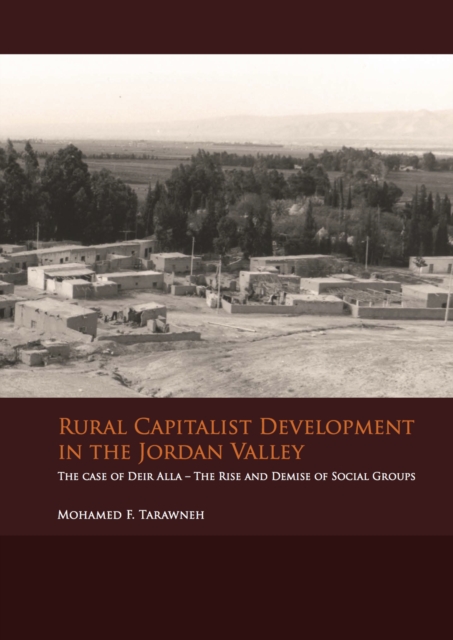
Rural Capitalist Development in The Jordan Valley
The case of Deir Alla is a social and economic case study of developing Third World agriculture. The study is based upon historical sources, contemporary public information with statistics, and field work in the Jordanian village of Deir Alla. This fieldwork took place in 1986 and a report was prepared in 1989. For this publication additional field work in 1997 accounted for the rapidly changing social and economic situation.The Ottoman feudal system, with the local harrath (ploughman) economy, changed gradually to private ownership since 1936, affecting the social relations of production. From 1950 onwards this development was strongly influenced by a sudden population increase (Palestinian refugees), the East Ghor irrigation system, the strong promotion of vegetable production and new technologies and institutions. Share cropping became the dominant feature of agrarian relations, but during the last decades international migrant labour expanded the wage labour system.Some types of production organization, such as the small-owner-family-labour system, proved to be more successful than others, but with the current difficult economic situation the debt trap is felt by many of these small owners.The book is important for the understanding of the social and economic history of the region, showing the dynamics of social change, but also because of its thorough analysis of the current situation, assessing theoretical models and predicting developments in a rapidly changing agricultural world.Mohamed Fayez Tarawneh is Associate Professor at Yarmouk University, specialized in the Anthropology of development and particularly interested in rural development and social change. Furthermore, he is the general manager of the Hashemite Fund for the Development of Jordan Badia. Some of his major publications concern a historical and social geographic study of
the Jordanian town and countryside of Kerak, the participatory development in Wadi Araba and Poverty in Jordan.
eBook

Routledge Handbook on Middle East Cities
Presenting the current debate about cities in the Middle East from Sana'a, Beirut and Jerusalem to Cairo, Marrakesh and Gaza, this book explores urban planning and policy, migration, gender and identity and the politics and economics of urban settings in the region.
This handbook moves beyond essentialist and reductive analyses of identity, urban politics, planning and development in cities in the Middle East and instead critically engages with both historical and contemporary urban processes in the region. It approaches \"cities\" as multidimensional sites; products of political processes, knowledge production and exchange; local and global visions; and spatial artefacts. Importantly, in the different case studies and theoretical approaches, there is no attempt to idealise urban politics, planning and everyday life in the Middle East - which (as with many other cities elsewhere) are also situations of contestation and violence - but rather to highlight how cities in the region, and especially those that are understudied, revolve around issues of housing, infrastructure, participation and identity, among other concerns.
Analysing a variety of cities in the Middle East, the book is a significant contribution to Middle East studies. It is an essential resource for students and academics interested in geography and regional and urban studies of the Middle East.
eBook
Determinants of puerperal sepsis among post partum women at public hospitals in west SHOA zone Oromia regional STATE, Ethiopia (institution BASEDCASE control study)
Background
Puerperal sepsis is an infection of the genital tract, which occurs from rupture of amniotic sacs and within 42
nd
day after delivery. It happens mainly after discharge in the 1st 24 h of parturition. It is the third leading cause of direct maternal mortality in developing nations. It is also among preventable conditions. Even though multiple interventions were done to overcome these health problems, maternal mortality and morbidities were still significant. Mainly, in Ethiopia lack of clearly identified causes of maternal mortality and morbidity makes the problem unsolved.
Methods
Case-control study was conducted at public Hospitals in west shoa zone Oromia regional state, Ethiopia from February 01 to April 30/2018.women with puerperal sepsis (
n
= 67) were selected by convenience method. Controls (
n
= 213) were selected by systematic random sampling. Controls to cases ratio was 3:1 and structured questionnaire was used to interviewafter verbal consent was obtained. Data was entered in to epi –info 7.2 then exported to SPSS version 20.0 for analysis. A logistic regression model was used for data analysis. Those variables which have
p
-value < 0.05 were accepted that they are independent determinants of puerperal sepsis.
Result
Rural residence (AOR [95%CI] = 2.5(1.029–6.054),Mothers with no formal education (AOR [95%CI] = 6.74([1.210–37.541]), up to primary level of education(AOR [95%CI] = 6.72(1.323–34.086), total monthly income of the mother or family<=500 ETB and 501–1500 ETB(AOR [95%CI] = 5.94(1.471–23.93) and (AOR [95%CI] =6.57 (1.338–32.265) respectively, Mothers having 1–2 times antenatal care(ANC)visit (AOR [95%CI] = 6.57([1.338–32.265]), Duration of Labor12–24 h (AOR [95%CI] = 3.12 (1.805–12.115),> = 25 h (AOR [95%CI] = 4.71([1.257–17.687]),vaginal examinations > = 5times (AOR [95%CI] = 4.00([1.330–12.029]), Delivery by C/S (AOR [95%CI] = 3.85 ([1.425–10.413]), Rupture of membrane > 24 h (AOR [95%CI] = 3.73([1.365–10.208]) and those Referred from other health institutions (AOR [95%CI] = 2.53([1.087–5.884],were independent determinants of puerperal sepsis in this study.
Conclusion
Majority of determinants of puerperal sepsis were related with pregnancy and childbirth. Therefore, to tackle a problem of puerperal sepsis all concerning bodies should take measures during prenatal, natal and postnatal period.
Journal Article