
Catalogue Search | MBRL


Are you sure you want to remove the book from the shelf?

{{itemTitle}}
2,758
result(s) for
"Rural poor"
Sort by:

Rural : the lives of the working class countryside
Work in the countryside ties you, soul and salary, to the land, but often those who labour in nature have the least control over what happens there. Starting with Rebecca Smith's own family history - foresters in Cumbria, miners in Derbyshire, millworkers in Nottinghamshire, builders of reservoirs and the Manchester Ship Canal - 'Rural' is an exploration of our green and pleasant land, and the people whose labour has shaped it. Beautifully observed, these are the stories of professions and communities that often go overlooked. Smith shows the precarity for those whose lives are entangled in the natural landscape. And she traces how these rural working-class worlds have changed.
Book

Labour, state and society in rural India
\"Behind India's high recent growth rates lies a story of societal conflict that is scarcely talked about. Across production sites, state institutions and civil society organisations, the dominant and less well-off sections of society are engaged in a protracted conflict that determines the material conditions of one quarter of the world's 'poor'. Increasingly mobile, and often engaged in multiple occupations in multiple locations, India's 'classes of labour' are highly segmented, but far from passive in the face of ongoing processes of exploitation and domination. Drawing on detailed fieldwork in rural South India over more than a decade, the book uses a 'class-relational' approach that focuses on 'the poor's' iniquitous relations with others, and views class in terms of contested social relations rather than structural locations marked by particular characteristics. The book explores continuity and change amongst forms of accumulation, exploitation and domination in three interrelated arenas of class relations: labour relations, the state and civil society. Marginal gains for labour derived from structural change are contested by capital, local state institutions and state poverty reduction programmes tend to be controlled by the dominant class, and civil society organisations tend to reproduce rather than challenge the status quo. On the other hand, elements of state policy have the capacity to improve the material conditions of 'the poor' where such ends are actively pursued by labouring class organisations. It is argued that social policy currently provides the most fertile terrain for redistributing power and resources to the labouring class, and may clear the way for more fundamental transformations.\"
eBook

Rural Poverty
Moving beyond the highly visual forms of poverty characteristic of the city, Rural Poverty explores the nature of poverty in rural spaces in Britain and America. Setting out key features, it highlights the important processes that hide key components of rural poverty. The book seeks to challenge dominant assumptions about the spatialities of poverty and the nature of rural spaces in Britain and America.
Drawing on a broad range of new research material, the book challenges dominant assumptions. It provides a comprehensive and critical review of the nature of poverty in rural spaces, giving particular attention to:
the scale, profile and causes of poverty in rural areas
the spatial unevenness and local geographies of rural poverty
the experiences of different forms of poverty in rural spaces
the shifting governance of rural welfare at central and local spatial scales.
Demonstrating that poverty represents a significant but neglected feature of rural life in Britain and America, this insightful book highlights the processes through which rural poverty remains hidden from the dominant gazes of poverty researchers and policy-makers, the statistical significance and spatial unevenness of poverty in rural areas, the ways in which poverty is experienced in local rural spaces, and the complex governance of welfare in rural spaces. Case study material is drawn from a wide range of locations, including Wiltshire, Northumberland and Hampshire in the UK and New England in the US.
1. The Definitional Complexities of Poverty in Britain and America 2. Rural Poverty in Britain: From Agricultural Poverty to Rural Deprivation 3. The Broader Contexts of Rural Poverty: Disadvantage and Social Exclusion in the British Countryside 4. Rural Poverty in America: Statistical Visibilities and Persistant Forms of Poverty 5. Housing Poverty and Homelessness in Rural Britain and America 6. The Local Contexts of Rural Poverty in Britain and America 7. Changing States of Welfare in Britain and America 8. Conclusion: Towards New Research Agendas for Rural Poverty
eBook


Singlewide
In Singlewide, Sonya Salamon and Katherine MacTavish explore the role of the trailer park as a source of affordable housing. America's trailer parks, most in rural places, shelter an estimated 12 million people, and the authors show how these parks serve as a private solution to a pressing public need. Singlewide considers the circumstances of families with school-age children in trailer parks serving whites in Illinois, Hispanics in New Mexico, and African Americans in North Carolina. By looking carefully at the daily lives of families who live side by side in rows of manufactured homes, Salamon and MacTavish draw conclusions about the importance of housing, community, and location in the families' dreams of opportunities and success as signified by eventually owning land and a conventional home. Working-poor rural families who engage with what Salamon and MacTavish call the \"mobile home industrial complex\" may become caught in an expensive trap starting with their purchase of a mobile home. A family that must site its trailer in a land-lease trailer park struggles to realize any of the anticipated benefits of homeownership. Seeking to break down stereotypes, Salamon and MacTavish reveal the important place that trailer parks hold within the United States national experience. In so doing, they attempt to integrate and normalize a way of life that many see as outside the mainstream, suggesting that families who live in trailer parks, rather than being \"trailer trash,\" culturally resemble the parks' neighbors who live in conventional homes.
eBook


Flood in a Changing Climate: The Impact on Livelihood and How the Rural Poor Cope in Bangladesh
It is already documented that climate change will lead to an intensification of the global water cycle with a consequent increase in flood hazards. Bangladesh is also facing an increasing trend of flood disasters. Among the various risks and disasters in Bangladesh, flood is the most common and frequent. Floods make people vulnerable, as they take away their livelihoods at the first instance and leave them with little resources to overcome from the situation. Because of floods, rural poor communities face job loss, and two-thirds of their income is reduced, which limits their capabilities of preparedness, response, and recovery to subsequent floods. People cope with the situation by bearing substantial debts and a loss of productive assets. With an empirical field study in one of the most flood-prone upazilas (sub-districts) of Bangladesh, namely Goalanda Upazilla of the Rajbari district, this study intends to draw a “flood impact tree” of the study area. It also examines the impacts of flood on the livelihood of the rural poor and explores their coping strategies. This paper aims to facilitate an understanding of the impact of floods on their livelihood, especially on the income and occupations of the rural poor. At the same time, it aims to learn from their coping mechanisms.
Journal Article

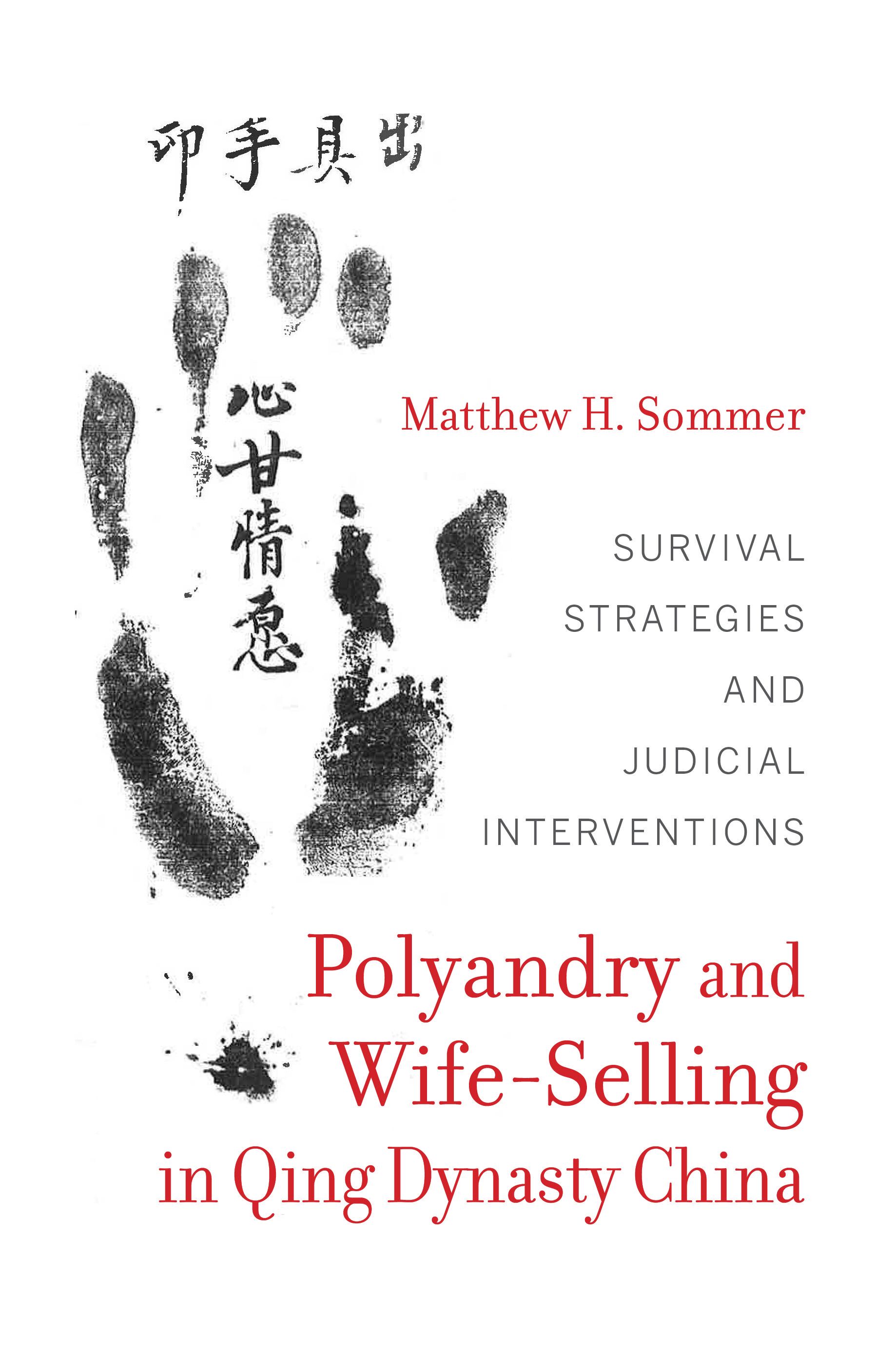
Polyandry and wife-selling in Qing Dynasty China
This book is a study of polyandry, wife-selling, and a variety of related practices in China during the Qing dynasty (1644-1912). By analyzing over 1200 legal cases from local and central court archives, Matthew Sommer explores the functions played by marriage, sex, and reproduction in the survival strategies of the rural poor under conditions of overpopulation, worsening sex ratios, and shrinking farm sizes. Polyandry and wife-selling represented opposite ends of a spectrum of strategies. At one end, polyandry was a means to keep the family together by expanding it. A woman would bring in a second husband in exchange for his help supporting her family. In contrast, wife sale was a means to survive by breaking up a family: a husband would secure an emergency infusion of cash while his wife would escape poverty and secure a fresh start with another man. Even though Qing law prohibited both practices under the rubric \"illicit sexual relations,\" Sommer shows how magistrates charged with propagating and enforcing a fundamentalist Confucian vision of female chastity tried to cope with their social reality in the face of daunting poverty. This contradiction illuminates both the pragmatism of routine adjudication and the increasingly dysfunctional nature of the dynastic state in the face of mounting social crisis. By casting a spotlight on the rural poor and the experiences of both men and women, Sommer provides an alternative to the standard paradigms of women’s history that have long dominated scholarship on gender and sexuality in late imperial China.
eBook