
Catalogue Search | MBRL


Are you sure you want to remove the book from the shelf?

{{itemTitle}}
92,979
result(s) for
"Rural schools."
Sort by:

Bush tracks : the opportunities and challenges of rural teaching and leadership
Transitioning from place to place has been identified as a key marker of many teachers' lives. Notions of place and transition have been researched for new teachers as they move from university to rural teaching positions; and, for experienced teachers who may move from school to school, town to city, city to rural town. Since 2002, the Bush Tracks Research Group has explored the lived experience of teachers in rural schools. Bush Tracks: The Opportunities and Challenges of Rural Teaching and Leadership is a compilation of more than a decade of research conducted by this multidisciplinary group of academics from the University of New England, New South Wales, Australia. Employing a variety of methodologies, these researchers have worked to understand the intimate lives of teachers working in rural schools - the personal and professional challenges of being in relentlessly close proximity to students and their families; the supports needed to continue professional pathways; and the opportunities for accelerated leadership, all while living in the 'fishbowl' of a rural community. Chapters also explore the working lives of small school principals, specifically, some of the innovative methods they use to circumvent metrocentric policies; how ingenuity can resolve challenging teaching and leadership situations; and, what can be done to reconcile sometimes conflicting roles. This book will be of interest to all teachers who have 'gone bush', or have ever wanted to; and, to teacher educators who want a text that is nuanced in discussing the challenges and opportunities of teaching in rural schools.
Book
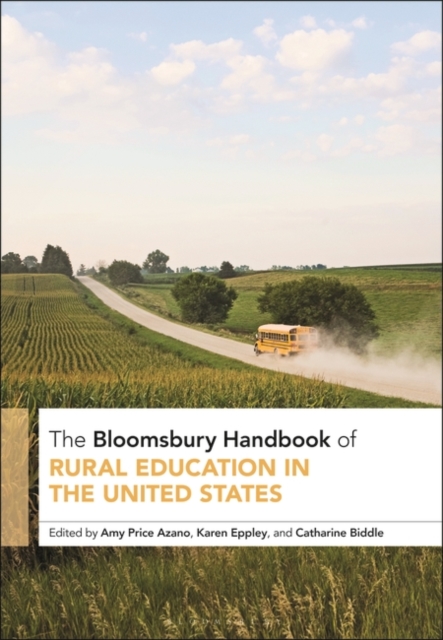
The Bloomsbury Handbook of Rural Education in the United States
This handbook begins with a foundational overview of rural education, examining the ways in which definitions, histories, policies, and demographic changes influence rural schools. This foundational approach includes how corporatization, population changes, poverty, and the role of data affect everyday learning in rural schools. In following sections, the contributors consider how school closures, charter schools, and district governance influence decision making in rural schooling, while also examining the influence of these structures on higher education attainment, rural school partnerships, and school leadership. They explore curriculum studies in rural education, including place-based and trauma-informed pedagogies, rural literacies, rural stereotype threat, and achievement. Finally, they engage with issues of identity and equity in rural schools by providing an overview of the literature related to diverse populations in rural places, including Indigenous, Black, and Latinx communities, and exceptional learners. Importantly, this handbook applies theoretical tools to rural classroom experiences, demonstrating the potential of work centered at the intersection of theory, rurality, and classroom practice. Each section concludes with a response by an international scholar, situating the topics covered within the broader global context.
eBook


Developing Rural School Leaders
Developing Rural School Leaders combines a focus on rural education and school leadership development to illustrate how the teaching and learning conditions in rural schools can be enhanced through transformative leadership coaching. By unpacking literature related to rural school leadership development and using case studies to authentically illustrate the complexities involved in rural school leadership development, this book explores how leaders can develop their abilities to increase data-informed instructional decision making, create a culture that supports teaching and learning, and develop other leaders. Ultimately, this important book concludes with an exploration of the opportunities and challenges of developing rural school leaders.
eBook


Bullying/Cyberbullying in Secondary Education: A Comparison Between Secondary Schools in Rural and Urban Contexts
The aim of the study us to analyze the difference of bullying (traditional bullying and cyberbullying) in rural and urban contexts. A total of 1094 junior and senior high school students (62.5% from urban areas, 37.6% from rural areas) from the region of Castile-La Mancha (Spain) took part herein. The results showed a similar proportion of intervention in all bullying roles and in polybullying in urban and rural context schools. However, victimization and physical bullying perpetration is more frequent in schools in urban areas. In rural schools, aggression is normally aimed at schoolmates. Regression showed the link between context and perpetration role. Victims in rural settings expressed greater distress than victims in schools in urban areas. These results indicate that the size of the population where the schools are located may be a relevant factor for the intervention, as well as the need for intervention at individual, group and community level in collaboration between schools and social services.
Journal Article


The Resilient Rural Leader
A practical guide for rural school and district leaders, with tips for maximizing resources and applying innovative solutions to the unique challenges of rural education.
eBook

What We Know and Where To Go: A Systematic Review of the Rural Student College and Career Readiness Literature and Future Directions for the Field
College and career readiness has become a national education policy priority. With more than 9.3 million rural students in the United States, the college and career readiness of rural students is a warranted priority for rural education researchers. Using a combination of Conley’s (2012) college and career readiness model, Perna’s (2006) nested model of college choice, and Social Cognitive Career Theory (Lent et al., 2014), we systematically reviewed and analyzed the extant literature on rural students’ college and career readiness. In addition to providing a comprehensive discussion of the prominent themes in the literature, we provide recommendations for future research on rural students’ college and career readiness as well as changes to college and career readiness standards and practices that would better align with the strengths and needs of rural students, schools, and communities.
Journal Article

Factors impacting implementation of nutrition and physical activity policies in rural schools
Background
Rural Latino children have higher rates of obesity compared to non-Latino Whites. Schools are in a unique position to address rural childhood obesity through policies. While evidence exists on factors that promote or impede school-based physical activity (PA) and nutrition policies, only a fraction has been in rural communities. This study seeks to understand 1) the knowledge and perceptions of school nutrition and PA policies and 2) barriers and facilitators to their implementation among rural school stakeholders from Washington State.
Methods
We conducted 20 semi-structured, in-depth interviews with school stakeholders (e.g., principals and school nutrition directors) from four K–12 school districts in the Lower Yakima Valley of Eastern Washington State. Thematic analysis was conducted using inductive, constant comparison approach to identify themes around knowledge and perceptions of policies and barriers and facilitators of policy implementation.
Results
Three main themes were identified: perceptions and knowledge of school PA and nutrition policies, barriers to policy implementation, and facilitators of policy implementation. The majority of stakeholders were supportive of school-based policies promoting PA and a healthy diet, even when lacking a specific understanding of these policies. Four subthemes were identified as barriers to policy implementation: viewing PA as a low priority, misuse of recess time, funding constraints, and lack of strong leadership. Facilitators of implementation included strong leadership at the district level, creating healthy norms through school-community linkages and pooling community resources to improve nutrition and PA among children.
Conclusions
Schools provide a unique setting to promote healthy diet and PA behaviors among children and their families. Study findings show that while knowledge of specific nutrition and PA policies may vary, support for such policies were high among rural stakeholders. Study findings can inform policy development and support strategies for policy implementation in rural settings. Future studies may want to examine whether implementation of strategies addressing the barriers and enhancing facilitators lead to success in rural school settings.
Journal Article