
Catalogue Search | MBRL


Are you sure you want to remove the book from the shelf?

{{itemTitle}}
11
result(s) for
"Russia (Federation) Social life and customs 20th century."
Sort by:

Russia : the business traveller's handbook
From the Back Cover: Today, Russia has 14 cities that are home to a million or more people. This fact alone is testimony to the extent to which Russia is both a major player in the world's economy and little understood. In just a few years, Russia has gone from being a world power in the making, to an undisputed key player on the global scene. As one of the four \"BRIC\" emerging markets, Russia's importance for world business cannot be overlooked any longer.
Book

The Socialist Way of Life in Siberia
The Buryats are a Mongolian population in Siberian Russia, the largest indigenous minority. The Socialist Way of Life in Siberia presents the dramatic transformation in their everyday lives during the late twentieth century. The book challenges the common notion that the process of modernization during the later Soviet period created a Buryat national assertiveness rather than assimilation or support for the state.
eBook

The endless steppe : growing up in Siberia
During World War II, when she was eleven years old, the author and her family were arrested in Poland by the Russians as political enemies and exiled to Siberia. She recounts here the trials of the following five years spent on the harsh Asian steppe.
Book
Russian History through the Senses
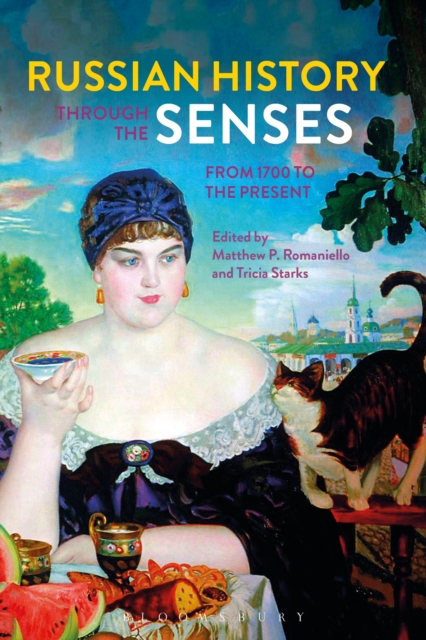
Bringing together an impressive cast of well-respected scholars in the field of modern Russian studies, Russian History through the Senses investigates life in Russia from 1700 to the present day via the senses. It examines past experiences of taste, touch, smell, sight and sound to capture a vivid impression of what it was to have lived in the Russian world, so uniquely placed as it is between East and West, during the last three hundred years. The book discusses the significance of sensory history in relation to modern Russia and covers a range of exciting case studies, rich with primary source material, that provide a stimulating way of understanding modern Russia at a visceral level. Russian History through the Senses is a novel text that is of great value to scholars and students interested in modern Russian studies.
eBook

A mountain of crumbs : a memoir
Elena Gorokhova describes her childhood in the Soviet Union during the 1960s, and also discusses her passion for the English language, the Bolshevik Revolution, and more.
Book

Jewish Russians : upheavals in a Moscow synagogue
Based on extensive fieldwork, Jewish Russians examines a population in crisis, in a city in crisis, in a state in crisis. Sascha Goluboff examines in depth a single community and the conflicts and struggles--sometimes physically violent ones--over control of its synagogue. She charts the demise of the elderly Russian Jewish community and the rise of a transnational one.
eBook

Letters from Vladivostok, 1894-1930
In 1894, Eleanor L. Pray left her New England home to move to Vladivostok in the Russian Far East with her husband, a merchant apprentice. Over the next thirty-six years— from the time of Tsar Alexander III to the early years of Stalin’s rule—she wrote over 2,000 letters chronicling her family life and the tumultuous social and political events she witnessed. Vladivostok, 5,600 miles east of Moscow, was shaped by a rich intersection of European and Asian cultures, and Pray’s witty and observant writing paints a vivid picture of the city and its denizens during a period of momentous social change. The book offers highlights from Pray’s letters along with illuminating historical and biographical information.
eBook


Letters from Vladivostock, 1894-1930
In 1894, Eleanor L. Pray left her New England home to move with her merchant husband to Vladivostok in the Russian Far East. Over the next thirty-six years from the time of Tsar Alexander III to the early years of Stalin s rule she wrote more than 2,000 letters chronicling her family life and the tumultuous social and political events she witnessed. Vladivostok, 5,600 miles east of Moscow, was shaped by a rich intersection of Asian cultures, and Pray s witty and observant writing paints a vivid picture of the city and its denizens during a period of momentous social change. The book offers highlights from Pray s letters along with illuminating historical and biographical information.
eBook
Common Places
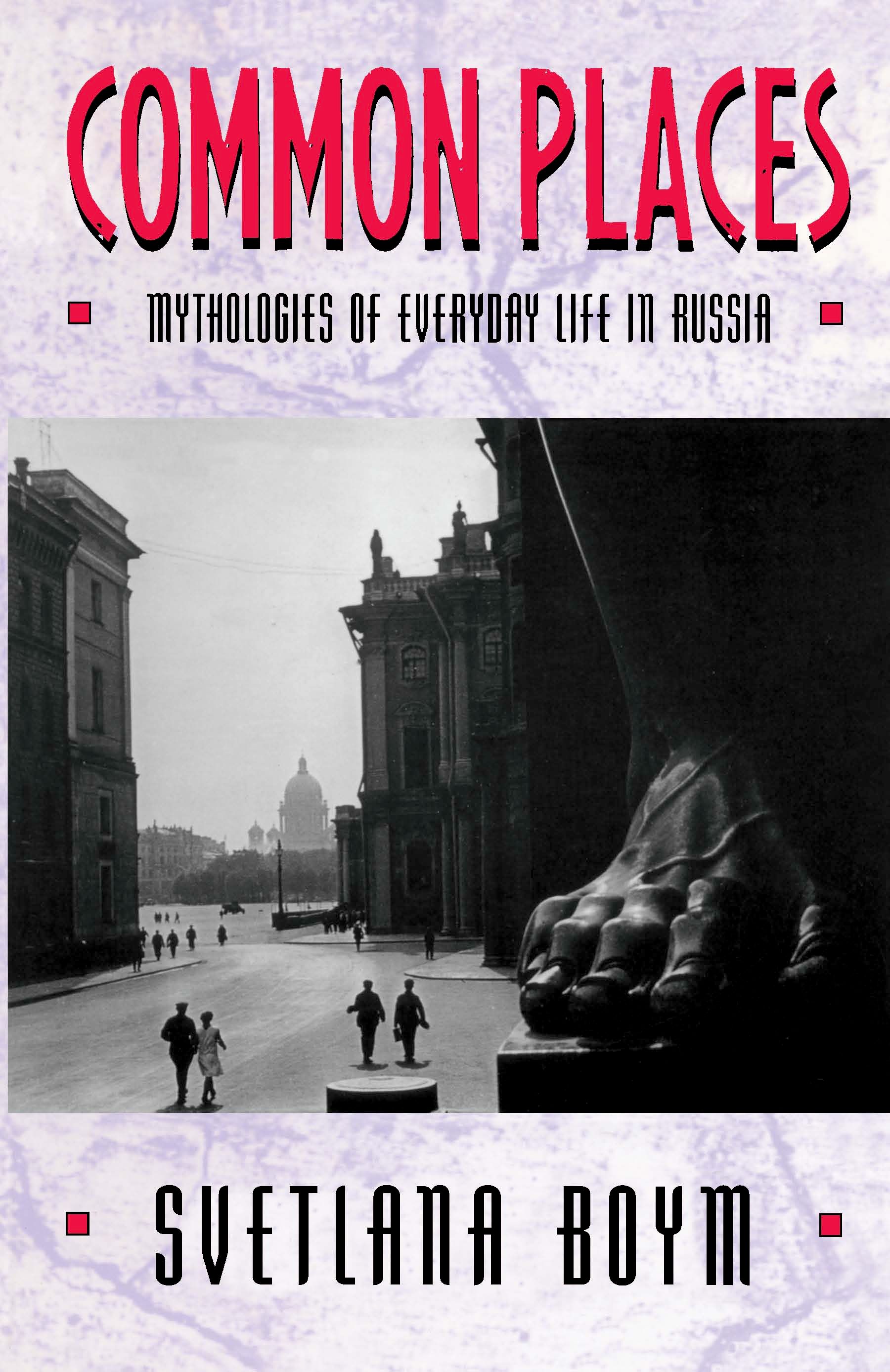
What is the \"real Russia\"? What is the relationship between national dreams and kitsch, between political and artistic utopia and everyday existence? Commonplaces of daily living would be perfect clues for those seeking to understand a culture. But all who write big books on Russian life confess their failure to get properly inside Russia, to understand its \"doublespeak.\" Svetlana Boym is a unique guide. A member of the last Soviet Generation, the Russian equivalent of our Generation X, she grew up in Leningrad and has lived in the West for the past thirteen years. Her book provides a view of Russia that is historically informed, replete with unexpected detail, and everywhere stamped with authority. Alternating analysis with personal accounts of Russian life, Boym conveys the foreignness of Russia and examines its peculiar conceptions of private life and common good, of Culture and Trash, of sincerity and banality. Armed with a Dictionary of Untranslatable Terms, we step around Uncle Fedia asleep in the hall, surrounded by a puddle of urine, and enter the Communal Apartment, the central exhibit of the book. It is the ruin of the communal utopia and a unique institution of Soviet daily life; a model Soviet home and a breeding ground for grassroots informants. Here, privacy is forbidden; here the inhabitants defiantly treasure their bits of \"domestic trash,\" targets of ideological campaigns for the transformation (perestroika) of everyday life. Against the Russian and Soviet myths of national destiny, the trivial, the ordinary, even the trashy, take on a utopian dimension. Boym studies Russian culture in a broad sense of the word; she ranges from nineteenth- and twentieth-century intellectual thought to art and popular culture. With her we go walking in Moscow and Leningrad, eavesdrop on domestic life, and discover jokes, films, and TV programs. Boym then reflects on the 1991 coup that marked the end of the Soviet Union and evoked fin-de-siècle apocalyptic visions. The book ends with a poignant reflection on the nature of communal utopia and nostalgia, on homesickness and the sickness of being home.
eBook