
Catalogue Search | MBRL


Are you sure you want to remove the book from the shelf?

{{itemTitle}}
5
result(s) for
"Russia -- Church history -- 1801-1917"
Sort by:

Russian Bible Wars
Although biblical texts were known in Church Slavonic as early as the ninth century, translation of the Bible into Russian came about only in the nineteenth century. Modern scriptural translation generated major religious and cultural conflict within the Russian Orthodox church. The resulting divisions left church authority particularly vulnerable to political pressures exerted upon it in the twentieth century. Russian Bible Wars illuminates the fundamental issues of authority that have divided modern Russian religious culture. Set within the theoretical debate over secularization, the volume clarifies why the Russian Bible was issued relatively late and amidst great controversy. Stephen Batalden's study traces the development of biblical translation into Russian and of the 'Bible wars' that then occurred in the nineteenth and twentieth centuries in Russia. The annotated bibliography of the Russian Bible identifies the different editions and their publication history.
eBook
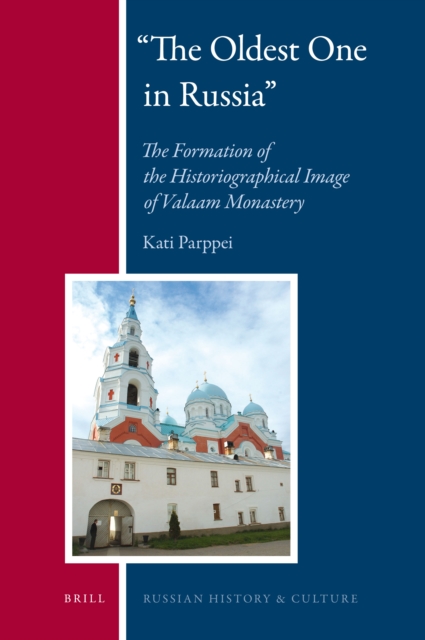
\The Oldest One in Russia\
Contributing, for instance, to the fields of nationality and borderland studies, this book offers a fascinating study of the process of \"writing a worthy past\" for the Russian Orthodox monastery of Valaam during the 18th and 19th centuries.
eBook

Afanasii Shchapov and the Significance of Religious Dissent in Imperial Russia, 1848-70
In the 1650s and 1660s, the head of the Russian Orthodox Church, Patriarch Nikon, carried out a series of reforms which were rejected by a large number of the faithful. The split that resulted, the Great Schism or raskol, led a large proportion of the Russian population to become completely isolated from the official church. Known as raskol'niki, they were seen as stubborn opponents of both church and government and were fiercely persecuted. Two centuries later amidst peasant protests, revolutionary conspiracies and government paranoia, Russia's religious dissenters were again at the forefront of national concerns. Russia's autocratic rulers, while equating Orthodoxy with political loyalty, saw the heterodox as a threat to internal security. At the same time, Russian revolutionaries began to look to the people as an instrument of political change. Where all too often loyalty to the Tsar was the defining feature of the peasants, the raskol'niki with their persecuted history and stubborn resistance seemed to promise a well of opposition from which the radicals could draw. The historian and radical thinker Afanasii Shchapov (1830-1876) championed religious dissent as a politically democratic movement. More than anyone else he defined the relationship between political and religious dissent that was to persist until the revolution of 1917. In examining Shchapov's works together with a wide range of printed and archival sources, Thomas Marsden reveals that the raskol'niki were central to the most important questions of mid-nineteenth century Russian society--those of revolution, nationality, and progress.
eBook

The Death of Tolstoy
In the middle of the night of October 28, 1910, Leo Tolstoy, the most famous man in Russia, vanished. A secular saint revered for his literary genius, pacificism, and dedication to the earth and the poor, Tolstoy had left his home in secret to embark on a final journey. His disappearance immediately became a national sensation. Two days later he was located at a monastery, but was soon gone again. When he turned up next at Astapovo, a small, remote railway station, all of Russia was following the story. As he lay dying of pneumonia, he became the hero of a national narrative of immense significance.
InThe Death of Tolstoy, William Nickell describes a Russia engaged in a war of words over how this story should be told. The Orthodox Church, which had excommunicated Tolstoy in 1901, first argued that he had returned to the fold and then came out against his beliefs more vehemently than ever. Police spies sent by the state tracked his every move, fearing that his death would embolden his millions of supporters among the young, the peasantry, and the intelligentsia. Representatives of the press converged on the stationhouse at Astapovo where Tolstoy lay ill, turning his death into a feverish media event that strikingly anticipated today's no-limits coverage of celebrity lives-and deaths.
Drawing on newspaper accounts, personal correspondence, police reports, secret circulars, telegrams, letters, and memoirs, Nickell shows the public spectacle of Tolstoy's last days to be a vivid reflection of a fragile, anxious empire on the eve of war and revolution.
eBook

Sacred stories : religion and spirituality in modern Russia
Sacred Stories brings together the work of leading scholars writing on the history of religion and religiosity in late imperial Russia during the critical decades preceding the 1917 revolutions. Embodying new research and new methodologies, this book reshapes our understanding of the place of religion in modern Russian history. Topics examined include miraculous icons and healing, pilgrim narratives, confessions, women and Orthodox domesticity, marriage and divorce, conversion and tolerance, Jewish folk beliefs, mysticism in Russian art, and philosophical aspects of Orthodox religious thought. Sacred Stories demonstrates that belief, spirituality, and the sacred were powerful and complex cultural expressions central to Russian political, social, economic, and cultural life. Contributors are Nicholas B. Breyfogle, Heather J. Coleman, Gregory L. Freeze, Nadieszda Kizenko, Alexei A. Kurbanovsky, Roy R. Robson, Bernice Glatzer Rosenthal, Gabriella Safran, Vera Shevzov, Sarah Abrevaya Stein, Mark Steinberg, Paul Valliere, William G. Wagner, Paul W. Werth, and Christine D. Worobec.
eBook