
Catalogue Search | MBRL


Are you sure you want to remove the book from the shelf?

{{itemTitle}}
5
result(s) for
"Russia -- Economic conditions -- To 1861"
Sort by:

The institutional framework of Russian serfdom
\"Russian rural history has long been based on a \"peasant myth\" which originated with nineteenth-century Romantics and is still accepted by many historians today. In this book, Tracy Dennison shows how Russian society looked from below, and finds nothing like the collective, redistributive, and market-averse behaviour often attributed to Russian peasants. On the contrary, the Russian rural population was as integrated into regional and even national markets as many of its west European counterparts. Serfdom was a loose garment that enabled different landlords to shape economic institutions, especially property rights, in widely diverse ways. Highly coercive and backward regimes on some landlords' estates existed side-by-side with surprisingly liberal approximations to a rule of law. This book paints a vivid and colourful picture of the everyday reality of rural Russia before the 1861 abolition of serfdom\"--Provided by publisher.
Book

The Institutional Framework of Russian Serfdom
Russian rural history has long been based on a 'Peasant Myth', originating with nineteenth-century Romantics and still accepted by many historians today. In this book, Tracy Dennison shows how Russian society looked from below, and finds nothing like the collective, redistributive and market-averse behaviour often attributed to Russian peasants. On the contrary, the Russian rural population was as integrated into regional and even national markets as many of its west European counterparts. Serfdom was a loose garment that enabled different landlords to shape economic institutions, especially property rights, in widely diverse ways. Highly coercive and backward regimes on some landlords' estates existed side-by-side with surprisingly liberal approximations to a rule of law. This book paints a vivid and colourful picture of the everyday reality of rural Russia before the 1861 abolition of serfdom.
eBook
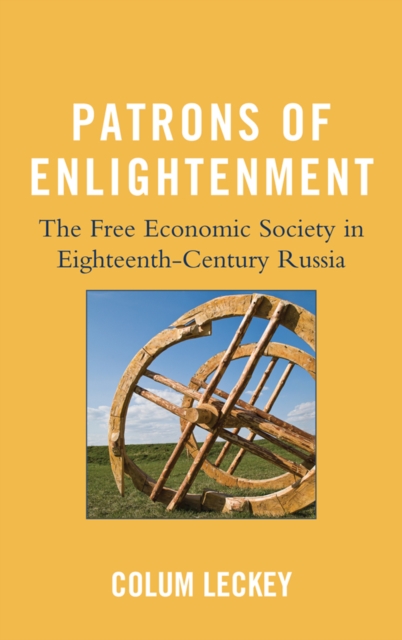
Patrons of enlightenment
Patrons of Enlightenment is the first English language study of the St. Petersburg Free Economic Study, one of the most prestigious and influential public associations in Imperial Russian history. Established in 1765 under the personal protection of Catherine the Great, its mission was to enlighten the villages and country estates of the Russian Empire by spreading the gospel of scientific agriculture to noble landowners and the peasants working their land. Emulating the patriotic associations of Western and Central Europe, it also sought to put the finishing touches on the cultural westernization of Russia initiated by the reforming tsar Peter the Great. Within the walls of its meeting house in St. Petersburg, it offered a neutral space where people of different rank, status, and lineage assembled to debate the great issues of the day, above all else the role of a privileged and enlightened nobility in a society anchored in serfdom. For its network of readers and correspondents in the provinces, it provided an opportunity to earn distinction on Russia's public stage through its voluminous publications and its flagship journal, the Transactions of the Free Economic Society. The Society provided the template for public activity and initiative in Imperial Russia, as hundreds of other organizations in the nineteenth century would emulate its example.
eBook
