
Catalogue Search | MBRL


Are you sure you want to remove the book from the shelf?

{{itemTitle}}
6,475
result(s) for
"Russia -- Relations -- Ukraine"
Sort by:

Ukraine crisis : what it means for the West
The Ukraine issue has rapidly escalated into a major geopolitical crisis, the most severe test of the relationship between Russia and the West since the Cold War. And it is far from resolved. Andrew Wilson's account situates the crisis within Russia's covert ambition since 2004 to expand its influence within the former Soviet periphery, and over countries that have since joined the EU and NATO, such as the Baltic States. He shows how Russia has spent billions developing its soft power within central Europe, aided by US diplomatic inattention in the area, and how Putin's conservative values project is widely misunderstood in he West. The book examines Yanukovych's corrupt 'coup d'etat' of 2010 and provides the most intimate day-by-day account we have of the protests in Kiev from November 2013 to February 2014 (at which Wilson was present). It explores the military coup in Crimea, the role of Russia and long-term tensions with the Muslim Crimean Tatars. It covers the election of 25 May 2014 and the prospects for new president Petro Poroshenko. And it analyses other states under pressure from Russia - Georgia, Moldova, Belarus. 'Russia will clearly not stop at Ukraine'. Andrew Wilson has been covering the Ukrainian crisis in newspapers, broadcasts and digital media (see link http://www.ucl.ac.uk/ssees/ssees-news-publication/andrew_wilson), was in the Maidan, Kiev, for the crucial demonstrations in February, and briefed Number 10 on his return.
Book

Children of Rus
InChildren of Rus', Faith Hillis recovers an all but forgotten chapter in the history of the tsarist empire and its southwestern borderlands. The right bank, or west side, of the Dnieper River-which today is located at the heart of the independent state of Ukraine-was one of the Russian empire's last territorial acquisitions, annexed only in the late eighteenth century. Yet over the course of the long nineteenth century, this newly acquired region nearly a thousand miles from Moscow and St. Petersburg generated a powerful Russian nationalist movement. Claiming to restore the ancient customs of the East Slavs, the southwest's Russian nationalists sought to empower the ordinary Orthodox residents of the borderlands and to diminish the influence of their non-Orthodox minorities.
Right-bank Ukraine would seem unlikely terrain to nourish a Russian nationalist imagination. It was among the empire's most diverse corners, with few of its residents speaking Russian as their native language or identifying with the culture of the Great Russian interior. Nevertheless, as Hillis shows, by the late nineteenth century, Russian nationalists had established a strong foothold in the southwest's culture and educated society; in the first decade of the twentieth, they secured a leading role in local mass politics. By 1910, with help from sympathetic officials in St. Petersburg, right-bank activists expanded their sights beyond the borderlands, hoping to spread their nationalizing agenda across the empire.
Exploring why and how the empire's southwestern borderlands produced its most organized and politically successful Russian nationalist movement, Hillis puts forth a bold new interpretation of state-society relations under tsarism as she reconstructs the role that a peripheral region played in attempting to define the essential characteristics of the Russian people and their state.
eBook

Ukraine and the art of strategy
\"In Ukraine and the Art of Strategy, Sir Lawrence Freedman provides an account of the origins and course of the Russia-Ukraine conflict through the lens of the theory and practice of strategy. That is, he explores Putin's near, medium, and long-term strategies when he decided to initiate the conflict. How successful has he been? In contrast to many who see Putin as a master operator who has resuscitated a supine Russia against all odds, Freedman is less impressed with his strategic acumen in terms of the long-term fallout. By exploring concepts such as coercive diplomacy, limited war, escalation and information operations, Freedman brings the story up to the present, where a low-level conflict between Ukrainian and breakaway rebel forces in the east grinds on, and illuminates the external challenges faced by the governments' involved\"-- Provided by publisher.
BOOK
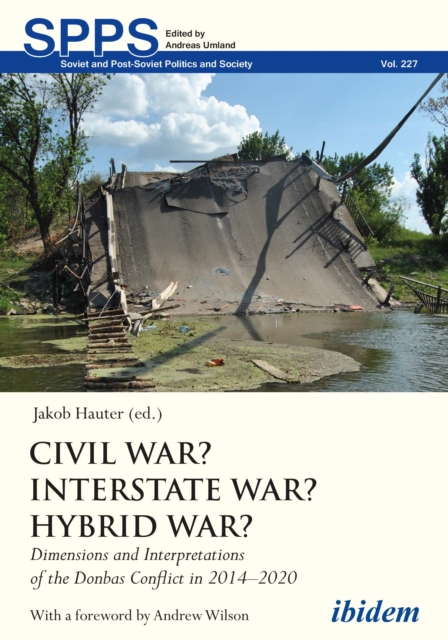
Civil War? Interstate War? Hybrid War?
This volume of collected papers takes stock of what has become known about the war in eastern Ukraines Donets Basin (Donbas) between April 2014 and mid-2020.It provides an introduction to the conflict and illustrates the key point of contention in the academic debate surrounding itthe question whether this war is primarily an internal Ukrainian.
eBook

The Russo-Ukrainian war : the return of history
\"Despite repeated warnings from the White House, Russia's invasion of Ukraine in February 2022 shocked the world. Why did Putin start the war--and why has it unfolded in previously unimaginable ways? Ukrainians have resisted a superior military; the West has united, while Russia grows increasingly isolated. Serhii Plokhy, a leading historian of Ukraine and the Cold War, offers a definitive account of this conflict, its origins, course, and the already apparent and possible future consequences\"-- Provided by publisher.
Book
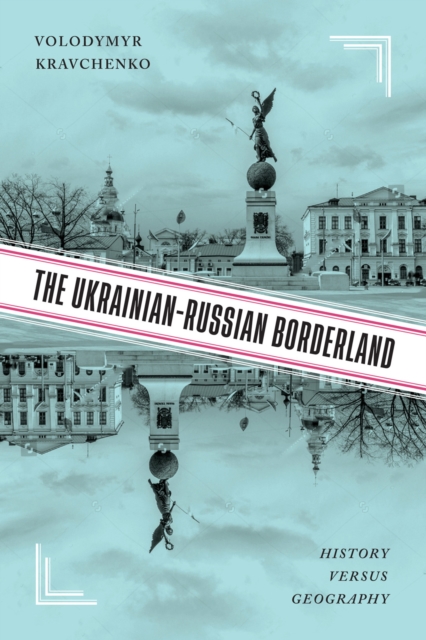
The Ukrainian-Russian Borderland
The eastern edge of Europe has long been in flux. The nature of the Ukrainian-Russian relationship is both complex and ambiguous. Prompted by the countries' historical and geographical entanglement, Volodymyr Kravchenko asks what the words Ukraine and Russia really mean. The Ukrainian-Russian Borderland abandons linear historical interpretation and addresses questions of identity and meaning through imperial and geographic contexts. Dominated by imperial powers, Eastern Europe and its boundaries were in a constant state of flux and re-identification during the Russian imperial period. Here, the Little Russian early modern identity discourse both connects and separates modern Russian and Ukrainian identities and gives rise to issues of historical terminology. Mirroring the historical ambiguity is the geographical fluidity of the borders between Ukraine and Russia; Kravchenko situates this issue in the city of Kharkiv and Kharkiv University as both real and imagined markers of the borderland. Putting the centuries-long Ukrainian-Russian relationship into imperial and regional contexts, Kravchenko adds a new perspective to the ongoing discourse about relations between the two nations.
eBook

The Cossack Myth
In the years following the Napoleonic Wars, a mysterious manuscript began to circulate among the dissatisfied noble elite of the Russian Empire. Entitled The History of the Rus', it became one of the most influential historical texts of the modern era. Attributed to an eighteenth-century Orthodox archbishop, it described the heroic struggles of the Ukrainian Cossacks. Alexander Pushkin read the book as a manifestation of Russian national spirit, but Taras Shevchenko interpreted it as a quest for Ukrainian national liberation, and it would inspire thousands of Ukrainians to fight for the freedom of their homeland. Serhii Plokhy tells the fascinating story of the text's discovery and dissemination, unravelling the mystery of its authorship and tracing its subsequent impact on Russian and Ukrainian historical and literary imagination. In so doing he brilliantly illuminates the relationship between history, myth, empire and nationhood from Napoleonic times to the fall of the Soviet Union.
eBook

Conflict in Ukraine
The current conflict in Ukraine has spawned the most serious crisis between Russia and the West since the end of the Cold War. It has undermined European security, raised questions about NATO's future, and put an end to one of the most ambitious projects of U.S. foreign policy -- building a partnership with Russia. It also threatens to undermine U.S. diplomatic efforts on issues ranging from terrorism to nuclear proliferation. And in the absence of direct negotiations, each side is betting that political and economic pressure will force the other to blink first. Caught in this dangerous game of chicken, the West cannot afford to lose sight of the importance of stable relations with Russia.This book puts the conflict in historical perspective by examining the evolution of the crisis and assessing its implications both for the Crimean peninsula and for Russia's relations with the West more generally. Experts in the international relations of post-Soviet states, political scientists Rajan Menon and Eugene Rumer clearly show what is at stake in Ukraine, explaining the key economic, political, and security challenges and prospects for overcoming them. They also discuss historical precedents, sketch likely outcomes, and propose policies for safeguarding U.S.-Russia relations in the future. In doing so, they provide a comprehensive and accessible study of a conflict whose consequences will be felt for many years to come.
eBook