
Catalogue Search | MBRL


Are you sure you want to remove the book from the shelf?

{{itemTitle}}
51
result(s) for
"Russia-Historiography"
Sort by:

Russia : myths and realities
An expert historian and former ambassador to Moscow unlocks fact from fiction to reveal what lies at the root of the Russian story. Churchill remarked that Russia is a riddle wrapped in a mystery inside an enigma. That has become an excuse for intellectual laziness. Russia is not all that different from anywhere else. But you have to disentangle the facts from the myths created both by the Russians themselves and by those who dislike them. In this dynamic new history, Rodric Braithwaite--Russia expert and former ambassador to Moscow--does exactly that, unpicking fact from fiction to discover what lies at the root of the Russian story. Russia is the largest country in the world, with the largest arsenal of nuclear weapons. Over a thousand years this multifaceted nation of shifting borders has been known as Rus, Muscovy, the Russian Empire, and the Soviet Union. Thirty years ago it was reinvented as the Russian Federation. Like the rest of us, the Russians constantly rewrite their history. They, too, omit episodes of national disgrace in favor of patriotic anecdotes, sometimes more rooted in myth than reality. Russia is not an enigma, but its past is violent, tragic, sometimes glorious, and always complicated.
BOOK
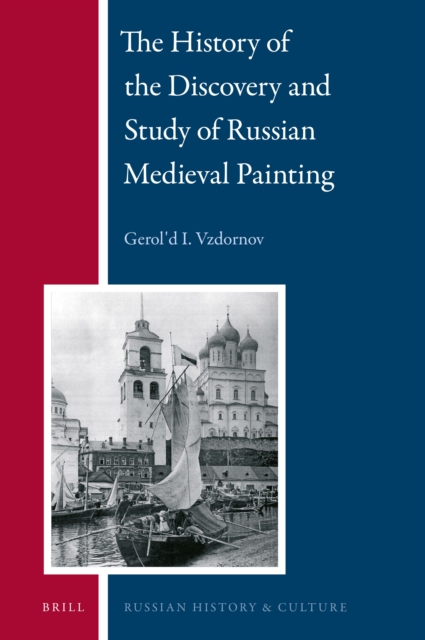
The history of the discovery and study of Russian medieval painting
This is the first study in any language to trace the emergence of the art historical interest in icon painting in the nineteenth century with its evident impact on the course of Russian modernism in the twentieth century. Given the surge in popularity of the Russian avant-garde, a book devoted to the gradual awareness of the artistic value of icons and their effect on Russian aesthetics is timely. The discoveries, the false starts, the incompetence, the interaction of dilettantes and academics, the meddling of tsars and church officials, all make for a fascinating tale of growing cultural awarenss. It is a story that prepares the ground for the explosioin of Russian cultural creativity and acceptability in the early twentieth century.
eBook


Nicholas Karamzin and Russian Society in the Nineteenth Century
Nicholas Karamzin (1766–1826) was a remarkably active thinker and writer during a time that was trying to all Europeans. A first-hand witness to the French Revolution, Napoleonic suzerainty over Europe, the burning of Moscow, and the Decembrist revolt in St. Petersburg, he presented in his voluminous correspondence and published writings a world view that recognized the weaknesses of the Russian Empire and at the same time foresaw the dangers of both radical change and rigid autocracy. Russian conservatism owes much to this man, even though he would have agreed with very few of those who came after him and were called conservative: he supported autocracy, but was committed to enlightenment; he abhorred constitutions. The fact that his writing had lasting significance has rarely been challenged, but the social and political nature of that contribution has never before been demonstrated. Previous studies of Karamzin have dealt with his literary career. This monograph focuses on the final third of his life, on his career at court (1816–26) and on the cultural heritage he left to the Russian Empire. As the historian of Russia most widely read by his and later generations, his historical interpretations mirrored and helped shape the image Russians had of themselves. Professor Black’s study of Karamzin is crucial to any examination of Russia’s enlightenment, conservatism, historical writing, and national self-consciousness.
eBook

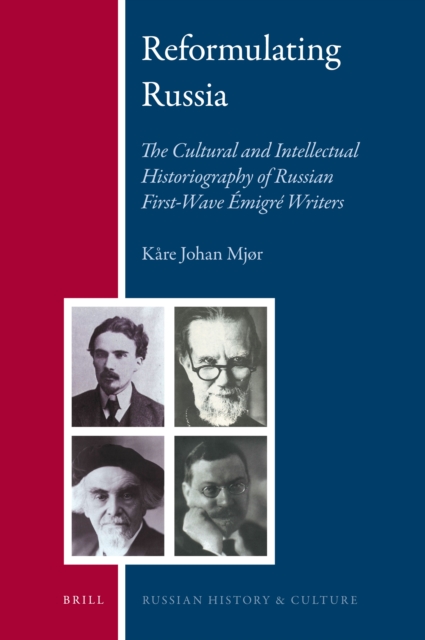
Reformulating Russia
Reformulating Russia provides a thorough narratological and contextual analysis of Russian émigré historiography as it appears in Georgii Fedotov's Saints of Ancient Russia, Georgii Florovskii's The Ways of Russian Theology, Nikolai Berdiaev's The Russian Idea and Vasilii Zenkovskii's History of Russian Philosophy.
eBook

Russia Before The 'Radiant Future'
One of the major historians of prerevolutionary Russia has collected in this volume some of his most important essays. Written over a number of years, these pioneering works have been revised and updated and are complemented by others being published for the first time. Thematically, they cover major subjects in Imperial Russian history and in historical writing, such as ideas and their role in historical change; the intelligentsia, the nobility, and peasant society; and historiography. The twelve essays raise cardinal questions about current scholarship on Russian history before the upheavals of 1917 and offer original interpretations that are of interest to the educated layman as well as the professional historian.
eBook

The Cossack myth : history and nationhood in the age of empires
\"In the years following the Napoleonic Wars, a mysterious manuscript began to circulate among the dissatisfied noble elite of the Russian Empire. Entitled 'The History of the Rus,' it became one of the most influential historical texts of the modern era. Attributed to an eighteenth-century Orthodox archbishop, it described the heroic struggles of the Ukrainian Cossacks. Alexander Pushkin read the book as a manifestation of Russian national spirit, but Taras Shevchenko interpreted it as a quest for Ukrainian national liberation and it would inspire thousands of Ukrainians to fight for the freedom of their homeland. Serhii Plokhy tells the fascinating story of the text's discovery and dissemination unravelling the mystery of its authorship and tracing its subsequent impact on Russian and Ukrainian historical and literary imagination. In so doing he brilliantly illuminates the relationship between history, myth, empire and nationhood from Napoleonic times to the fall of the Soviet Union\"-- Provided by publisher.
Book

Stalin's Empire of Memory
Based on declassified materials from eight Ukrainian and Russian archives,Stalin's Empire of Memory, offers a complex and vivid analysis of the politics of memory under Stalinism. Using the Ukrainian republic as a case study, Serhy Yekelchyk elucidates the intricate interaction between the Kremlin, non-Russian intellectuals, and their audiences.
Yekelchyk posits that contemporary representations of the past reflected the USSR's evolution into an empire with a complex hierarchy among its nations. In reality, he argues, the authorities never quite managed to control popular historical imagination or fully reconcile Russia's 'glorious past' with national mythologies of the non-Russian nationalities.
Combining archival research with an innovative methodology that links scholarly and political texts with the literary works and artistic images,Stalin's Empire of Memorypresents a lucid, readable text that will become a must-have for students, academics, and anyone interested in Russian history.
eBook