
Catalogue Search | MBRL


Are you sure you want to remove the book from the shelf?

{{itemTitle}}
1,557
result(s) for
"Russian essays."
Sort by:
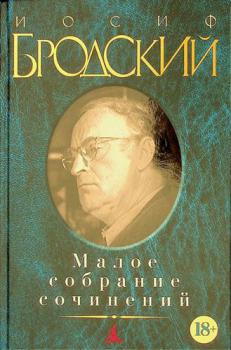

Shaping Speechlessness after February 24, 2022 in the Magazine \ROAR\
This study analyzes essays published in the magazine “Resistance and Oppositional Art Review” (“ROAR”), which was established after the full-scale Russian invasion of Ukraine. The study focuses on the motif of speechlessness that appeared in many texts by authors contributing to the magazine during the first month after February 24, 2022. The inquiry shows that the motif may acquire different forms and relate to various emotions such as guilt, shame, and fear. The author of this study argues that the motif is used not only as a specific emotional response to ongoing events but also as a medium to communicate a political statement of disagreement with the Russian invasion. Thus, it is possible to consider the magazine roar and its contributors as an emotional community
Journal Article

Tolstoy On War
In 1812, Napoleon launched his fateful invasion of Russia. Five decades later, Leo Tolstoy publishedWar and Peace, a fictional representation of the era that is one of the most celebrated novels in world literature. The novel contains a coherent (though much disputed) philosophy of history and portrays the history and military strategy of its time in a manner that offers lessons for the soldiers of today. To mark the two hundredth anniversary of the French invasion of Russia and acknowledge the importance of Tolstoy's novel for our historical memory of its central events, Rick McPeak and Donna Tussing Orwin have assembled a distinguished group of scholars from diverse disciplinary backgrounds-literary criticism, history, social science, and philosophy-to provide fresh readings of the novel.
The essays inTolstoy On Warfocus primarily on the novel's depictions of war and history, and the range of responses suggests that these remain inexhaustible topics of debate. The result is a volume that opens fruitful new avenues of understandingWar and Peacewhile providing a range of perspectives and interpretations without parallel in the vast literature on the novel.
eBook
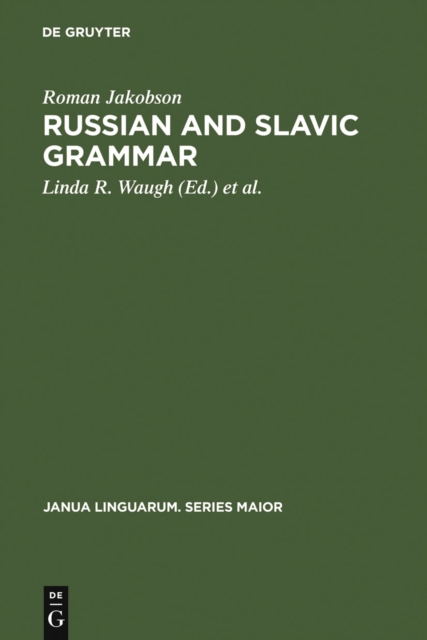
Russian and Slavic grammar : studies, 1931-1981
No detailed description available for \"Russian and Slavic Grammar\".
eBook

Theory and History of Folklore
The Russian folklorist Vladimir Propp published his first book, Morphology of the Folktale, in 1928. Since it was translated to English, in 1958, it has become an international bestseller and is well known as a major theoretical work in oral literature. Now, Anatoly Liberman has selected seven essays and three chapters from his later books which together reveal the full range of Propp’s thought in Theory and History of Folklore. This will help readers see that his work is essentially a theory of narrative. Included are the famous essay by Claude Levi-Strauss about Propp and Propp’s response to Levi-Strauss’s Critique. “This book will give Propp’s admirers in the English-speaking world a whole new perspective on this distinguished scholar’s contribution to folkloristics. Liberman provides the necessary background in terms of Russian/Soviet intellectual (and political) currents to place Propp’s work in a new light. No student of structuralism in folklore can afford to miss Liberman’s anthology.” -Alan Dundes, University of California, Berkeley
eBook

Osip Mandelstam, Essayist
I'am suspicious of poets' attempts to explain their craft. Not long ago I met a Russian dissident Poet now living in Paris whose ... sensitive verse I had been ranslating into English. I went to see armed with the sort of questions I thought would allow me to penetrate what Mandelstam would doubtless called 'the deeper geological yers of her poetry, helping me to more adequately in English hat I found
Magazine Article

Weber, Liberalism and Revolution
IN THE VOLUMINOUS WRITINGS ABOUT MAX WEBER OR THE THEORIES BASED UPON HIS WORK, TWO CENTRAL TOPICS--THE MODE OF HISTORICAL ANALYSIS AND THE PROBLEM OF LIBERALISM--HAVE OFTEN ELUDED INFORMED DISCUSSION AND PROVOKED MISUNDERSTANDING. THE AUTHOR WONDERS HOW MANY DISTORTIONS MIGHT HAVE BEEN AVOIDED, OR HOW THE CRITICAL RECEPTION OF WEBER'S THOUGHT IN THE SOCIAL SCIENCES MIGHT HAVE BEEN ALTERED HAD THESE TEXTS BEEN MADE AVAILABLE ALONGSIDE THE ESSAYS IN THE SOCIOLOGY OF RELIGION, THE PHILOSOPHY OF THE SOCIAL SCIENCES, OR THAT UNFINISHED COMPENDIUM, \"ECONOMY AND SOCIETY.\" THIS ARTICLE RETHINKS A FEW OF THE ISSUES THAT HAVE SWIRLED AROUND WEBER'S THOUGHT.
Journal Article
