
Catalogue Search | MBRL


Are you sure you want to remove the book from the shelf?

{{itemTitle}}
1,878
result(s) for
"Russian fiction"
Sort by:

Writing Fear
In Russia, gothic fiction is often seen as an aside - a literary curiosity that experienced a brief heyday and then disappeared. In fact, its legacy is much more enduring, persisting within later Russian literary movements. Writing Fear explores Russian literature's engagement with the gothic by analysing the practices of borrowing and adaptation. Katherine Bowers shows how these practices shaped literary realism from its romantic beginnings through the big novels of the 1860s and 1870s to its transformation during the modernist period.Bowers traces the development of gothic realism with an emphasis on the affective power of fear. She then investigates the hybrid genre's function in a series of case studies focused on literary texts that address social and political issues such as urban life, the woman question, revolutionary terrorism, and the decline of the family. By mapping the myriad ways political and cultural anxiety take shape via the gothic mode in the age of realism, Writing Fear challenges the conventional literary history of nineteenth-century Russia.
eBook
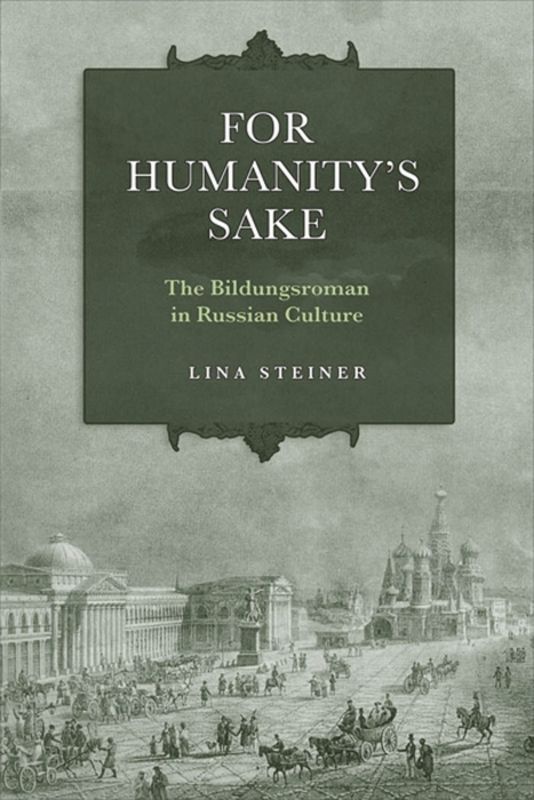
For Humanity's Sake
Positing the classic Russian novel as an inheritor of the Enlightenment's key values — including humanity, self-perfection, and cross-cultural communication —For Humanity's Sakeoffers a unique view of Russian intellectual history and literature.
eBook


Where Currents Meet
Where Currents Meet treats the Ukrainian and Russian components of cultural experience in Ukraine’s East as elements of a complex continuum. This study of cultural memory in post-Soviet space shows how its inhabitants negotiate the historical legacy they have inherited. Tanya Zaharchenko approaches contemporary Ukrainian literature at the intersection of memory studies and border studies, and her analysis adds a new voice to an ongoing exploration of cultural and historical discourses in Ukraine. This scholarly journey through storylines explores the ways in which younger writers in Kharkiv (Kharkov in Russian), a diverse, dynamic, but understudied border city in east Ukraine today come to grips with a traumatized post-Soviet cultural landscape. Zaharchenko’s book examines the works of Serhiy Zhadan, Andrei Krasniashchikh, Yuri Tsaplin, Oleh Kotsarev and others, introducing them as a “doubletake\" generation who came of age during the Soviet Union’s collapse and as adults revisited this experience in their novels. Filling the space between society and the state, local literary texts have turned into forms of historical memory and agents of political life.
eBook

Celestial Hellscapes
The common thread of astronomy is fantastically important for understanding the Strugatskiis' works--their most important works are experiments in cosmology. This book explores how the Strugatskiis cosmological explorations are among the most fundamental elements of their art. It also examines how these explorations connect to their predecessors in the Russian literary tradition.
eBook