
Catalogue Search | MBRL


Are you sure you want to remove the book from the shelf?

{{itemTitle}}
19
result(s) for
"Russian literature-Jewish authors-History and criticism"
Sort by:

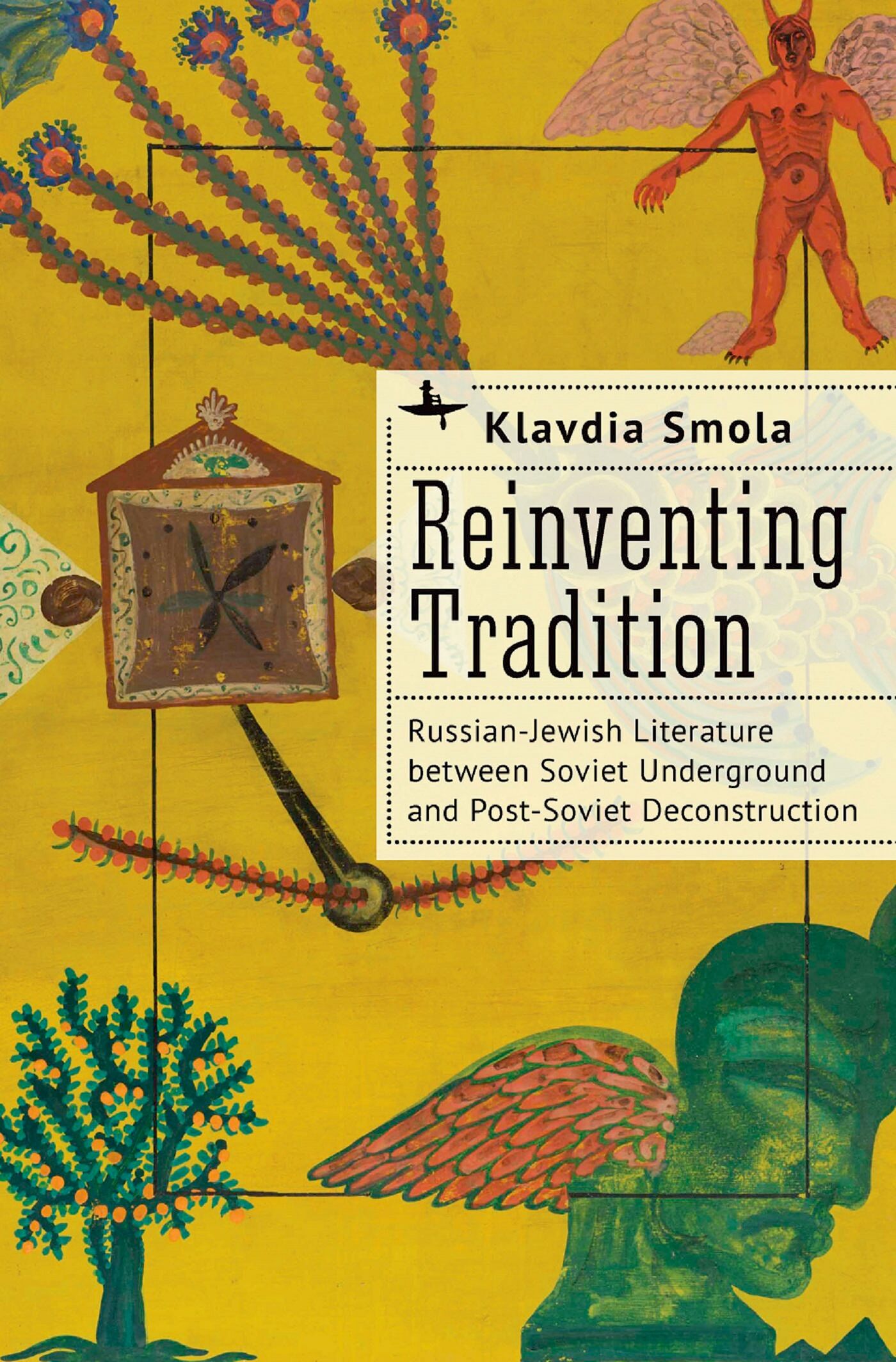
Reinventing Tradition
How was the Jewish tradition reinvented in Russian-Jewish literature after a long period of assimilation, the Holocaust, and decades of Communism? The process of reinventing the tradition began in the counter-culture of Jewish dissidents, in the midst of the late-Soviet underground of the 1960-1970s, and it continues to the present day. In this period, Jewish literature addresses the reader of the ‘post-human’ epoch, when the knowledge about traditional Jewry and Judaism is received not from the family members or the collective environment, but rather from books, paintings, museums and popular culture.
Klavdia Smola explores how contemporary Russian-Jewish literature turns to the traditions of Jewish writing, from biblical Judaism to early-Soviet (anti-)Zionist novels, and how it ‘re-writes’ Haskalah satire, Hassidic Midrash or Yiddish travelogues.
eBook
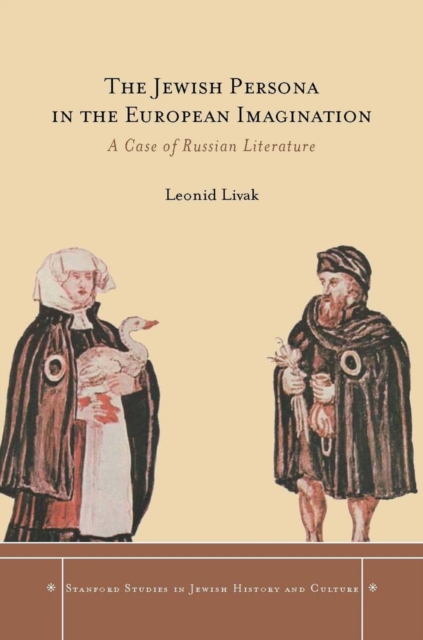
The Jewish Persona in the European Imagination
This book proposes that the idea of the Jews in European cultures has little to do with actual Jews, but rather is derived from the conception of Jews as Christianity's paradigmatic Other, eternally reenacting their morally ambiguous New Testament role as the Christ-bearing and -killing chosen people of God. Through new readings of canonical Russian literary texts by Gogol, Turgenev, Chekhov, Babel, and others, the author argues that these European writers-Christian, secular, and Jewish-based their representation of Jews on the Christian exegetical tradition of anti-Judaism. Indeed, Livak disputes the classification of some Jewish writers as belonging to \"Jewish literature,\" arguing that such an approach obscures these writers' debt to European literary traditions and their ambivalence about their Jewishness.
This work seeks to move the study of Russian literature, and Russian-Jewish literature in particular, down a new path. It will stir up controversy around Christian-Jewish cultural interaction; the representation of otherness in European arts and folklore; modern Jewish experience; and Russian literature and culture.
eBook

Music from a Speeding Train
Music from a Speeding Train explores the uniquely Jewish space created by Jewish authors working within the limitations of the Soviet cultural system. It situates Russian- and Yiddish- language authors in the same literary universe—one in which modernism, revolution, socialist realism, violence, and catastrophe join traditional Jewish texts to provide the framework for literary creativity. These writers represented, attacked, reformed, and mourned Jewish life in the pre-revolutionary shtetl as they created new forms of Jewish culture. The book emphasizes the Soviet Jewish response to World War II and the Nazi destruction of the Jews, disputing the claim that Jews in Soviet Russia did not and could not react to the killings of Jews. It reveals a largely unknown body of Jewish literature beginning as early as 1942 that responds to the mass killings. By exploring works through the early twenty-first century, the book reveals a complex, emotionally rich, and intensely vibrant Soviet Jewish culture that persisted beyond Stalinist oppression.
eBook
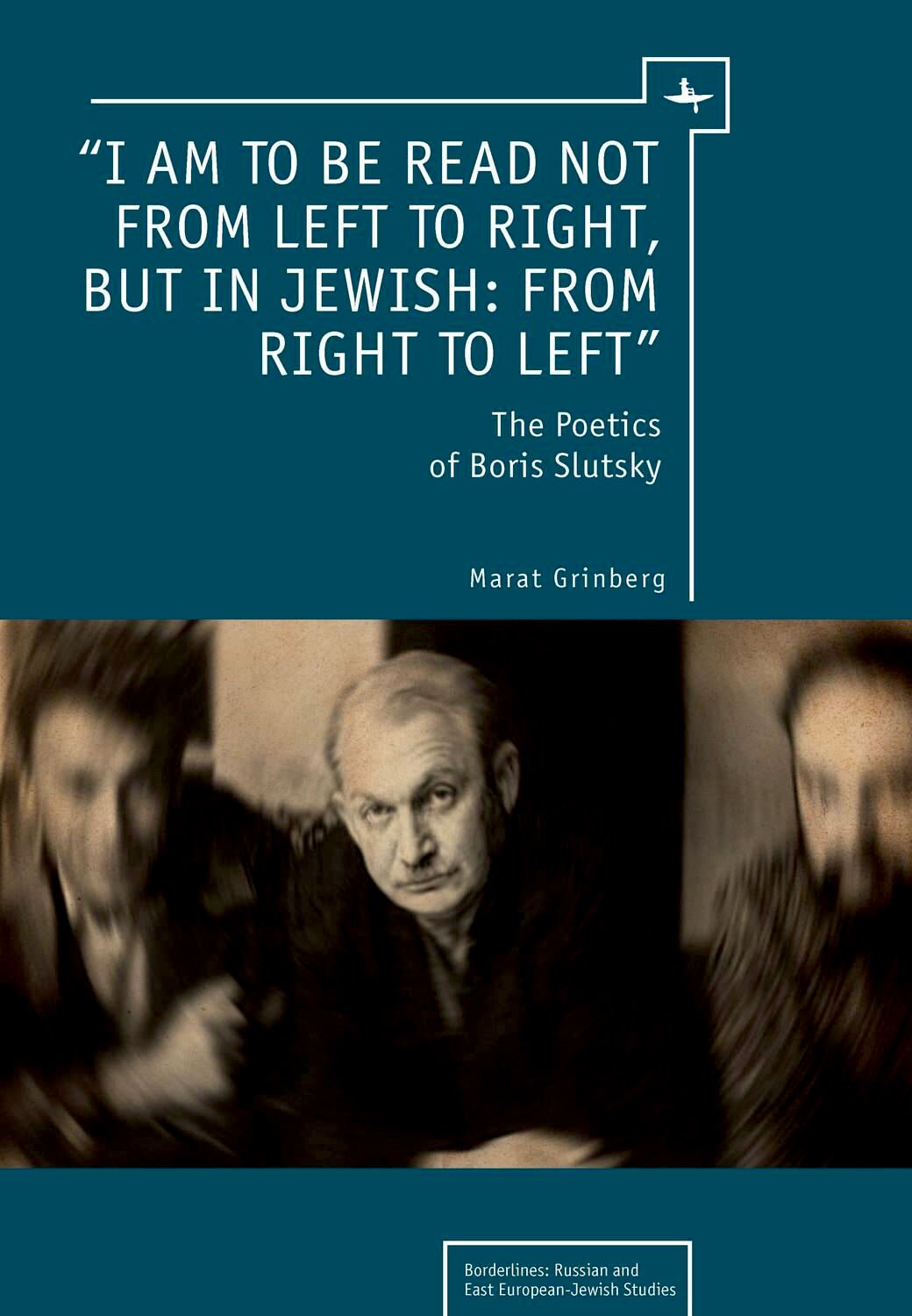
\I am to be read not from left to right, but in Jewish: from right to left\ : the poetics of Boris Slutsky
Boris Slutsky (1919-1986) is a major original figure of Russian poetry of the second half of the twentieth century, whose oeuvre has remained unexplored and unstudied. The first scholarly study of the poet, this fills this critical lacuna. It argues that Slutsky's body of work amounts to a Holy Writ of his times, which daringly fuses biblical prooftexts and stylistics with the language of late Russian Modernism and Soviet newspeak.
eBook

Lev Levanda, Russian Jewish Literature, and Literary Madness in 1880s Russia
This article attempts to reassess the last years of the writer Lev Levanda's life and work in order to consider new paradigms for understanding the influence of Russia's first pogroms (1881–82) on Jewish individuals. Conventionally, studies of the pogroms deal with the macro-picture: How did the Jewish people react? This research investigates the response of one person, Levanda, who previously tethered himself ideologically to the idea of integration in Russia. After 1882, he found himself without an ideal and mission. He flirted with several movements, including Ḥibbat Tsiyyon, but could not find a positive solution and consolation to his disappointments. The pogroms apparently contributed to the mental illness that killed him.
Journal Article

Jewish Women Writers in the Soviet Union
This book presents the lives and works of eleven Jewish women authors who lived in the Soviet Union, and who wrote and published their works in Russian. The works include poems, novels, memoirs and other writing. The book provides an overview of the life of each author, an overview of each author's literary output, and an assessment of each author's often conflicted view of her \"feminine self\" and of her \"Jewish self\".
At a time when the large Jewish population which lived within the Soviet Union was threatened under Stalin's prosecutions the book provides highly-informative insights into what it was like to be a Jewish woman in the Soviet Union in this period. The writers presented are: Alexandra Brustein, Elizaveta Polonskaia, Raisa Bloch, Hanna Levina, Ol'ga Ziv, Yulia Neiman, Rahil' Baumwohl', Margarita Alliger, Sarah Levina-Kul'neva, Sarah Pogreb and Zinaida Mirkina.
eBook

I Am to Be Read Not from Left to Right, but in Jewish
No detailed description available for \"\"I am to be read not from left to right, but in Jewish: from right to left\"\".
eBook

In a Maelstrom
The first concise history of Russian-Jewish literary prose, this book discusses Russian-Jewish literarature in four periods, analyzing the turning points (1881–82, 1897, 1917) and proposing that the selected epoch (1860–1940) represents a special strand that was unfairly left out of both Russian and Jewish national literatures. Based on theoretical sources on the subject, the book establishes the criteria of dual cultural affiliation, and in a survey of Russian-Jewish literature presents the pitfalls of assimilation and discusses different forms of anti-Semitism. After showing the oeuvre of 18 representative authors as a whole, the book analyzes a number of characteristic novels and short stories in terms of contemporary literary studies. Many texts discussed have not been reprinted since their first publication. The material offers indispensable information not only for comparative and literary studies but for multicultural, historical, ethnographic, Judaist, religious and linguistic investigations as well.
eBook
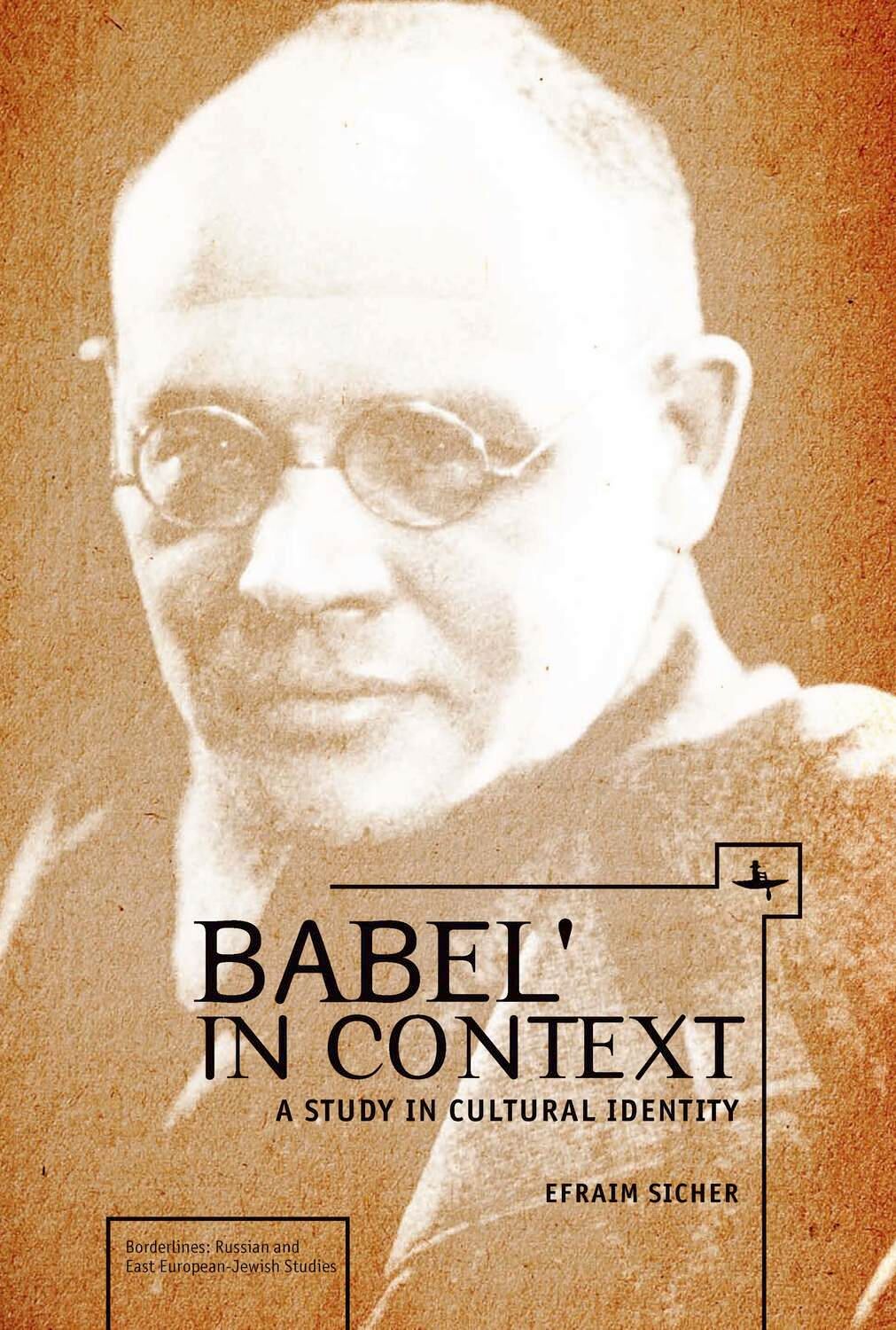
Babel' in Context
Isaak Babel (1894–1940) is arguably one of the greatest modern short story writers of the early twentieth century. Yet his life and work are shrouded in the mystery of who Babel was—an Odessa Jew who wrote in Russian, who came from one of the most vibrant centers of east European Jewish culture and all his life loved Yiddish and the stories of Sholom Aleichem.This is the first book in English to study the intertextuality of Babel’s work. It looks at Babel’s cultural identity as a case study in the contradictions and tensions of literary influence, personal loyalties, and ideological constraint. The complex and often ambivalent relations between the two cultures inevitably raise controversial issues that touch on the reception of Babel and other Jewish intellectuals in Russian literature, as well as the “Jewishness” of their work.
eBook