
Catalogue Search | MBRL


Are you sure you want to remove the book from the shelf?

{{itemTitle}}
5
result(s) for
"Russian-Israeli literature"
Sort by:

Studies in the History of Russian-Israeli Literature
This collection of essays covers a hundred-year history of Russian-language literature in Israel, including the pre-state period. Some of the studies are devoted to an overview of the literary process and the activities of its participants, others—to individual genres and movements. As a result, a complex and multifaceted picture emerges of a not quite fully defined, but very lively and dynamic community that develops in the most difficult conditions. The contributors trace the paths of Russian-Israeli prose, poetry and drama, various waves of avant-garde, fantasy, and critical thought. Today, in Russian-Israeli literature, the voices of writers of various generations and waves of repatriation are intertwined: from the \"seventies\" to the \"war
aliyah \" of the recent times. Both the Russian-Israeli authors and their critics often hold different opinions of their respective roles in Israel’s historical and literary storms. While disagreeing on the definition of their place on the map of modern culture, Russian-Israeli writers are united by a shared bond with the fate of the Jewish state.
eBook
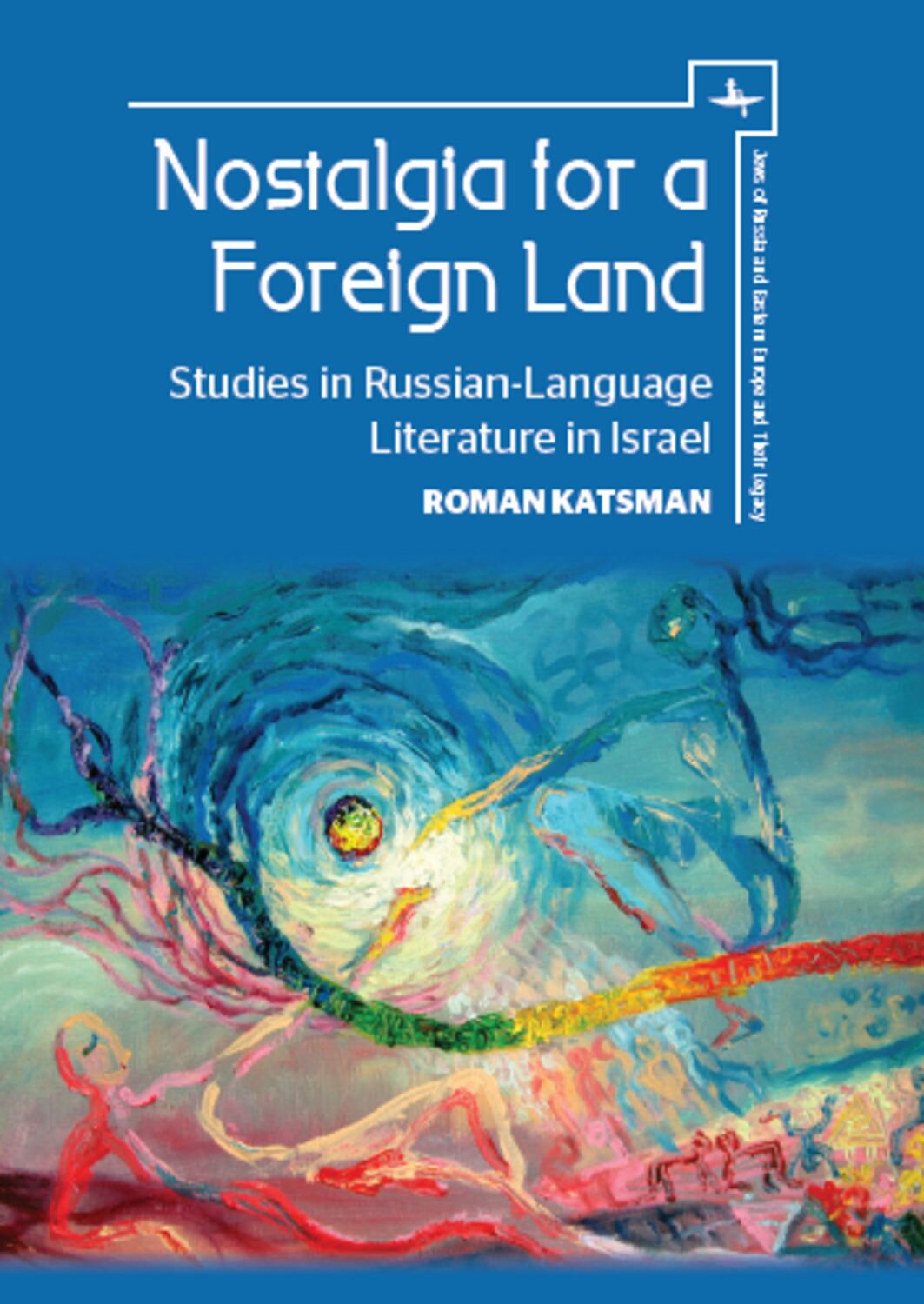
Nostalgia for a Foreign Land
This volume focuses on several Russian authors among many who immigrated to Israel with the \"big wave\" of 1990s or later, and whose largest part of the works was written in Israel: Dina Rubina, Nekod Singer, Elizaveta Mikhailichenko and Yury Nesis, and Mikhail Yudson.
eBook


Some Thoughts on Russian-Language Israeli Fiction: Introducing Dina Rubina
The article seeks to introduce Russian-language Israeli literature, specifically focusing on the works of one of its best-known representatives, Dina Rubina. The article traces the three most prominent themes in her works: the theater, the autobiography, and the cultural synthesis between post-Soviet and Israeli Jewish cultures accompanied by the complex linguistic relationships between Russian and Hebrew. Drawing on the Bakhtinian theories of the carnivalesque and of the humor associated with the lower bodily stratum, as well as on the topos ofteatrum mundiand the legacy of Russian drama, the article examines Rubina's commentary on Israeli society and culture. Her focus on the ridiculous and the absurd, on the permutations of masks and identities in Israel, and on the multifaceted immigrant experience is essential for understanding her writing.
Journal Article