
Catalogue Search | MBRL


Are you sure you want to remove the book from the shelf?

{{itemTitle}}
27
result(s) for
"Russkai︠a︡ pravoslavnai︠a︡ t︠s︡erkovʹ -- Russia"
Sort by:
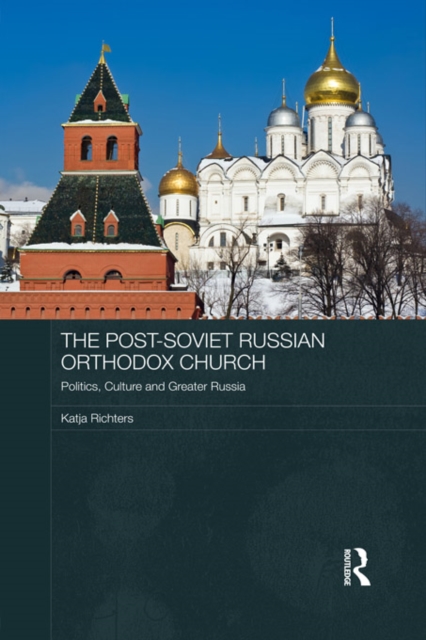
The Post-Soviet Russian Orthodox Church
In recent years, the Russian Orthodox Church has become a more prominent part of post-Soviet Russia. A number of assumptions exist regarding the Church's relationship with the Russian state: that the Church has always been dominated by Russia's secular elites; that the clerics have not sufficiently fought this domination and occasionally failed to act in the Church's best interest; and that the Church was turned into a Soviet institution during the twentieth century. This book challenges these assumptions. It demonstrates that church-state relations in post-communist Russia can be seen in a much more differentiated way, and that the church is not subservient, very much having its own agenda. Yet at the same time it is sharing the state's, and Russian society's nationalist vision.
The book analyses the Russian Orthodox Church's political culture, focusing on the Putin and Medvedev eras from 2000. It examines the upper echelons of the Moscow Patriarchate in relation to the governing elite and to Russian public opinion, explores the role of the church in the formation of state religious policy, and the church's role within the Russian military. It discusses how the Moscow Patriarchate is asserting itself in former Soviet republics outside Russia, especially in Estonia, Ukraine and Belarus. It concludes by re-emphasising that, although the church often mirrors the Kremlin's political preferences, it most definitely acts independently.
eBook

Orthodox Christianity in Imperial Russia
From sermons and clerical reports to personal stories of faith, this book of translated primary documents reveals the lived experience of Orthodox Christianity in 19th- and early 20th-century Russia. These documents allow us to hear the voices of educated and uneducated writers, of clergy and laity, nobles and merchants, workers and peasants, men and women, Russians and Ukrainians. Orthodoxy emerges here as a multidimensional and dynamic faith. Beyond enhancing our understanding of Orthodox Christianity as practiced in Imperial Russia, this thoughtfully edited volume offers broad insights into the relationship between religious narrative and social experience and reveals religion's central place in the formation of world views and narrative traditions.
eBook

Russian Orthodoxy under the Old Regime
In this book, which is especially suitable for course use, eleven scholars examine one of the most important institutions of imperial Russia, the Orthodox church in the two centuries before the Russian revolution. The material is arranged in two sections, the first devoted to Orthodoxy’s role in Russian social and cultural life and the second dealing with the curch’s relationship to the tsarist regime.
eBook

Russian Policy in the Orthodox East
The book is the first attempt to make a systematic analysis of the Russian ecclesiastical policy in the diocese of the Patriarchate of Constantinople in the period of 1878-1914. It is based mainly on unedited materials from the archives of Moscow, St. Petersburg, Sofia, Athens, Belgrade and Istanbul. Using the existing publications on the political aspects of the Eastern question, the author presents a new understanding of the role of Russia in the East Mediterranean region at the end of the 19th and the beginning of the 20th centuries.
eBook

Doubly Chosen
Doubly Chosen provides the first detailed study of a unique cultural and religious phenomenon in post-Stalinist Russia—the conversion of thousands of Russian Jewish intellectuals to Orthodox Christianity, first in the 1960s and later in the 1980s. These time periods correspond to the decades before and after the great exodus of Jews from the Soviet Union. Judith Deutsch Kornblatt contends that the choice of baptism into the Church was an act of moral courage in the face of Soviet persecution, motivated by solidarity with the values espoused by Russian Christian dissidents and intellectuals. Oddly, as Kornblatt shows, these converts to Russian Orthodoxy began to experience their Jewishness in a new and positive way. Working primarily from oral interviews conducted in Russia, Israel, and the United States, Kornblatt underscores the conditions of Soviet life that spurred these conversions: the virtual elimination of Judaism as a viable, widely practiced religion; the transformation of Jews from a religious community to an ethnic one; a longing for spiritual values; the role of the Russian Orthodox Church as a symbol of Russian national culture; and the forging of a new Jewish identity within the context of the Soviet dissident movement.
eBook

Religion and Enlightenment in Catherinian Russia
This valuable study explores the Russian Enlightenment with reference to the religious Enlightenment of the mid to late eighteenth century. Grounded in close reading of the sermons and devotional writings of Platon (Levshin), Court preacher and Metropolitan of Moscow, the book examines the blending of European ideas into the teachings of Russian Orthodoxy. Highlighting the interplay between Enlightenment thought and Orthodox enlightenment, Elise Wirtschafter addresses key questions of concern to religious Enlighteners across Europe: humanity's relationship to God and creation, the distinction between learning and enlightenment, the role of Christian love in authority relationships, the meaning of free will in a universe governed by Divine Providence, and the unity of church, monarchy, and civil society. Countering scholarship that depicts an Orthodox religious culture under assault from European modernity and Petrine absolutism, Wirtschafter emphasizes the ability of Russia's educated churchmen to assimilate and transform Enlightenment ideas. The intellectual and spiritual vitality of eighteenth-century Orthodoxy helps to explain how Russian policymakers and intellectuals met the challenge of European power while simultaneously coming to terms with the broad cultural appeal of the Enlightenment's universalistic human rights agenda. Religion and Enlightenment in Catherinian Russia defines the Russian Enlightenment as a response to the allure of European modernity, as an instrument of social control, and as the moral voice of an emergent independent society. Because Russia's enlightened intellectuals focused on the moral perfectibility of the individual human being, rather than social and political change, the originality of the Russian Enlightenment has gone unrecognized. This study corrects images of a superficial Enlightenment and crisis-ridden religious culture, arguing that in order to understand the humanistic sensibility and emphasis on individual dignity that permeate Russian intellectual history, and the history of the educated classes more broadly, it is necessary to bring Orthodox teachings into the discussion of Enlightenment thought. The result is a book that explains the distinctive origins of modern Russian culture while also allowing scholars to situate the Russian Enlightenment in European and global history.
eBook

The Orthodox Church and civil society in Russia
In the void left by the fall of Communism in Russia during the late twentieth century, can that country establish a true civil society? Many scholars have analyzed the political landscape to answer this question, but in The Orthodox Church and Civil Society in Russia, Wallace L. Daniel offers a unique perspective: within the church are individuals who hold the values and institutional models that can be vital in determining the direction of Russia in the twenty-first century.
Daniel tells the stories of a teacher and controversial parish priest, the leader of Russia’s most famous women’s monastery, a newspaper editor, and a parish priest at Moscow University to explore thoroughly and with a human voice the transformation from Communist country to a new social order. Daniel explores specific religious communities and the way they operate, their efforts to rebuild parish life, and the individuals who have devoted themselves to such goals. This is the level, Daniel shows, at which the reconstruction of Russia and the revitalization of Russian society is taking place.
This book is written for general readers interested in the intersection between politics, religion, and society, as well as for scholars.
eBook
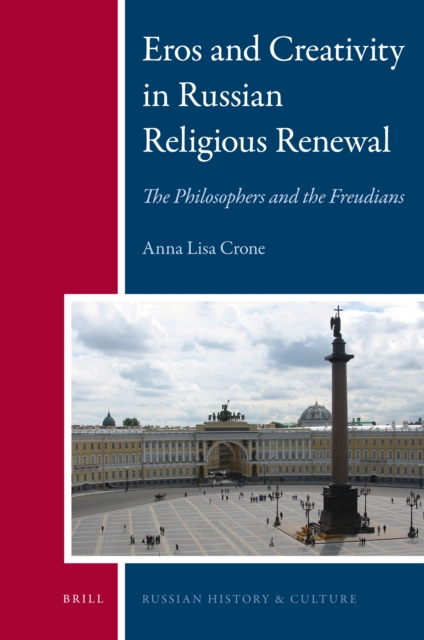
Eros and Creativity in Russian Religious Renewal
Eros and Creativity in Russian Religious Renewal explores a tradition of sublimation and the theories of creativity in works of the four greatest Russian religious thinkers: Solovyov, Rozanov, Berdyaev and Vysheslatsev. Crone's study adds what is missing to the few books that currently exist about the use of psychoanalysis in Russia. It shows how the sexual theories of creativity /sublimation of Solovyov and Rozanov led to the concepts of Berdyaev and Vysheslatsev.
eBook

Russia's Social Gospel
The late Russian Empire experienced rapid economic change, social
dislocation, and multiple humanitarian crises, enduring two wars,
two famines, and three revolutions. A \"pastoral activism\" took hold
as parish clergymen led and organized the response of Russia's
Orthodox Christians to these traumatic events. In Russia's
Social Gospel , Daniel Scarborough considers the roles played
by pastors in the closing decades of the failing tsarist empire and
the explosive 1917 revolutions. This volume draws upon extensive
archival research to examine the effects of the pastoral movement
on Russian society and the Orthodox Church. Scarborough argues that
the social work of parish clergymen shifted the focus of Orthodox
practice in Russia toward cooperative social activism as a
devotional activity. He furthers our understanding of Russian
Orthodoxy by illuminating the difficult position of parish priests,
who were charged with both spiritual and secular responsibilities
but were supported by neither church nor state. His nuanced look at
the pastorate shows how social and historical traumas shifted
perceptions of what being religious meant, in turn affecting how
the Orthodox Church organized itself, and contributed to Russia's
modernization.
eBook
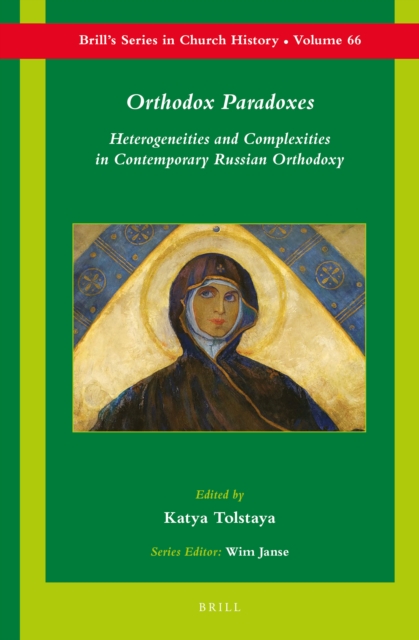
Orthodox Paradoxes
This book focuses on \"Orthodox paradoxes\" created by the dynamic between tradition and innovation within the Russian Orthodox Church. Nineteen contributions from renowned specialists tackle societal and theological aspects and implications of these paradoxes.
eBook