
Catalogue Search | MBRL


Are you sure you want to remove the book from the shelf?

{{itemTitle}}
26
result(s) for
"Rwanda Fiction."
Sort by:

In the shadow of 10,000 hills : a novel
\"In 1968, a disillusioned and heartbroken Lillian Carlson left Atlanta after the assassination of Martin Luther King. She found meaning in the hearts of orphaned African children and cobbled together her own small orphanage in the Rift Valley alongside the lush forests of Rwanda.Three decades later, in New York City, Rachel Shepherd, lost and heartbroken herself, embarks on a journey to find the father who abandoned her as a young child, determined to solve the enigma of Henry Shepherd, a now-famous photographer. When an online search turns up a clue to his whereabouts, Rachel travels to Rwanda to connect with an unsuspecting and uncooperative Lillian. While Rachel tries to unravel the mystery of her father's disappearance, she finds unexpected allies in an ex-pat doctor running from his past and a young Tutsi woman who lived through a profound experience alongside her father. Set amongst the gaping wounds of a healing country, follow the intertwining stories of three women who discover something unexpected: grace when there can be no forgiveness.\" -- Amazon.com
Book

Murambi, the book of bones
[W]hat is true of Rwanda is true in each of us; we all share in
Africa. -- L'Harmattan [This novel] comes closer than
have many political scientists or historians to trying to understand why this small
country... sank in such appalling violence. -- Radio France
International In April of 1994, nearly a million Rwandans were
killed in what would prove to be one of the swiftest, most terrifying killing sprees
of the 20th century. In Murambi, The Book of Bones, Boubacar Boris Diop comes face
to face with the chilling horror and overwhelming sadness of the tragedy. Now, the
power of Diop's acclaimed novel is available to English-speaking readers through
Fiona Mc Laughlin's crisp translation. The novel recounts the story of a Rwandan
history teacher, Cornelius Uvimana, who was living and working in Djibouti at the
time of the massacre. He returns to Rwanda to try to comprehend the death of his
family and to write a play about the events that took place there. As the novel
unfolds, Cornelius begins to understand that it is only our humanity that will save
us, and that as a writer, he must bear witness to the atrocities of the
genocide. From the novel: If only by the way people
are walking, you can see that tension is mounting by the minute. I can feel it
almost physically. Everyone is running or at least hurrying about. I meet more and
more passersby who seem to be walking around in circles. There seems to be another
light in their eyes. I think of the fathers who have to face the anguished eyes of
their children and who can't tell them anything. For them, the country has become an
immense trap in the space of just a few hours. Death is on the prowl. They can't
even dream of defending themselves. Everything has been meticulously prepared for a
long time: the administration, the army, and the [militia] are going to combine
forces to kill, if possible, every last one of them.
eBook

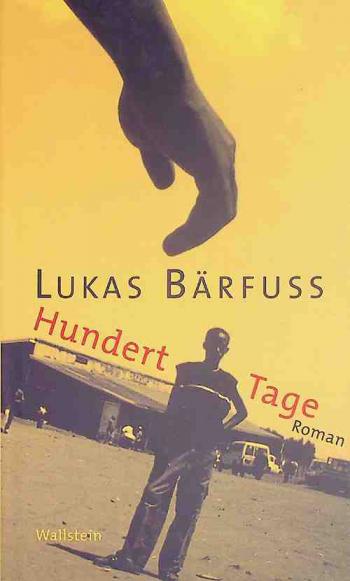
One hundred days
When Swiss aid worker David Hohl arrives in Rwanda in 1990, he wants to know what it feels like to make a difference. Instead, he finds himself among expats, living a life of postcolonial privilege and boredom, and he begins to suspect that the agency is more concerned with political expedience than improving lives. But are his own motives any more noble? When civil war breaks out and David goes into hiding, he is forced to examine his own relationship to the country he wants to help and to the cosmopolitan Rwandan woman he wants to possess. As the genocide rages over the course of one hundred desperate days, the clear line David has always drawn between idealism and complicity quickly begins to blur.--P. [4] of cover.
BOOK

Rwanda Genocide Stories
During what has become officially known as the genocide against the Tutsi, as many as one million Rwandan people were brutally massacred between April and July 1994. This book presents a critical study of fictional responses by authors inside and outside Rwanda to the 1994 genocide. Focusing on a large and original corpus of creative writing by African authors, including writers from Rwanda, Rwanda Genocide Stories: Fiction After 1994 examines the positionality of authors and their texts in relation to the genocide. How do issues of ‘ethnicity’, nationality, geographical location and family history affect the ways in which creative writers respond to what happened in 1994? And how do such factors lead to authors and their texts being positioned by others? The book is organized around the principal subject positions created by the genocide, categories that have particular connotations and have become fraught with political tension and ambiguity in the context of post-genocide Rwanda. Through analysis of the figures of tourists, witnesses, survivors, victims and perpetrators, the book identifies the ways in which readers of genocide stories are compelled to reevaluate their knowledge of Rwanda and take an active role in commemorative processes: as self-critical tourists, ethical witnesses, judges or culpable bystanders, we are encouraged to acknowledge and assume our own responsibility for what happened in 1994.
eBook

The past ahead : a novel
\"The Past Ahead\" is the story of the destinies of two people after their experiences of the genocide in Rwanda. Isaro is orphaned, exiled, and now returned to her native country. Niko is a character in a novel that Isaro writes to help her understand her country's recent horrific past. Isaro's quest to recover the memory of the life she has lost is haunted by her nightmare imaginings, whose horror is given expression through Niko, a mute social outcast. When an army intent on massacre reaches his village, the once gentle young man is forced to become a killer. After the fighting ends, Niko retreats to a cave that he shares with a family of gorillas to try to escape the burden of his guilt. In his solitude, he is plagued with painful memories that will not leave him. As Isaro writes Niko's story, she succumbs to the sadness of death, violence, and the dreadful reminders of her terrible past. Stunning and powerfully written, Gatore's novel lays bare the unfathomable human cost of this international tragedy.
eBook


Memory and the Popular: Rwanda in Mukoma Wa Ngugi’s Fiction
This essay locates the valences of the popular in Mukoma Wa Ngugi’s fiction to understand how Rwanda as a background for a thriller fits into a longer tradition of African popular genres that represent the aftermath of violent conflict. The question of whether Nairobi Heat and Black Star Nairobi attempt to illuminate the genocide or only evoke it as background shapes the approach to the popular. The essay then identifies ways in which Mukoma’s novels are also in conversation with the more canonical works of anticolonial “writing back” to empire and in fact perform an unnarration , or blotting out, of that discourse and the historical dynamics that inform it. Mukoma does not divorce himself entirely from this older literary project, which exercises a disruptive influence in the popular as he configures it. Finally, the essay examines the relation among action, morality, and sentimentality to identify how Mukoma reclaims the plot of intervention from the humanitarian framing of the failure of international intervention.
Journal Article

Bare life as a development/postcolonial problematic
Development studies and postcolonial studies conceptualize and examine the Third World in different ways, yet works associated with the two fields can usefully be combined to illuminate key issues in our time. This article focuses on postcolonial transitions in parts of Africa where the state actively injures or kills a local citizenry, sometimes in the name of development. Using Zimbabwe and Rwanda as very different examples of such transitions, and drawing on selected development and postcolonial writings - fact and 'fiction' - I argue for framing such cases as examples of the 'bare life', 'camp' biopolitics articulated by Georgio Agamben. These concepts enable us to see the widening spaces of exception to law that a postcolonial state can create in periods of crisis and defend on the grounds of post-coloniality, that is, as states always already injured by colonialism and its biopolitical development project. The terrain such states enter might be termed 'fascism' - a location of political economy that development studies has generally neglected in recent years but that novels depicting postcolonial contexts can make vivid.
Journal Article