
Catalogue Search | MBRL


Are you sure you want to remove the book from the shelf?

{{itemTitle}}
108,135
result(s) for
"SAUDI ARABIA"
Sort by:
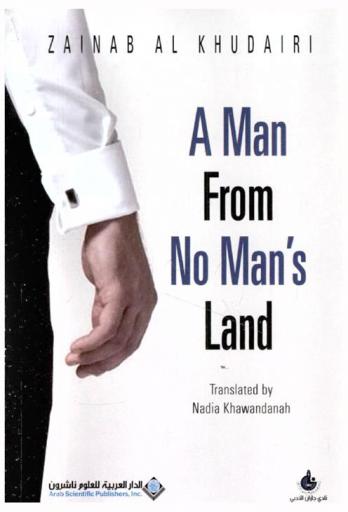

Oil and Security Policies
In Oil and security: Saudi Arabia 1950-2012 Islam Y. Qasem explains how the world's largest oil producer and exporter, Saudi Arabia, used oil resources to maximize internal and external security since the mid-twentieth century.
eBook

Changing Saudi Arabia : art, culture, and society in the Kingdom
Explores the role of Saudi Arabia's arts movement in promoting progressive social reform in the kingdom.
Book

A Most Masculine State
Women in Saudi Arabia are often described as either victims of patriarchal religion and society or successful survivors of discrimination imposed on them by others. Madawi Al-Rasheed's new book goes beyond these conventional tropes to probe the historical, political and religious forces that have, across the years, delayed and thwarted their emancipation. The book demonstrates how, under the patronage of the state and its religious nationalism, women have become hostage to contradictory political projects that on the one hand demand female piety, and on the other hand encourage modernity. Drawing on state documents, media sources and interviews with women from across Saudi society, the book examines the intersection between gender, religion and politics to explain these contradictions and to show that, despite these restraints, vibrant debates on the question of women are opening up as the struggle for recognition and equality finally gets under way.
eBook
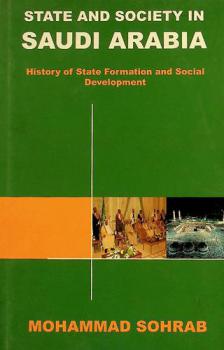

Eunuchs and sacred boundaries in Islamic society
In this thought-provoking interdisciplinary work, Shaun Marmon describes how eunuchs, as a category of people who embodied ambiguity, both defined and mediated critical thresholds of moral and physical space in the household, in the palace and in the tomb of pre-modern Islamic society. The author's central focus is on the sacred society of eunuchs who guarded the tomb of the Prophet Muhammad in Medina for over six centuries and whose last representatives still perform many of their time honored rituals to this day. Through Marmon's account, the \"sacred\" eunuchs of Medina become historical guides into uncharted dimensions of Islamic ritual, political symbolism, social order, gender and time.
eBook

Erythropoietin in traumatic brain injury (EPO-TBI): a double-blind randomised controlled trial
Erythropoietin might have neurocytoprotective effects. In this trial, we studied its effect on neurological recovery, mortality, and venous thrombotic events in patients with traumatic brain injury.
Erythropoietin in Traumatic Brain Injury (EPO-TBI) was a double-blind, placebo-controlled trial undertaken in 29 centres (all university-affiliated teaching hospitals) in seven countries (Australia, New Zealand, France, Germany, Finland, Ireland, and Saudi Arabia). Within 24 h of brain injury, 606 patients were randomly assigned by a concealed web-based computer-generated randomisation schedule to erythropoietin (40 000 units subcutaneously) or placebo (0·9% sodium chloride subcutaneously) once per week for a maximum of three doses. Randomisation was stratified by severity of traumatic brain injury (moderate vs severe) and participating site. With the exception of designated site pharmacists, the site dosing nurses at all sites, and the pharmacists at the central pharmacy in France, all study personnel, patients, and patients' relatives were masked to treatment assignment. The primary outcome, assessed at 6 months by modified intention-to-treat analysis, was improvement in the patients' neurological status, summarised as a reduction in the proportion of patients with an Extended Glasgow Outcome Scale (GOS-E) of 1–4 (death, vegetative state, and severe disability). Two equally spaced preplanned interim analyses were done (after 202 and 404 participants were enrolled). This study is registered with ClinicalTrials.gov, number NCT00987454.
Between May 3, 2010, and Nov 1, 2014, 606 patients were enrolled and randomly assigned to erythropoietin (n=308) or placebo (n=298). Ten of these patients (six in the erythropoietin group and four in the placebo group) were lost to follow up at 6 months; therefore, data for the primary outcome analysis was available for 596 patients (302 in the erythropoietin group and 294 in the placebo group). Compared with placebo, erythropoietin did not reduce the proportion of patients with a GOS-E level of 1–4 (134 [44%] of 302 patients in the erythropoietin group vs 132 [45%] of 294 in the placebo group; relative risk [RR] 0·99 [95% CI 0·83–1·18], p=0·90). In terms of safety, erythropoietin did not significantly affect 6-month mortality versus placebo (32 [11%] of 305 patients had died at 6 months in the erythropoietin group vs 46 [16%] of 297 [16%] in the placebo group; RR 0·68 [95% CI 0·44–1·03], p=0·07) or increase the occurrence of deep venous thrombosis of the lower limbs (48 [16%] of 305 vs 54 [18%] of 298; RR 0·87 [95% CI 0·61–1·24], p=0·44).
Following moderate or severe traumatic brain injury, erythropoietin did not reduce the number of patients with severe neurological dysfunction (GOS-E level 1–4) or increase the incidence of deep venous thrombosis of the lower limbs. The effect of erythropoietin on mortality remains uncertain.
The National Health and Medical Research Council and the Transport Accident Commission.
Journal Article


The psychological impact of COVID-19 pandemic on the general population of Saudi Arabia
The severe acute respiratory syndrome coronavirus 2 (SARS-CoV-2) is an emerging infection causing a widely spread pandemic of Coronavirus disease 2019 (COVID-19). The current COVID-2019 pandemic is prompting fear of falling sick, dying, helplessness and stigma, urgent and timely understanding of mental health status is needed to help the community. Our investigation designed to survey the general population in Saudi Arabia to assess the degree of psychological impact during the pandemic.
During the early stage of the outbreak, we conducted an online-based survey using a snowballing sample technique. The surveys collected data about several aspects of participant sociodemographic, knowledge, concerns, psychological impact, and mental health status. We assessed the psychological impact and mental health status using the Impact of Event Scale-Revised (IES-R), and the Depression, Anxiety, and Stress Scale (DASS-21).
Our survey recruited 1160 respondents of the general public of Saudi Arabia. Of them, 23.6% reported moderate or severe psychological impact of the outbreak, 28.3%,24%, and 22.3% reported moderate to severe depressive, anxiety, and stress symptoms, respectively. Females reported IES-R (B: 5.46, 95% CI: 3.61 to 7.31) and DASS subscales B coefficient ranged from 1.65 to 2.63, along with high-school students, working in the medical field, and poor self-reported health status was significantly associated with a high level of IES-R and DASS scales (p < .05). Experiencing breathing difficulty and dizziness showed a stronger association with higher IES-R and DASS subscales than other somatic symptoms (e.g., headache and fever);(p < .001). Respondents who practiced specific preventative measures (e.g., hand washing, social distancing) demonstrated a protective effect against stress, anxiety, and depression symptoms. Social distancing appeared to be protective on stress and anxiety subscales (B: -1.49, 95% CI: −2.79 to −0.19),(B: -1.53, 95% CI: −2.50 to −0.57),respectively; and hand hygiene on depression subscale (B: -2.43, 95% CI: −4.44 to −0.42).
Throughout the early stage of the COVID-19 outbreak in Saudi Arabia, the results showed that nearly one-fourth of the sampled general population experienced moderate to severe psychological impact. Following specific precautionary measures appeared to have a protective effect on the individual's mental health. Our findings can be used to construct psychological interventions directed toward vulnerable populations and to implement public mental health strategies in the early stages of the outbreak.
•There is Limited data about psychological impact during the COVID-19 pandemic in Saudi Arabia•Health care workers, females, were associated with higher levels of stress, anxiety, and depression symptoms.•Students and those with poor self-reported health status reported higher levels of stress, anxiety, and depression symptoms.•Participants with reported mental disorders (10.5%) showed high scores on all DASS and IER-S scales.•Preventative measures demonstrated a protective effect against, stress, anxiety, and depression symptoms
Journal Article