
Catalogue Search | MBRL


Are you sure you want to remove the book from the shelf?

{{itemTitle}}
290,792
result(s) for
"SCIENCE / Chemistry / Analytic"
Sort by:

Secondary Ion Mass Spectrometry
This book serves as a practical reference for anyone involved in any form of Secondary Ion Mass Spectrometry (SIMS). This is presented in a concise yet comprehensive manner to those wanting to know more about the technique in general as opposed to advanced sample specific procedures/applications.
eBook

Interlaboratory Comparison of Branched GDGT Temperature and pH Proxies Using Soils and Lipid Extracts
Ratios of glycerol dialkyl glycerol tetraethers (GDGT), which are membrane lipids of bacteria and archaea, are at the base of several paleoenvironmental proxies. They are frequently applied to soils as well as lake‐ and marine sediments to generate records of past temperature and soil pH. To derive meaningful environmental information from these reconstructions, high analytical reproducibility is required. Based on submitted results by 39 laboratories from across the world, which employ a diverse range of analytical and quantification methods, we explored the reproducibility of brGDGT‐based proxies (MBT′5ME, IR, and #ringstetra) measured on four soil samples and four soil lipid extracts. Correct identification and integration of 5‐ and 6‐methyl brGDGTs is a prerequisite for the robust calculation of proxy values, but this can be challenging as indicated by the large inter‐interlaboratory variation. The exclusion of statistical outliers improves the reproducibility, where the remaining uncertainty translates into a temperature offset from median proxy values of 0.3–0.9°C and a pH offset of 0.05–0.3. There is no apparent systematic impact of the extraction method and sample preparation steps on the brGDGT ratios. Although reported GDGT concentrations are generally consistent within laboratories, they vary greatly between laboratories. This large variability in brGDGT quantification may relate to variations in ionization efficiency or specific mass spectrometer settings possibly impacting the response of brGDGTs masses relative to that of the internal standard used. While ratio values of GDGT are generally comparable, quantities can currently not be compared between laboratories. Key Points 39 laboratories participated in a round robin to determine the reproducibility of glycerol dialkyl glycerol tetraethers (GDGT) proxy values and quantities Peak selection impacts the ratio values and there is no apparent systematic impact of the extraction method and sample preparation steps Quantification of GDGTs remains a problem, and comparison of GDGT concentrations between laboratories requires further method development
Journal Article

New biomarkers of coffee consumption identified by the non-targeted metabolomic profiling of cohort study subjects
Coffee contains various bioactives implicated with human health and disease risk. To accurately assess the effects of overall consumption upon health and disease, individual intake must be measured in large epidemiological studies. Metabolomics has emerged as a powerful approach to discover biomarkers of intake for a large range of foods. Here we report the profiling of the urinary metabolome of cohort study subjects to search for new biomarkers of coffee intake. Using repeated 24-hour dietary records and a food frequency questionnaire, 20 high coffee consumers (183-540 mL/d) and 19 low consumers were selected from the French SU.VI.MAX2 cohort. Morning spot urine samples from each subject were profiled by high-resolution mass spectrometry. Partial least-square discriminant analysis of multidimensional liquid chromatography-mass spectrometry data clearly distinguished high consumers from low via 132 significant (p-value<0.05) discriminating features. Ion clusters whose intensities were most elevated in the high consumers were annotated using online and in-house databases and their identities checked using commercial standards and MS-MS fragmentation. The best discriminants, and thus potential markers of coffee consumption, were the glucuronide of the diterpenoid atractyligenin, the diketopiperazine cyclo(isoleucyl-prolyl), and the alkaloid trigonelline. Some caffeine metabolites, such as 1-methylxanthine, were also among the discriminants, however caffeine may be consumed from other sources and its metabolism is subject to inter-individual variation. Receiver operating characteristics curve analysis showed that the biomarkers identified could be used effectively in combination for increased sensitivity and specificity. Once validated in other cohorts or intervention studies, these specific single or combined biomarkers will become a valuable alternative to assessment of coffee intake by dietary survey and finally lead to a better understanding of the health implications of coffee consumption.
Journal Article
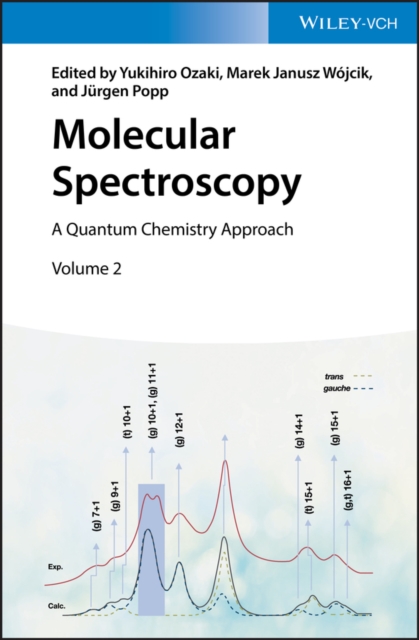
Molecular Spectroscopy
Uniquely creates a strong bridge between molecular spectroscopy and quantum chemistry This two-volume book consists of many reviews reporting new applications of quantum chemistry to molecular spectroscopy (Raman, infrared, near-infrared, terahertz, far-ultraviolet, etc.).
eBook

Untargeted Mass Spectrometry Lipidomics identifies correlation between serum sphingomyelins and plasma cholesterol
Background
Lipoproteins are major players in the development and progression of atherosclerotic plaques leading to coronary stenosis and myocardial infarction. Epidemiological, genetic and experimental observations have implicated the association of sphingolipids and intermediates of sphingolipid synthesis in atherosclerosis. We aimed to investigate relationships between quantitative changes in serum sphingolipids, the regulation of the metabolism of lipoproteins (LDL, HDL), and endophenotypes of coronary artery disease (CAD).
Methods
We carried out untargeted liquid chromatography – mass spectrometry (UPLC-MS) lipidomics of serum samples of subjects belonging to a cross-sectional study and recruited on the basis of absence or presence of angiographically-defined CAD, and extensively characterized for clinical and biochemical phenotypes.
Results
Among the 2998 spectral features detected in the serum samples, 1328 metabolic features were significantly correlated with at least one of the clinical or biochemical phenotypes measured in the cohort. We found evidence of significant associations between 34 metabolite signals, corresponding to a set of sphingomyelins, and serum HDL cholesterol. Many of these metabolite associations were also observed with serum LDL and total cholesterol levels but not as much with serum triglycerides.
Conclusion
Among patients with CAD, sphingolipids in the form of sphingomyelins are directly correlated with serum levels of lipoproteins and total cholesterol. Results from this study support the fundamental role of sphingolipids in modulating lipid serum levels, highlighting the importance to identify novel targets in the sphingolipid metabolic pathway for anti-atherogenic therapies.
Journal Article

Artificial Neural Networks in Biological and Environmental Analysis
Based on our knowledge of the functioning human brain, ANNs (artificial neural networks) serve as a modern paradigm for computing. Drawing on the author's substantial experience, this book provides a comprehensive introduction and practical guide to the development, optimization, and application of ANNs in modern environmental and biological analysis. Presenting basic principles together with simulated biological and environmental data sets and real applications in the field, this volume helps scientists use the power of the ANN model to explain physical concepts and to demonstrate complex natural processes.
eBook

A simple in situ synthesis of iron oxide magnetic nanoparticles embedded in thermosensitive polymer for DNA capture
In this study, we report a simple one-pot synthesis of iron oxide nanoparticles (IONPs) modified with thermoresponsive polymers potentially applicable for nucleic acid capture. Ferrous (Fe2+) and ferric (Fe3+) ions were coprecipitated to a dispersion of previously prepared poly(N-isopropylacrylamide-co-2-aminoethyl methacrylate) P(NIPAAm-co-AEM) for in situ synthesis of magnetite (Fe3O4) and concurrent surface modification of Fe3O4 with the polymer to obtain magnetic nanocomposites. Fourier-transform infrared (FTIR) spectroscopy analysis reveals the surface modification of Fe3O4 with P(NIPAAm-co-AEM) and P(NIPAAm) as functional and control polymers, respectively. Fe3O4@P(NIPAAm-co-AEM) and Fe3O4@P(NIPAAm) nanocomposites’ surfaces contain 7.5 and 2.3 wt% of immobilized polymers, respectively. Vibrating sample magnetometry (VSM) result indicates a high saturation of magnetization value, 75 emu/g, for Fe3O4@P(NIPAAm-co-AEM) nanocomposites. The hydrodynamic diameter of Fe3O4@P(NIPAAm-co-AEM) in water changes depending on pH and temperature. A study for deoxyribonucleic acid (DNA) capture ability of Fe3O4@P(NIPAAm-co-AEM) nanocomposites shows a maximum 18.5 mg/g of DNA can be adsorbed on Fe3O4@P(NIPAAm-co-AEM).
Journal Article

Hydrophilic Interaction Chromatography
\"This book provides background information, guidance for method development, and a discussion of applications in the field of hydrophilic interaction chromatography (HILIC.) The book serves as a valuable reference tool for scientists confronted with an analysis problem involving polar compounds to determine if HILIC would be a good choice to pursue and helps them in choosing initial experimental conditions. The book gives a detailed description of the HILIC retention mechanisms and specific information regarding application areas spanning a wide range of industries.Topics include: HILIC retention mechanisms, Stationary Phases for HILIC, HILIC Method Development, Pharmaceutical and Other Applications of HILIC, HILIC for Drug Discovery, HILIC in Two-Dimensional Separations\"--
eBook

Handbook of Rare Earth Elements
The Handbook of Rare Earth Elements focuses on the essential role of modern instrumental analytics in the recycling, purification and analysis of rare earth elements.Due to their numerous applications, e.g.
eBook
Theoretical Mass Spectrometry
This book discusses fragmentation mechanisms of molecules under mass spectrometry conditions and the resulting peaks observed in ESI-MS/MS experiments.The underlying principles are used to understand everything from small molecules to biological poly-peptides collision induced dissociation.
eBook