
Catalogue Search | MBRL


Are you sure you want to remove the book from the shelf?

{{itemTitle}}
78,352
result(s) for
"SCIENCE / Chemistry / Inorganic"
Sort by:

Essentials of Inorganic Materials Synthesis
This compact handbook describes all the important methods of synthesis employed today for synthesizing inorganic materials. Some features:
* Focuses on modern inorganic materials with applications in nanotechnology, energy materials, and sustainability
* Synthesis is a crucial component of materials science and technology; this book provides a simple introduction as well as an updated description of methods
* Written in a very simple style, providing references to the literatureto get details of the methods of preparation when required
eBook

Phosphorus Chemistry
The book is the first thorough study of the role of phosphorus chemistry in the origin of life. This book starts with depiction of the phosphorus role in life creation and evolution. Then it outlines in vital processes how different phosphorus-containing compounds participate as biomarker in life evolution. Written by renowned scientists, it is suitable for researchers and students in organic phosphorus chemistry and biochemistry.
eBook

Direct observation of mineral–organic composite formation reveals occlusion mechanism
Manipulation of inorganic materials with organic macromolecules enables organisms to create biominerals such as bones and seashells, where occlusion of biomacromolecules within individual crystals generates superior mechanical properties. Current understanding of this process largely comes from studying the entrapment of micron-size particles in cooling melts. Here, by investigating micelle incorporation in calcite with atomic force microscopy and micromechanical simulations, we show that different mechanisms govern nanoscale occlusion. By simultaneously visualizing the micelles and propagating step edges, we demonstrate that the micelles experience significant compression during occlusion, which is accompanied by cavity formation. This generates local lattice strain, leading to enhanced mechanical properties. These results give new insight into the formation of occlusions in natural and synthetic crystals, and will facilitate the synthesis of multifunctional nanocomposite crystals.
The occlusion of biomacromolecules can endow biominerals with enhanced mechanical properties. Here, the authors use
in situ
atomic force microscopy and micromechanical simulations to trace micelle incorporation in calcite to shed light on the mechanism of occlusion and cavity formation.
Journal Article

Hypervalent Iodine Chemistry
Hypervalent Iodine Chemistry is the first comprehensive text covering all of the main aspects of the chemistry of organic and inorganic polyvalent iodine compounds, including applications in chemical research, medicine, and industry. Providing a comprehensive overview of the preparation, properties, and synthetic applications of this important class of reagents, the text is presented in the following way: The introductory chapter provides a historical background and describes the general classification of iodine compounds, nomenclature, hypervalent bonding, structural features, and the principles of reactivity of polyvalent iodine compounds. Chapter 2 gives a detailed description of the preparative methods and structural features of all known classes of organic and inorganic derivatives of polyvalent iodine. Chapter 3, the key chapter of the book, deals with the many applications of hypervalent iodine reagents in organic synthesis. Chapter 4 describes the most recent achievements in hypervalent iodine catalysis. Chapter 5 deals with recyclable polymer-supported and nonpolymeric hypervalent iodine reagents. Chapter 6 covers the \"green\" reactions of hypervalent iodine reagents under solvent-free conditions or in aqueous solutions. The final chapter provides an overview of the important practical applications of polyvalent iodine compounds in medicine and industry. This book is aimed at all chemists interested in iodine compounds, including academic and industrial researchers in inorganic, organic, physical, medicinal, and biological chemistry. It will be particularly useful to synthetic organic and inorganic chemists, including graduate and advanced undergraduate students. It comprehensively covers the green chemistry aspects of hypervalent iodine chemistry, making it especially useful for industrial chemists.
eBook

Progress in Inorganic Chemistry, Volume 58
This series provides inorganic chemists and materials scientists with a forum for critical, authoritative evaluations of advances in every area of the discipline.Volume 58 continues to report recent advances with a significant, up-to-date selection of contributions by internationally-recognized researchers.
eBook

Protist diversity and community complexity in the rhizosphere of switchgrass are dynamic as plants develop
Background
Despite their widespread distribution and ecological importance, protists remain one of the least understood components of the soil and rhizosphere microbiome. Knowledge of the roles that protists play in stimulating organic matter decomposition and shaping microbiome dynamics continues to grow, but there remains a need to understand the extent to which biological and environmental factors mediate protist community assembly and dynamics. We hypothesize that protists communities are filtered by the influence of plants on their rhizosphere biological and physicochemical environment, resulting in patterns of protist diversity and composition that mirror previously observed diversity and successional dynamics in rhizosphere bacterial communities.
Results
We analyzed protist communities associated with the rhizosphere and bulk soil of switchgrass (SG) plants (
Panicum virgatum
) at different phenological stages, grown in two marginal soils as part of a large-scale field experiment. Our results reveal that the diversity of protists is lower in rhizosphere than bulk soils, and that temporal variations depend on soil properties but are less pronounced in rhizosphere soil. Patterns of significantly prevalent protists groups in the rhizosphere suggest that most protists play varied ecological roles across plant growth stages and that some plant pathogenic protists and protists with omnivorous diets reoccur over time in the rhizosphere. We found that protist co-occurrence network dynamics are more complex in the rhizosphere compared to bulk soil. A phylogenetic bin-based null model analysis showed that protists’ community assembly in our study sites is mainly controlled by homogenous selection and dispersal limitation, with stronger selection in rhizosphere than bulk soil as SG grew and senesced.
Conclusions
We demonstrate that environmental filtering is a dominant determinant of overall protist community properties and that at the rhizosphere level, plant control on the physical and biological environment is a critical driver of protist community composition and dynamics. Since protists are key contributors to plant nutrient availability and bacterial community composition and abundance, mapping and understanding their patterns in rhizosphere soil is foundational to understanding the ecology of the root-microbe-soil system.
5stCu76cmNPcXaeF7W4bD3
Video Abstract
Journal Article
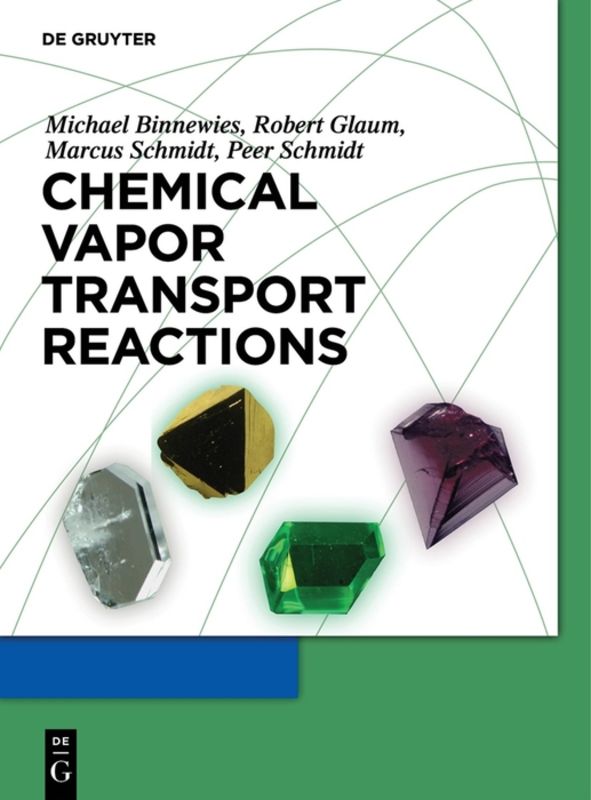
Chemical Vapor Transport Reactions
This comprehensive handbook covers the diverse aspects of chemical vapor transport reactions from basic research to important practical applications. The book begins with an overview of models for chemical vapor transport reactions and then proceeds to treat the specific chemical transport reactions for the elements, halides, oxides, sulfides, selenides, tellurides, pnictides, among others. Aspects of transport from intermetallic phases, the stability of gas particles, thermodynamic data, modeling software and laboratory techniques are also covered. Selected experiments using chemical vapor transport reactions round out the work, making this book a useful reference for researchers and instructors in solid state and inorganic chemistry.
eBook

Perovskite-type catalytic materials for environmental applications
Perovskites are mixed-metal oxides that are attracting much scientific and application interest owing to their low price, adaptability, and thermal stability, which often depend on bulk and surface characteristics. These materials have been extensively explored for their catalytic, electrical, magnetic, and optical properties. They are promising candidates for the photocatalytic splitting of water and have also been extensively studied for environmental catalysis applications. Oxygen and cation non-stoichiometry can be tailored in a large number of perovskite compositions to achieve the desired catalytic activity, including multifunctional catalytic properties. Despite the extensive uses, the commercial success for this class of perovskite-based catalytic materials has not been achieved for vehicle exhaust emission control or for many other environmental applications. With recent advances in synthesis techniques, including the preparation of supported perovskites, and increasing understanding of promoted substitute perovskite-type materials, there is a growing interest in applied studies of perovskite-type catalytic materials. We have studied a number of perovskites based on Co, Mn, Ru, and Fe and their substituted compositions for their catalytic activity in terms of diesel soot oxidation, three-way catalysis, N
2
O decomposition, low-temperature CO oxidation, oxidation of volatile organic compounds, etc. The enhanced catalytic activity of these materials is attributed mainly to their altered redox properties, the promotional effect of co-ions, and the increased exposure of catalytically active transition metals in certain preparations. The recent lowering of sulfur content in fuel and concerns over the cost and availability of precious metals are responsible for renewed interest in perovskite-type catalysts for environmental applications.
Journal Article


Inorganic Substances. 2014. Bibliography
By browsing about 10 000 000 scientific articles of over 200 major journals some 200 000 publications were selected. The extracted data is part of the following material research fields: crystal structures (S), phase diagrams (C) and intrinsic physical properties (P). These research field codes as well as the chemical systems investigated in each publication were included in the present work. The aim of this Bibliography is to provide researchers with a comprehensive compilation of all up to now published scientific publications on inorganic systems in only three handy volumes.
eBook