
Catalogue Search | MBRL


Are you sure you want to remove the book from the shelf?

{{itemTitle}}
205,019
result(s) for
"SCIENCE / Earth Sciences / General."
Sort by:

Fault Lines
Earth's fractured geology is visible in its fault lines. It is along these lines that earthquakes occur, sometimes with disastrous effects. These disturbances can significantly influence urban development, as seen in the aftermath of two earthquakes in Messina, Italy, in 1908 and in the Belice Valley, Sicily, in 1968. Following the history of these places before and after their destruction, this book explores plans and developments that preceded the disasters and the urbanism that emerged from the ruins. These stories explore fault lines between \"rural\" and \"urban,\" \"backwardness\" and \"development,\" and \"before\" and \"after,\" shedding light on the role of environmental forces in the history of human habitats.
eBook

Making Meaning Out of Mountains
Mountains bear the imprint of human activity. Scars from logging and surface mining sit alongside national parks and ski lodges. Although the environmental effects of extractive industries are well known, skiing is more likely to bring to mind images of luxury, wealth, and health. In Making Meaning out of Mountains, Mark Stoddart draws on interviews, field observations, and media analysis to reveal the multiple, often conflicting meanings attached to skiing in British Columbia. Corporate leaders promote the industry as sustainable development, while environmentalists and some First Nations argue that skiing sacrifices wildlife habitats and traditional lands to tourism and corporate gain. Skiers themselves appreciate the opportunity to commune with nature but are concerned about skiing’s environmental impact. This multilayered analysis not only challenges us to reflect more seriously on skiing’s negative effects, it also brings to light how certain groups came to be viewed as the “natural” inhabitants and legitimate managers of mountain environments.
eBook
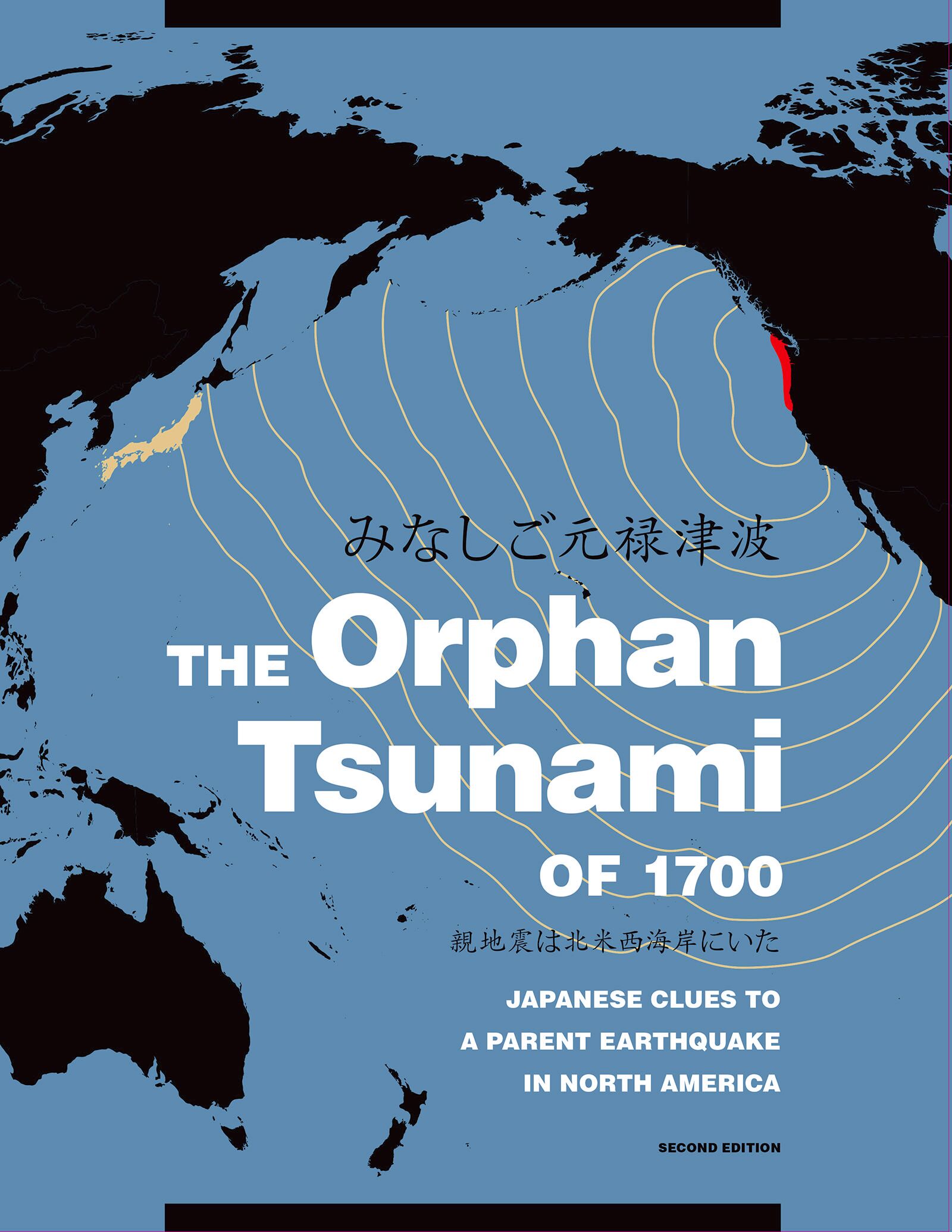
The Orphan Tsunami of 1700
A puzzling tsunami entered Japanese history in January 1700. Samurai, merchants, and villagers wrote of minor flooding and damage. Some noted having felt no earthquake; they wondered what had set off the waves but had no way of knowing that the tsunami was spawned during an earthquake along the coast of northwestern North America. This orphan tsunami would not be linked to its parent earthquake until the mid-twentieth century, through an extraordinary series of discoveries in both North America and Japan. The Orphan Tsunami of 1700, now in its second edition, tells this scientific detective story through its North American and Japanese clues. The story underpins many of today's precautions against earthquake and tsunami hazards in the Cascadia region of northwestern North America. The Japanese tsunami of March 2011 called attention to these hazards as a mirror image of the transpacific waves of January 1700.Hear Brian Atwater on NPR with Renee Montagne http://www.npr.org/templates/story/story.php?storyId=4629401
eBook
Inverse Theory and Applications in Geophysics (2nd Edition)
The 2nd Edition of this book brings together fundamental results developed by the Russian mathematical school in regularization theory and combines them with the related research in geophysical inversion carried out in the West. It presents a detailed exposition of the methods of regularized solution of inverse problems based on the ideas of Tikhonov regularization, and shows the different forms of their applications in both linear and nonlinear methods of geophysical inversion. Its the first book of its kind to treat many kinds of inversion and imaging techniques in a unified mathematical manner.
eBook

Gaian Systems
A groundbreaking look at Gaia theory's intersections
with neocybernetic systems theory
Often seen as an outlier in science, Gaia has run a long and
varied course since its formulation in the 1970s by atmospheric
chemist James Lovelock and microbiologist Lynn Margulis. Gaian
Systems is a pioneering exploration of the dynamic and complex
evolution of Gaia's many variants, with special attention to
Margulis's foundational role in these developments.
Bruce Clarke assesses the different dialects of systems theory
brought to bear on Gaia discourse. Focusing in particular on
Margulis's work-including multiple pieces of her unpublished Gaia
correspondence-he shows how her research and that of Lovelock was
concurrent and conceptually parallel with the new discourse of
self-referential systems that emerged within neocybernetic systems
theory. The recent Gaia writings of Donna Haraway, Isabelle
Stengers, and Bruno Latour contest its cybernetic status. Clarke
engages Latour on the issue of Gaia's systems description and
extends his own systems-theoretical synthesis under what he terms
\"metabiotic Gaia.\" This study illuminates current issues in
neighboring theoretical conversations-from biopolitics and the
immunitary paradigm to NASA astrobiology and the Anthropocene.
Along the way, he points to science fiction as a vehicle of Gaian
thought.
Delving into many issues not previously treated in accounts of
Gaia, Gaian Systems describes the history of a theory that
has the potential to help us survive an environmental crisis of our
own making.
eBook

Inertial Navigation Systems with Geodetic Applications
This book covers all aspects of inertial navigation systems (INS), including the sensor technology and the estimation of instrument errors, as well as their integration with the Global Positioning System (GPS) for geodetic applications. Complete mathematical derivations are given. Both stabilized and strapdown mechanizations are treated in detail. Derived algorithms to process sensor data and a comprehensive explanation of the error dynamics provide not only an analytical understanding but also a practical implementation of the concepts. A self-contained description of GPS, with emphasis on kinematic applications, is one of the highlights in this book.
The text is of interest to geodesists, including surveyors, mappers, and photogrammetrists; to engineers in aviation, navigation, guidance, transportation, and robotics; and to scientists involved in aerogeophysics and remote sensing.
eBook

vast machine
Global warming skeptics often fall back on the argument that the scientific case for global warming is all model predictions, nothing but simulation; they warn us that we need to wait for real data, \"sound science.\" In A Vast Machine Paul Edwards has news for these doubters: without models, there are no data. Today, no collection of signals or observations--even from satellites, which can \"see\" the whole planet with a single instrument--becomes global in time and space without passing through a series of data models. Everything we know about the world's climate we know through models. Edwards offers an engaging and innovative history of how scientists learned to understand the atmosphere--to measure it, trace its past, and model its future. Edwards argues that all our knowledge about climate change comes from three kinds of computer models: simulation models of weather and climate; reanalysis models, which recreate climate history from historical weather data; and data models, used to combine and adjust measurements from many different sources. Meteorology creates knowledge through an infrastructure (weather stations and other data platforms) that covers the whole world, making global data. This infrastructure generates information so vast in quantity and so diverse in quality and form that it can be understood only by computer analysis--making data global. Edwards describes the science behind the scientific consensus on climate change, arguing that over the years data and models have converged to create a stable, reliable, and trustworthy basis for the reality of global warming.
eBook

Amber
Spanning centuries and continents, a beautifully illustrated history of humanity's enduring enthrallment with a seemingly banal substance: petrified tree sap, or amber. Amber: From Antiquity to Eternity is a history of human engagement with amber across three millennia. The book vividly describes our conceptions, stories, and political and scholarly disputes about amber, as well as issues of national and personal identity, religion, art, literature, music, and science. Rachel King rewrites amber's history for the twenty-first century, tackling thorny ethical and moral questions regarding humanity's relationship with amber in the past, as well our connection with it today. With the Earth facing unprecedented challenges, amber—the natural time capsule, and preserver of key information about the planet's evolutional history—promises to offer invaluable insights into what comes next.
eBook

Conrad Kain
Conrad Kain is a titan amongst climbers in Canada and is well-known in mountaineering circles all over the world. His letters to Amelie Malek-a life-long friend-offer a candid view into the deepest thoughts of the Austrian mountain guide, and are a perfect complement to his autobiography, Where the Clouds Can Go. The 144 letters provide a unique and personal view of what it meant to immigrate to Canada in the early part of the twentieth century. Kain's letters are ordered chronologically with annotations, keeping the sections in English untouched, while those in German have been carefully translated. Historians and mountain culture enthusiasts worldwide will appreciate Kain's genius for description, his passion for nature, his opinions, and his musings about his life. Foreword by Chic Scott. Epilogue by Don Bourdon.
eBook
The Great Quake Debate
In the first half of the twentieth century, when seismology was still in in its infancy, renowned geologist Bailey Willis faced off with fellow high-profile scientist Robert T. Hill in a debate with life-or-death consequences for the millions of people migrating west. Their conflict centered on a consequential question: Is southern California earthquake country?These entwined biographies of Hill and Willis offer a lively, accessible account of the ways that politics and financial interests influenced the development of earthquake science. During this period of debate, severe quakes in Santa Barbara (1925) and Long Beach (1933) caused scores of deaths and a significant amount of damage, offering turning points for scientific knowledge and mainstreaming the idea of earthquake safety.The Great Quake Debate sheds light on enduring questions surrounding the environmental hazards of our dynamic planet. What challenges face scientists bearing bad news in the public arena? How do we balance risk and the need to sustain communities and cities? And how well has California come to grips with its many faults?
eBook