
Catalogue Search | MBRL


Are you sure you want to remove the book from the shelf?

{{itemTitle}}
1,037,846
result(s) for
"SCIENCE / Energy"
Sort by:


Gas Turbine Heat Transfer and Cooling Technology
A comprehensive reference for engineers and researchers, this second edition focuses on gas turbine heat transfer issues and their associated cooling technologies for aircraft and land-based gas turbines. It provides information on state-of-the-art cooling technologies such as advanced turbine blade film cooling and internal cooling schemes.
eBook
Cultures of energy
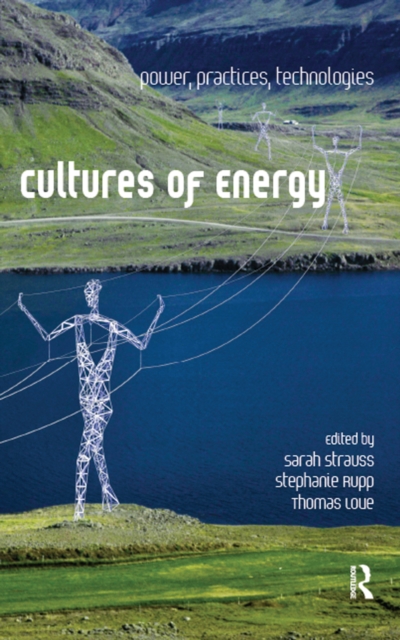
This path-breaking volume explores cultures of energy, the underlying but under-appreciated dimensions of both crisis and innovation in resource use around the globe. Theoretical chapters situate pressing energy issues in larger conceptual frames, and ethnographic case studies reveal energy as it is imagined, used, and contested in a variety of cultural contexts. Contributors address issues including the connection between resource flows and social relationships in energy systems; cultural transformation and notions of progress and collapse; the blurring of technology and magic; social tensions that accompany energy contraction; and sociocultural changes required in affluent societies to reduce dependence on fossil fuels. Each of five thematic sections concludes with an integrative and provocative conversation among the authors. The volume is an ideal tool for teaching unique, contemporary, and comparative perspectives on social theories of science and technology in undergraduate and graduate courses.
eBook


Topological Insulators and Topological Superconductors
This graduate-level textbook is the first pedagogical synthesis of the field of topological insulators and superconductors, one of the most exciting areas of research in condensed matter physics. Presenting the latest developments, while providing all the calculations necessary for a self-contained and complete description of the discipline, it is ideal for graduate students and researchers preparing to work in this area, and it will be an essential reference both within and outside the classroom. The book begins with simple concepts such as Berry phases, Dirac fermions, Hall conductance and its link to topology, and the Hofstadter problem of lattice electrons in a magnetic field. It moves on to explain topological phases of matter such as Chern insulators, two- and three-dimensional topological insulators, and Majorana p-wave wires. Additionally, the book covers zero modes on vortices in topological superconductors, time-reversal topological superconductors, and topological responses/field theory and topological indices. The book also analyzes recent topics in condensed matter theory and concludes by surveying active subfields of research such as insulators with point-group symmetries and the stability of topological semimetals. Problems at the end of each chapter offer opportunities to test knowledge and engage with frontier research issues. Topological Insulators and Topological Superconductors will provide graduate students and researchers with the physical understanding and mathematical tools needed to embark on research in this rapidly evolving field.
eBook

Non–cooperative equilibria of Fermi systems with long range interactions
The authors define a Banach space $\\mathcal{M}_{1}$ of models for fermions or quantum spins in the lattice with long range interactions and make explicit the structure of (generalised) equilibrium states for any $\\mathfrak{m}\\in \\mathcal{M}_{1}$. In particular, the authors give a first answer to an old open problem in mathematical physics--first addressed by Ginibre in 1968 within a different context - about the validity of the so-called Bogoliubov approximation on the level of states. Depending on the model $\\mathfrak{m}\\in \\mathcal{M}_{1}$, the authors' method provides a systematic way to study all its correlation functions at equilibrium and can thus be used to analyse the physics of long range interactions. Furthermore, the authors show that the thermodynamics of long range models $\\mathfrak{m}\\in \\mathcal{M}_{1}$ is governed by the non-cooperative equilibria of a zero-sum game, called here thermodynamic game.
eBook

On the steady motion of a coupled system solid-liquid
The authors study the unconstrained (free) motion of an elastic solid $\\mathcal B$ in a Navier-Stokes liquid $\\mathcal L$ occupying the whole space outside $\\mathcal B$, under the assumption that a constant body force $\\mathfrak b$ is acting on $\\mathcal B$. More specifically, the authors are interested in the steady motion of the coupled system $\\{\\mathcal B,\\mathcal L\\}$, which means that there exists a frame with respect to which the relevant governing equations possess a time-independent solution. The authors prove the existence of such a frame, provided some smallness restrictions are imposed on the physical parameters, and the reference configuration of $\\mathcal B$ satisfies suitable geometric properties.
eBook

IoT, Machine Learning and Blockchain Technologies for Renewable Energy and Modern Hybrid Power Systems
This edited book comprises chapters that describe the IoT, machine learning, and blockchain technologies for renewable energy and modern hybrid power systems with simulation examples and case studies.
After reading this book, users will understand recent technologies such as IoT, machine learning techniques, and blockchain technologies and the application of these technologies to renewable energy resources and modern hybrid power systems through simulation examples and case studies.
This edited book comprises chapters that describe the IoT, machine learning, and blockchain technologies for renewable energy and modern hybrid power systems with simulation examples and case studies.
eBook
Nonconservative Stability Problems of Modern Physics
This work gives a complete overview on the subject of nonconservative stability from the modern point of view. Relevant mathematical concepts are presented, as well as rigorous stability results and numerous classical and contemporary examples from mechanics and physics. It deals with both finite- and infinite-dimensional nonconservative systems and covers the fundamentals of the theory, including such topics as Lyapunov stability and linear stability analysis, Hamiltonian and gyroscopic systems, reversible and circulatory systems, influence of structure of forces on stability, and dissipation-induced instabilities, as well as concrete physical problems, including perturbative techniques for nonself-adjoint boundary eigenvalue problems, theory of the destabilization paradox due to small damping in continuous circulatory systems, Krein-space related perturbation theory for the MHD kinematic mean field ?²-dynamo, analysis of Campbell diagrams and friction-induced flutter in gyroscopic continua, non-Hermitian perturbation of Hermitian matrices with applications to optics, and magnetorotational instability and the Velikhov-Chandrasekhar paradox. The book serves present and prospective specialists providing the current state of knowledge in the actively developing field of nonconservative stability theory. Its understanding is vital for many areas of technology, ranging from such traditional ones as rotor dynamics, aeroelasticity and structural mechanics to modern problems of hydro- and magnetohydrodynamics and celestial mechanics.
eBook
Changing energy
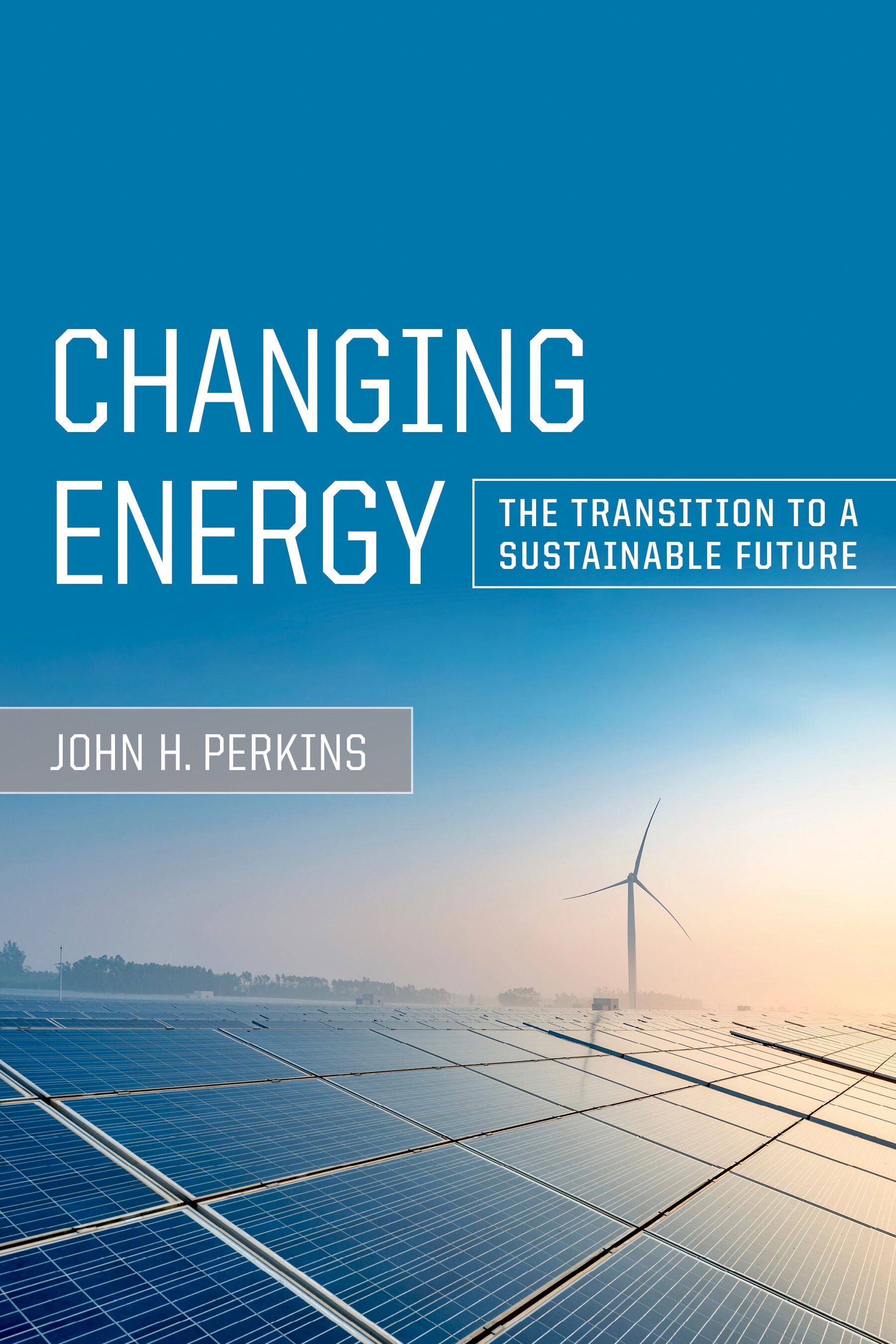
Changing Energy outlines how humanity established the current energy economy through three previous transitions, and how we now stand poised for a necessary fourth transition. Human societies around the globe have received immense benefits from uses of coal, oil, gas, and uranium sources, yet we must now rebuild our energy economies to rely on renewable sources and use them efficiently. The imperative for a fourth energy transition comes from dangers related to climate change, geopolitical tensions, documented health and environmental effects, and long-term depletion of today’s sources. John H. Perkins argues that a future in which current levels of energy service benefits are sustained can come only from investments in the technologies needed to bring about a fourth energy transition. Changing Energy envisions a viable post–fossil fuel economy and identifies the barriers to be overcome.
eBook