
Catalogue Search | MBRL


Are you sure you want to remove the book from the shelf?

{{itemTitle}}
600,456
result(s) for
"SCIENCE / Life Sciences / Neuroscience."
Sort by:

Principles of Neural Design
Neuroscience research has exploded, with more than fifty thousand neuroscientists applying increasingly advanced methods. A mountain of new facts and mechanisms has emerged. And yet a principled framework to organize this knowledge has been missing. In this book, Peter Sterling and Simon Laughlin, two leading neuroscientists, strive to fill this gap, outlining a set of organizing principles to explain the whys of neural design that allow the brain to compute so efficiently. Setting out to \"reverse engineer\" the brain -- disassembling it to understand it -- Sterling and Laughlin first consider why an animal should need a brain, tracing computational abilities from bacterium to protozoan to worm. They examine bigger brains and the advantages of \"anticipatory regulation\"; identify constraints on neural design and the need to \"nanofy\"; and demonstrate the routes to efficiency in an integrated molecular system, phototransduction. They show that the principles of neural design at finer scales and lower levels apply at larger scales and higher levels; describe neural wiring efficiency; and discuss learning as a principle of biological design that includes \"save only what is needed.\"Sterling and Laughlin avoid speculation about how the brainmightwork and endeavor to make sense of what is already known. Their distinctive contribution is to gather a coherent set of basic rules and exemplify them across spatial and functional scales.
eBook

Dawn of the Neuron
In science, sometimes it is best to keep things simple. Initially discrediting the discovery of neurons in jellyfish, mid-nineteenth-century scientists grouped jellyfish, comb-jellies, hydra, and sea anemones together under one term - \"coelenterates\" - and deemed these animals too similar to plants to warrant a nervous system. In Dawn of the Neuron, Michel Anctil shows how Darwin's theory of evolution completely eradicated this idea and cleared the way for the modern study of the neuron. Once zoologists accepted the notion that varying levels of animal complexity could evolve, they began to use simple-structured creatures such as coelenterates and sponges to understand the building blocks of more complicated nervous systems. Dawn of the Neuron provides fascinating insights into the labours and lives of scientists who studied coelenterate nervous systems over several generations, and who approached the puzzling origin of the first nerve cells through the process outlined in evolutionary theory. Anctil also reveals how these scientists, who were willing to embrace improved and paradigm-changing scientific methods, still revealed their cultural backgrounds, their societal biases, and their attachments to schools of thought and academic traditions while presenting their ground-breaking work. Their attitudes toward the neuron doctrine - where neurons are individual, self-contained cells - proved decisive in the exploration of how neurons first emerged. Featuring photographs and historical sketches to illustrate this quest for knowledge, Dawn of the Neuron is a remarkably in-depth exploration of the link between Darwin's theory of evolution and pioneering studies and understandings of the first evolved nervous systems
eBook

The rewiring brain : a computational approach to structural plasticity in the adult brain
The adult brain is not as hard-wired as traditionally thought.By modifying their small- or large-scale morphology, neurons can make new synaptic connections or break existing ones (structural plasticity).
eBook


Drug Addiction Mechanisms in the Brain
Drug Addiction Mechanisms in the Brain explores the fascinating world of drug substances and their effects on the brain. This book provides a comprehensive overview of the ten major substances that contribute to drug addiction Information about each substance is presented in a specific chapter, shedding light on their biochemical mechanisms and physiological effects. From the stimulating effects of cocaine to the sedative properties of heroin, and the hallucinogenic experiences induced by LSD, the book takes the reader through the intricate pathways of addiction. Other substances covered in the book include alcohol, nicotine, MDMA, METH, morphine, ketamine, and fentanyl. Readers will gain an understanding about neurochemical alterations in the brain Anyone looking for interesting knowledge about the addictive nature of common drugs and their complex interplay with the brain will find this book informative. Readership Researchers, healthcare professionals, counsellors and general readers.
eBook

Neurowaves
The connection of the brain to the mind remains one of the most persistent mysteries in philosophy and neuroscience. Georg Northoff proposes a new approach to the so-called mind-body problem, drawing on an insight from physics: time structures all objects and events in the world, and all objects and events are in dynamic relationship. This also shapes the brain as it is part of the dynamic of the world as whole. In Neurowaves Northoff posits that the entire world is structured by waves of time and argues that the passing of these waves through our brains – neurowaves – produces mental experience. The brain's neural waves transform into mental waves; time and its dynamics are shared by brain and mind as their common currency. As in physics and biology, that radically changes our view. Copernicus showed how the earth moves and that its movements are just a tiny part of the universe's passage of time. Darwin showed that the human species is one among many species passing through evolution's timescales. Northoff calls for another Copernican revolution, replacing the mind-body problem with questions about the temporal-dynamic relationship between brain and world. Illustrated with vivid examples from different facets of the physical and biological world, Neurowaves provides captivating insights and an innovative, entertaining unravelling of the temporal connection of brain and mind.
eBook
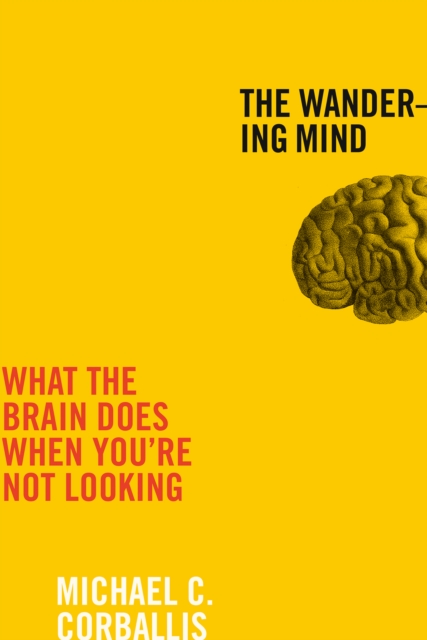
The Wandering Mind
While psychologists write bestsellers about humans' smarter side - language, cognition, consciousness - and self-help gurus harangue us to be attentive and mindful, we all know that much of the time our minds are just goofing off. So what does the brain do when you're not looking? Rooted in neuroscience, psychology and evolutionary biology but written with Corballis' signature wit and wisdom, The Wandering Mind takes us into the world of the 'default-mode network' to tackle the big questions. What do rats dream about? What's with our fiction addiction? Is the hippocampus where free will takes a holiday? And does mind-wandering drive creativity? In Pieces of Mind, Michael Corballis took 21 short walks around the human brain. In The Wandering Mind he stretches out for a longer hike into those murky regions of the brain where dreams and religion, fiction and fantasy lurk.
eBook

Molecular neuroendocrinology : from genome to physiology
Molecular Neuroendocrinology: From Genome to Physiology, provides researchers and students with a critical examination of the steps being taken to decipher genome complexity in the context of the expression, regulation and physiological functions of genes in neuroendocrine systems. The 19 chapters are divided into four sectors: A) describes and explores the genome, its evolution, expression and the mechanisms that contribute to protein, and hence biological, diversity. B) discusses the mechanisms that enhance peptide and protein diversity beyond what is encoded in the genome through post-translational modification. C) considers the molecular tools that today's neuroendocrinologists can use to study the regulation and function of neuroendocrine genes within the context of the intact organism. D) presents a range of case studies that exemplify the state-of-the-art application of genomic technologies in physiological and behavioural experiments that seek to better understand complex biological processes. • Written by a team of internationally renowned researchers • Both print and enhanced e-book versions are available • Illustrated in full colour throughout This is the third volume in a new Series 'Masterclass in Neuroendocrinology' , a co- publication between Wiley and the INF (International Neuroendocrine Federation) that aims to illustrate highest standards and encourage the use of the latest technologies in basic and clinical research and hopes to provide inspiration for further exploration into the exciting field of neuroendocrinology. Series Editors: John A. Russell, University of Edinburgh, UK and William E. Armstrong, The University of Tennessee, USA
eBook