
Catalogue Search | MBRL


Are you sure you want to remove the book from the shelf?

{{itemTitle}}
23
result(s) for
"SCIENCE / Optics. bisacsh"
Sort by:

Optical Coatings and Thermal Noise in Precision Measurement
Thermal noise from optical coatings is a growing area of concern and overcoming limits to the sensitivity of high precision measurements by thermal noise is one of the greatest challenges faced by experimental physicists. In this timely book, internationally renowned scientists and engineers examine our current theoretical and experimental understanding. Beginning with the theory of thermal noise in mirrors and substrates, subsequent chapters discuss the technology of depositing coatings and state-of-the-art dielectric coating techniques used in precision measurement. Applications and remedies for noise reduction are also covered. Individual chapters are dedicated to specific fields where coating thermal noise is a particular concern, including the areas of quantum optics/optomechanics, gravitational wave detection, precision timing, high-precision laser stabilisation via optical cavities and cavity quantum electrodynamics. While providing full mathematical detail, the text avoids field-specific jargon, making it a valuable resource for readers with varied backgrounds in modern optics.
eBook

Computational Colour Science Using MATLAB
Computational Colour Science Using MATLAB 2nd Edition offers a practical, problem-based approach to colour physics. The book focuses on the key issues encountered in modern colour engineering, including efficient representation of colour information, Fourier analysis of reflectance spectra and advanced colorimetric computation. Emphasis is placed on the practical applications rather than the techniques themselves, with material structured around key topics. These topics include colour calibration of visual displays, computer recipe prediction and models for colour-appearance prediction. Each topic is carefully introduced at three levels to aid student understanding. First, theoretical ideas and background information are discussed, then explanations of mathematical solutions follow and finally practical solutions are presented using MATLAB. The content includes: * A compendium of equations and numerical data required by the modern colour and imaging scientist. * Numerous examples of solutions and algorithms for a wide-range of computational problems in colour science. * Example scripts using the MATLAB programming language. This 2nd edition contains substantial new and revised material, including three innovative chapters on colour imaging, psychophysical methods, and physiological colour spaces; the MATLAB toolbox has been extended with a professional, optimized, toolbox to go alongside the current teaching toolbox; and a java toolbox has been added which will interest users who are writing web applications and/or applets or mobile phone applications. Computational Colour Science Using MATLAB 2nd Edition is an invaluable resource for students taking courses in colour science, colour chemistry and colour physics as well as technicians and researchers working in the area. In addition, it acts a useful reference for professionals and researchers working in colour dependent industries such as textiles, paints, print & electronic imaging. Review from First Edition: \"…highly recommended as a concise introduction to the practicalities of colour science…\" (Color Technology, 2004)
eBook
Aberration-corrected analytical transmission electron microscopy
\"The book is concerned with the theory, background, and practical use of transmission electron microscopes with lens correctors that can correct the effects of spherical aberration. The book also covers a comparison with aberration correction in the TEM and applications of analytical aberration corrected STEM in materials science and biology. This book is essential for microscopists involved in nanoscale and materials microanalysis especially those using scanning transmission electron microscopy, and related analytical techniques such as electron diffraction x-ray spectrometry (EDXS) and electron energy loss spectroscopy (EELS)\"--
\"The book will be concerned with the theory, background and practical use of transmission electron microscopes with lens correctors which can correct for the effects of spherical aberration\"--
eBook
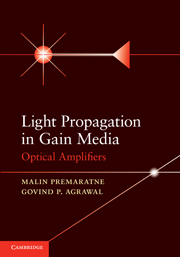
Light Propagation in Gain Media
Over the past two decades, optical amplifiers have become of key importance in modern communications. In addition to this, the technology has applications in cutting-edge research such as biophotonics and lab-on-a-chip devices. This book provides a comprehensive treatment of the fundamental concepts, theory and analytical techniques behind the modern optical amplifier technology. The book covers all major optical amplification schemes in conventional materials, including the Raman and parametric gain processes. The final chapter is devoted to optical gain in metamaterials, a topic that has been attracting considerable attention in recent years. The authors emphasize analytical insights to give a deeper, more intuitive understanding of various amplification schemes. The book assumes background knowledge of electrical engineering or applied physics, including exposure to electrodynamics and wave motion, and is ideal for graduate students and researchers in physics, optics, bio-optics and communications.
eBook
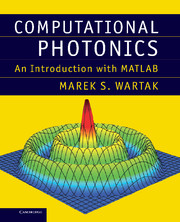
Computational Photonics
A comprehensive manual on the efficient modeling and analysis of photonic devices through building numerical codes, this book provides graduate students and researchers with the theoretical background and MATLAB programs necessary for them to start their own numerical experiments. Beginning by summarizing topics in optics and electromagnetism, the book discusses optical planar waveguides, linear optical fiber, the propagation of linear pulses, laser diodes, optical amplifiers, optical receivers, finite-difference time-domain method, beam propagation method and some wavelength division devices, solitons, solar cells and metamaterials. Assuming only a basic knowledge of physics and numerical methods, the book is ideal for engineers, physicists and practising scientists. It concentrates on the operating principles of optical devices, as well as the models and numerical methods used to describe them.
eBook

An introduction to quantum optics
This book provides a solid pedagogical background in the techniques used in quantum optics, with an emphasis on open quantum systems. Suitable for undergraduates as a second semester quantum mechanics course or first year graduate students, this book begins with a short summary of quantum mechanics and contains physics of open systems and their application to light/matter interactions. Written in a simplified manner and classroom tested, this book provides the fundamentals of quantum optics and includes recent developments in the field.
eBook

Visible light communications
Visible light communication (VLC) has emerged as an attractive alternative to radio frequency (RF) communication, due to its abundant, license free bandwidth and cost-effectiveness. The visible light spectrum is much larger than the entire RF spectrum, and largely unexplored. VLC has proved its viability in automotive applications to provide short range vehicle-to-vehicle and vehicle-to-infrastructure communications due to increased deployment of LED lights and image sensors in modern vehicles. However, there are a few challenges, described in this book, that need to be addressed before global adaptation. VLC can be a blessing for intelligent transportation systems and autonomous vehicles. This book stands out as a must-read for researchers, graduate students and industry professionals who work in the VLC field. Part of IOP Series in Emerging Technologies in Optics and Photonics.
eBook

Fundamentals of quantum entanglement
Quantum entanglement (QE) has rapidly become a subject of great interest in academia, industry, and government research institutions. This book builds on the first edition of Fundamentals of Quantum Entanglement to provide a transparent and more insightful introduction for graduate students, scientists, and engineers. It is also a highly useful education tool for those practitioners that were not aware of the physical origin of quantum entanglement: the Dirac-Wheeler-Pryce-Ward physics. The new edition includes an expansion on topics such as quantum entropy and quantum time. The book provides a direct, practical, and transparent introduction to the principles and physics of quantum entanglement. It does so whilst utilizing an interferometric approach based on Dirac-Feynman superposition probability amplitudes. Part of IOP Series in Coherent Sources, Quantum Fundamentals, and Applications.
eBook
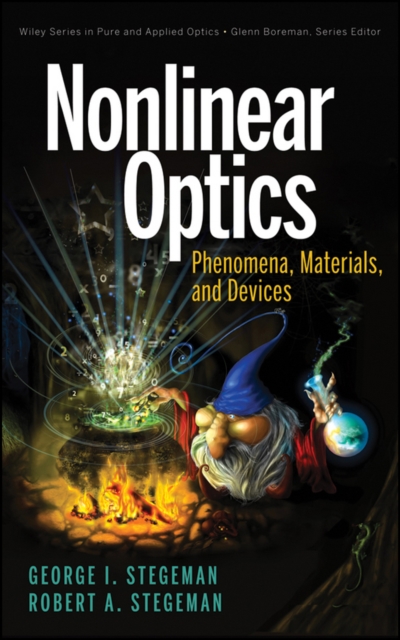
Nonlinear optics
\"This book is based on tried and tested courses taught by the author, George Stegeman, who is one of the experimental pioneers in nonlinear optics. The book starts with second order phenomena, goes on to explain the derivation of nonlinear susceptibilities, and finishes with a thorough discussion of third order nonlinear effects. Included is a simple \"electron on a spring\" model which helps readers begin their journey through the field of nonlinear optics\"--
eBook

X-ray photoelectron spectroscopy
This book introduces readers interested in the field of X-ray Photoelectron Spectroscopy (XPS) to the practical concepts in this field.The book first introduces the reader to the language and concepts used in this field and then demonstrates how these concepts are applied.
eBook