
Catalogue Search | MBRL


Are you sure you want to remove the book from the shelf?

{{itemTitle}}
259,610
result(s) for
"SCIENCE / Spectroscopy "
Sort by:

X-ray photoelectron spectroscopy
This book introduces readers interested in the field of X-ray Photoelectron Spectroscopy (XPS) to the practical concepts in this field.The book first introduces the reader to the language and concepts used in this field and then demonstrates how these concepts are applied.
eBook
Practical Raman spectroscopy : an introduction
This text offers an open-learning approach to Raman spectroscopy providing detail on instrumentation, applications and discussions questions throughout the book.
It provides a valuable guide to assist with teaching Raman spectroscopy which is gaining attention in (analytical) chemistry, and as a consequence, teaching programs have followed. Today, education in Raman spectroscopy is often limited to theoretical aspects (e.g. selection rules), but practical aspects are usually disregarded. With these course notes, the author hopes to fill this gap and include information about Raman instrumentation and how it is interpreted.
* Provides auser-friendly text that tackles the theoretical background, and offers everyday tips for common practice
* Raman instrumentation and practical aspects, which are sometimes overlooked, are covered
* Appropriate for students, and includes summaries, text boxes, illustrating the ideas with examples from research literature or providing background information or links with other courses
* Written with an open-learning approach, this book will be ideal for use as a self-study guide or as the basis of a taught course with discussion and self-assessment questions throughout the text
* Includes a comprehensive bibliography to guide the reader to more specialized texts and sources.
eBook

Infrared and Raman spectroscopy in forensic science
This book will provide a survey of the major areas in which information derived from vibrational spectroscopy investigations and studies have contributed to the benefit of forensic science, either in a complementary or a unique way. This is highlighted by examples taken from real case studies and analyses of forensic relevance, which provide a focus for current and future applications and developments.
eBook

Computational strategies for spectroscopy
Computational spectroscopy is a rapidly evolving field that is becoming a versatile and widespread tool for the assignment of experimental spectra and their interpretation as related to chemical physical effects. This book is devoted to the most significant methodological contributions in the field, and to the computation of IR, UV-VIS, NMR and EPR spectral parameters with reference to the underlying vibronic and environmental effects. Each section starts with a chapter written by an experimental spectroscopist dealing with present challenges in the different fields; comprehensive coverage of conventional and advanced spectroscopic techniques is provided by means of dedicated chapters written by experts. Computational chemists, analytical chemists and spectroscopists, physicists, materials scientists, and graduate students will benefit from this thorough resource.
eBook
Quantum Mechanical Tunneling in Chemical Physics
This book presents basic theories as well as original theories developed by the authors in quantum mechanical tunneling. It presents practical methods and numerical applications to real multidimensional systems. The text offers information so readers can understand the basic concepts and dynamics of multidimensional tunneling phenomena and use the described methods for various molecular spectroscopy and chemical dynamics problems. It explains nonadiabatic phenomena. It also discusses tunneling in chemical reactions, including theories for direct evaluation of reaction rate constants for both electronically adiabatic and nonadiabatic chemical reactions.
eBook
Vibrational spectroscopy at electrified interfaces
Reviews the latest theory, techniques, and applications
Surface vibrational spectroscopy techniques probe the structure and composition of interfaces at the molecular level. Their versatility, coupled with their non-destructive nature, enables in-situ measurements of operating devices and the monitoring of interface-controlled processes under reactive conditions.
Vibrational Spectroscopy at Electrified Interfaces explores new and emerging applications of Raman, infrared, and non-linear optical spectroscopy for the study of charged interfaces. The book draws from hundreds of findings reported in the literature over the past decade. It features an internationally respected team of authors and editors, all experts in the field of vibrational spectroscopy at surfaces and interfaces. Content is divided into three parts:
* Part One, Nonlinear Vibrational Spectroscopy, explores properties of interfacial water, ions, and biomolecules at charged dielectric, metal oxide, and electronically conductive metal catalyst surfaces. In addition to offering plenty of practical examples, the chapters present the latest measurement and instrumental techniques.
* Part Two, Raman Spectroscopy, sets forth highly sensitive approaches for the detection of biomolecules at solid-liquid interfaces as well as the use of photon depolarization strategies to elucidate molecular orientation at surfaces.
* Part Three, IRRAS Spectroscopy (including PM-IRRAS), reports on wide-ranging systems—from small fuel molecules at well-defined surfaces to macromolecular complexes—that serve as the building blocks for functional interfaces in devices designed for chemical sensing and electric power generation.
The Wiley Series on Electrocatalysis and Electrochemistry is dedicated to reviewing important advances in the field, exploring how these advances affect industry. The series defines what we currently know and can do with our knowledge of electrocatalysis and electrochemistry as well as forecasts where we can expect the field to be in the future.
eBook
Handbook of Rare Earth Elements
The Handbook of Rare Earth Elements focuses on the essential role of modern instrumental analytics in the recycling, purification and analysis of rare earth elements.Due to their numerous applications, e.g.
eBook
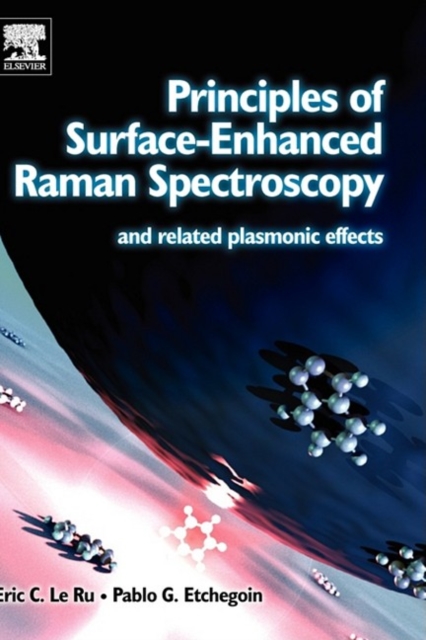
Principles of Surface-Enhanced Raman Spectroscopy and Related Plasmonic Effects
Surface-Enhanced Raman Scattering (SERS) was discovered in the 1970s and has since grown enormously in breadth, depth, and understanding. One of the major characteristics of SERS is its interdisciplinary nature; it lies at the boundary between physics, chemistry, colloid science, plasmonics, nanotechnology, and biology. By their very nature, it is impossible to find a textbook that will summarize the principles needed for SERS of these rather dissimilar and disconnected topics. Although a basic understanding of these topics is necessary for research projects in SERS with all its many aspects and applications, they are seldom touched upon as a coherent unit during most undergraduate studies in physics or chemistry. This book intends to fill this existing gap in the literature. It provides an overview of the underlying principles of SERS, from the fundamental understanding of the effect to its potential applications. It is aimed primarily at newcomers to the field, graduate student, researcher or scientist, attracted by the many applications of SERS and plasmonics or its basic science. The emphasis is on concepts and background material for SERS, such as Raman spectroscopy, the physics of plasmons, or colloid science, all of them introduced within the context of SERS, and from where the more specialized literature can be followed.
eBook
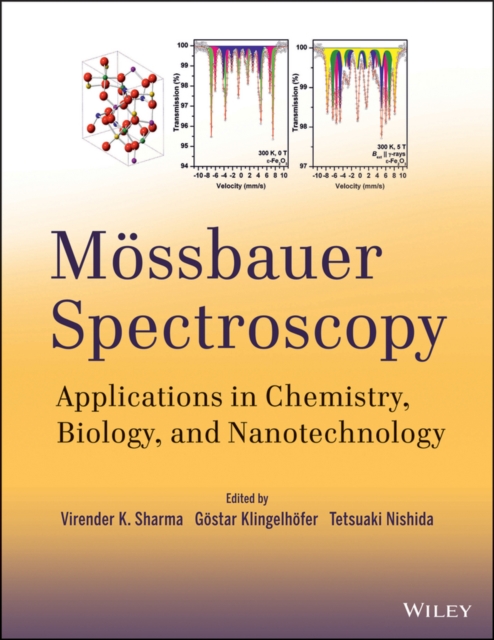
Mossbauer spectroscopy: applications in chemistry, biology, industry, and nanotechnology
Providing a modern update of the field, Mossbauer Spectroscopy focuses on applications across a broad range of fields, including analysis of inorganic elements, nanoparticles, metalloenzymyes, biomolecules (including proteins), glass, coal, and iron. Ideal for a broad range of scientists, this one-stop reference presents advances gained in the field over past two decades, including a detailed theoretical description of Mossbauer spectroscopy, an extensive treatment of Mossbauer spectroscopy in applied areas, and challenges and future opportunities for the further development of this technique.
eBook
Theoretical Mass Spectrometry
This book discusses fragmentation mechanisms of molecules under mass spectrometry conditions and the resulting peaks observed in ESI-MS/MS experiments.The underlying principles are used to understand everything from small molecules to biological poly-peptides collision induced dissociation.
eBook