
Catalogue Search | MBRL


Are you sure you want to remove the book from the shelf?

{{itemTitle}}
305,295
result(s) for
"SCIENCE / System Theory"
Sort by:
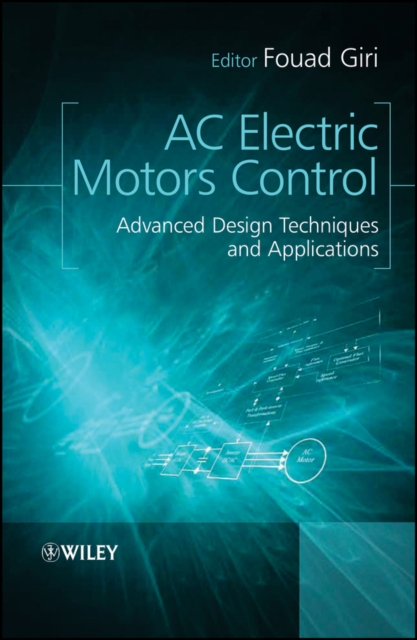
AC Electric Motors Control
The complexity of AC motor control lies in the multivariable and nonlinear nature of AC machine dynamics. Recent advancements in control theory now make it possible to deal with long-standing problems in AC motors control. This text expertly draws on these developments to apply a wide range of model-based control designmethods to a variety of AC motors. Contributions from over thirty top researchers explain how modern control design methods can be used to achieve tight speed regulation, optimal energetic efficiency, and operation reliability and safety, by considering online state variable estimation in the absence of mechanical sensors, power factor correction, machine flux optimization, fault detection and isolation, and fault tolerant control. Describing the complete control approach, both controller and observer designs are demonstrated using advanced nonlinear methods, stability and performance are analysed using powerful techniques, including implementation considerations using digital computing means. Other key features: • Covers the main types of AC motors including triphase, multiphase, and doubly fed induction motors, wound rotor, permanent magnet, and interior PM synchronous motors • Illustrates the usefulness of the advanced control methods via industrial applications including electric vehicles, high speed trains, steel mills, and more • Includes special focus on sensorless nonlinear observers, adaptive and robust nonlinear controllers, output-feedback controllers, fault detection and isolation algorithms, and fault tolerant controllers This comprehensive volume provides researchers and designers and R&D engineers with a single-source reference on AC motor system drives in the automotive and transportation industry. It will also appeal to advanced students in automatic control, electrical, power systems, mechanical engineering and robotics, as well as mechatronic, process, and applied control system engineers.
eBook
Frequency-Domain Analysis and Design of Distributed Control Systems
This book presents a unified frequency-domain method for the analysis of distributed control systems. The following important topics are discussed by using the proposed frequency-domain method: (1) Scalable stability criteria of networks of distributed control systems; (2) Effect of heterogeneous delays on the stability of a network of distributed control system; (3) Stability of Internet congestion control algorithms; and (4) Consensus in multi-agent systems. This book is ideal for graduate students in control, networking and robotics, as well as researchers in the fields of control theory and networking who are interested in learning and applying distributed control algorithms or frequency-domain analysis methods.
eBook

Signals and Boundaries
Complex adaptive systems (cas), including ecosystems, governments, biological cells, and markets, are characterized by intricate hierarchical arrangements of boundaries and signals. In ecosystems, for example, niches act as semi-permeable boundaries, and smells and visual patterns serve as signals; governments have departmental hierarchies with memoranda acting as signals; and so it is with other cas. Despite a wealth of data and descriptions concerning different cas, there remain many unanswered questions about \"steering\" these systems. In Signals and Boundaries , John Holland argues that understanding the origin of the intricate signal/border hierarchies of these systems is the key to answering such questions. He develops an overarching framework for comparing and steering cas through the mechanisms that generate their signal/boundary hierarchies. Holland lays out a path for developing the framework that emphasizes agents, niches, theory, and mathematical models. He discusses, among other topics, theory construction; signal-processing agents; networks as representations of signal/boundary interaction; adaptation; recombination and reproduction; the use of tagged urn models (adapted from elementary probability theory) to represent boundary hierarchies; finitely generated systems as a way to tie the models examined into a single framework; the framework itself, illustrated by a simple finitely generated version of the development of a multi-celled organism; and Markov processes.
eBook

Modeling and Visualization of Complex Systems and Enterprises
Explains multi-level models of enterprise systems and covers modeling methodology This book addresses the essential phenomena underlying the overall behaviors of complex systems and enterprises. Understanding these phenomena can enable improving these systems. These phenomena range from physical, behavioral, and organizational, to economic and social, all of which involve significant human components. Specific phenomena of interest and how they are represented depend on the questions of interest and the relevant domains or contexts. Modeling and Visualization of Complex Systems and Enterprises examines visualization of phenomena and how understanding the relationships among phenomena can provide the basis for understanding where deeper exploration is warranted. The author also reviews mathematical and computational models, defined very broadly across disciplines, which can enable deeper understanding. * Presents a 10 step methodology for addressing questions associated with the design or operation of complex systems and enterprises * Examines six archetypal enterprise problems including two from healthcare, two from urban systems, and one each from financial systems and defense systems * Provides an introduction to the nature of complex systems, historical perspectives on complexity and complex adaptive systems, and the evolution of systems practice Modeling and Visualization of Complex Systems and Enterprises is written for graduate students studying systems science and engineering and professionals involved in systems science and engineering, those involved in complex systems such as healthcare delivery, urban systems, sustainable energy, financial systems, and national security.
eBook
Foundations of complex systems
Complexity is emerging as a post-Newtonian paradigm for approaching a large body of phenomena of concern at the crossroads of physical, engineering, environmental, life and human sciences from a unifying point of view.
eBook
Self-organizing networks
With the current explosion in network traffic, and mounting pressure on operators’ business case, Self-Organizing Networks (SON) play a crucial role. They are conceived to minimize human intervention in engineering processes and at the same time improve system performance to maximize Return-on-Investment (ROI) and secure customer loyalty. Written by leading experts in the planning and optimization of Multi-Technology and Multi-Vendor wireless networks, this book describes the architecture of Multi-Technology SON for GSM, UMTS and LTE, along with the enabling technologies for SON planning, optimization and healing. This is presented mainly from a technology point of view, but also covers some critical business aspects, such as the ROI of the proposed SON functionalities and Use Cases. Key features: Follows a truly Multi-Technology approach: covering not only LTE, but also GSM and UMTS, including architectural considerations of deploying SON in today’s GSM and UMTS networks Features detailed discussions about the relevant trade-offs in each Use Case Includes field results of today’s GSM and UMTS SON implementations in live networks Addresses the calculation of ROI for Multi-Technology SON, contributing to a more complete and strategic view of the SON paradigm This book will appeal to network planners, optimization engineers, technical/strategy managers with operators and R&D/system engineers at infrastructure and software vendors. It will also be a useful resource for postgraduate students and researchers in automated wireless network planning and optimization.
eBook
Systems dependability assessment
Presents recent developments of probabilistic assessment of systems dependability based on stochastic models, including graph theory, finite state automaton and language theory, for both dynamic and hybrid contexts.
eBook

Emergence and Convergence
Two problems continually arise in the sciences and humanities, according to Mario Bunge: parts and wholes and the origin of novelty. InEmergence and Convergence, he works to address these problems, as well as that of systems and their emergent properties, as exemplified by the synthesis of molecules, the creation of ideas, and social inventions.
Along the way, Bunge examines further topical problems, such as the search for the mechanisms underlying observable facts, the limitations of both individualism and holism, the reach of reduction, the abuses of Darwinism, the rational choice-hermeneutics feud, the modularity of the brain vs. the unity of the mind, the cluster of concepts around 'maybe,' the uselessness of many-worlds metaphysics and semantics, the hazards posed by Bayesianism, the nature of partial truth, the obstacles to correct medical diagnosis, and the formal conditions for the emergence of a cross-discipline.
Bunge is not interested in idle fantasies, but about many of the problems that occur in any discipline that studies reality or ways to control it. His work is about the merger of initially independent lines of inquiry, such as developmental evolutionary biology, cognitive neuroscience, and socio-economics. Bunge proposes a clear definition of the concept of emergence to replace that of supervenience and clarifies the notions of system, real possibility, inverse problem, interdiscipline, and partial truth that occur in all fields.
eBook
Nonlinear dynamics of piecewise constant systems and implementation of piecewise constant arguments
Piecewise constant systems exist in widely expanded areas such as engineering, physics, and mathematics. Extraordinary and complex characteristics of piecewise constant systems have been reported in recent years. This book provides the methodologies for analyzing and assessing nonlinear piecewise constant systems on a theoretically and practically sound basis.
eBook

Nonlinear system identification : NARMAX methods in the time, frequency, and spatio-temporal domains
Nonlinear System Identification: NARMAX Methods in the Time, Frequency, and Spatio-Temporal Domains describes a comprehensive framework for the identification and analysis of nonlinear dynamic systems in the time, frequency, and spatio-temporal domains. This book is written with an emphasis on making the algorithms accessible so that they can be applied and used in practice. Includes coverage of: * The NARMAX (nonlinear autoregressive moving average with exogenous inputs) model * The orthogonal least squares algorithm that allows models to be built term by term where the error reduction ratio reveals the percentage contribution of each model term * Statistical and qualitative model validation methods that can be applied to any model class * Generalised frequency response functions which provide significant insight into nonlinear behaviours * A completely new class of filters that can move, split, spread, and focus energy * The response spectrum map and the study of sub harmonic and severely nonlinear systems * Algorithms that can track rapid time variation in both linear and nonlinear systems * The important class of spatio-temporal systems that evolve over both space and time * Many case study examples from modelling space weather, through identification of a model of the visual processing system of fruit flies, to tracking causality in EEG data are all included to demonstrate how easily the methods can be applied in practice and to show the insight that the algorithms reveal even for complex systems NARMAX algorithms provide a fundamentally different approach to nonlinear system identification and signal processing for nonlinear systems. NARMAX methods provide models that are transparent, which can easily be analysed, and which can be used to solve real problems. This book is intended for graduates, postgraduates and researchers in the sciences and engineering, and also for users from other fields who have collected data and who wish to identify models to help to understand the dynamics of their systems.
eBook