
Catalogue Search | MBRL


Are you sure you want to remove the book from the shelf?

{{itemTitle}}
4,522
result(s) for
"SCIENCE Life Sciences Zoology Entomology."
Sort by:
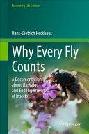
Why every fly counts : a documentation about the value and endangerment of insects
\"This book discusses the beneficial and harmful effects of insects and explains their development and significance for biodiversity. Threatening pests or threatened beneficials? Biting midges are wonderful insects. The animals are so tiny and uniquely shaped that they are particularly good at pollinating the small and tight flowers of the cocoa tree. Without them, there would be much less chocolate. We associate other insects more with the damage that they cause. Mosquitoes and wasps bite us. Moth larvae damage textiles and contaminate foods. Ants undermine our paths and flies are just a pain. But what exactly is our relationship with insects? Are they more beneficial or harmful? What role do they play in the world? What are the effects of climate change: Will the number of insects continue to increase?\"--Publisher's description.
Book

Alien worlds : how insects conquered the Earth & why their fate will determine our future
\"Life on Earth depends on the busy activities of insects, but global populations of these teeming creatures are currently under threat, with grave consequences for us all. Alien Worlds presents insects and other arthropods as you have never seen them before, explaining how they conquered the planet and why there are so many of them, and shedding light on the evolutionary marvels that enabled them to thrive. Blending glorious imagery with entertaining and informative science writing, this book takes you inside the hidden realm of insects and reveals why their fate carries profound implications for our own\"--Dust jacket flap.
Book

The insect epiphany : how our six-legged allies shape human culture
\"Insects surround us. They fuel life on Earth through their roles as pollinators, predators, and prey, but rarely do we consider the outsize influence they have had on our culture and civilization. Their anatomy and habits inform how we live, work, create art, and innovate. Featuring nearly 250 color images--from ancient etchings to avant-garde art, from bug-based meals to haute couture--The Insect Epiphany proves that our world would look very different without insects, not just because they are crucial to our ecosystems, but because they have shaped and inspired so many aspects of what makes us human.\"--Amazon.com.
BOOK


Moths, myths, and mosquitoes : the eccentric life of Harrison G. Dyar, Jr.
\"Known for years by Washington, D.C. history buffs and entomologists as an eccentric's eccentric for his underground tunnels, bigamy, and fighting with colleagues, it is oft forgotten that Harrison Gray Dyar, Jr. was a world-class scientist from 1890s until his death. His contributions to the understanding of evolution, classification, and the biology of moths, mosquitoes and primitive wasps have stood the test of time, as have his underappreciated contributions to building the national collections of these insects at the Smithsonian Institution.\"-- Provided by publisher.
Book

The Evolution of Social Wasps
Social behavior occurs in some of the smallest animals as well as some the largest, and the transition from solitary life to sociality is an unsolved evolutionary mystery. The Evolution of Social Wasps examines social behavior in a single lineage of insects, wasps of the family Vespidae. It presents empirical knowledge of social wasps from two approaches: one that focuses on phylogeny and life history; and one that focuses on individual ontogeny, colony development, and population dynamics. It also provides an extensive summary of the existing literature while demonstrating how it can be clouded by theory. This approach to the conflicting literature on sociality highlights how often repeated models can become fixed in the thinking of the scientific community. Instead, it presents a mechanistic scenario for the evolution of sociality in wasps that changes our perspective on kin selection, the paradigm that has dominated thinking about social evolution since the 1970s.
eBook

Handbook of Zoology
This volume of the series Handbook of Zoology deals with the anatomy of the gastrointestinal digestive tract – stomach, small intestine, caecum and colon – in all eutherian orders and suborders. It presents compilations of anatomical studies, as well as an extensive list of references, which makes widely dispersed literature accessible. Introductory sections to orders and suborders give notice to biology, taxonomy, biogeography and food of the respective taxon. It is a characteristic of this book that different sections of the post-oesophageal tract are discussed separately from each other. Informations on form and function of organs of digestion in eutherians are discussed under comparative-anatomical aspects. The variability and diversity of anatomical structures represents the basis of functional differentiations.
eBook

Handbook of Zoology
This volume of the series Handbook of Zoology deals with the anatomy of the gastrointestinal digestive tract – stomach, small intestine, caecum and colon – in all eutherian orders and suborders. It presents compilations of anatomical studies, as well as an extensive list of references, which makes widely dispersed literature accessible. Introductory sections to orders and suborders give notice to biology, taxonomy, biogeography and food of the respective taxon. It is a characteristic of this book that different sections of the post-oesophageal tract are discussed separately from each other. Informations on form and function of organs of digestion in eutherians are discussed under comparative-anatomical aspects. The variability and diversity of anatomical structures represents the basis of functional differentiations.
eBook