
Catalogue Search | MBRL


Are you sure you want to remove the book from the shelf?

{{itemTitle}}
304,292
result(s) for
"SCIENCE System Theory."
Sort by:


AC Electric Motors Control
The complexity of AC motor control lies in the multivariable and nonlinear nature of AC machine dynamics. Recent advancements in control theory now make it possible to deal with long-standing problems in AC motors control. This text expertly draws on these developments to apply a wide range of model-based control designmethods to a variety of AC motors. Contributions from over thirty top researchers explain how modern control design methods can be used to achieve tight speed regulation, optimal energetic efficiency, and operation reliability and safety, by considering online state variable estimation in the absence of mechanical sensors, power factor correction, machine flux optimization, fault detection and isolation, and fault tolerant control. Describing the complete control approach, both controller and observer designs are demonstrated using advanced nonlinear methods, stability and performance are analysed using powerful techniques, including implementation considerations using digital computing means. Other key features: • Covers the main types of AC motors including triphase, multiphase, and doubly fed induction motors, wound rotor, permanent magnet, and interior PM synchronous motors • Illustrates the usefulness of the advanced control methods via industrial applications including electric vehicles, high speed trains, steel mills, and more • Includes special focus on sensorless nonlinear observers, adaptive and robust nonlinear controllers, output-feedback controllers, fault detection and isolation algorithms, and fault tolerant controllers This comprehensive volume provides researchers and designers and R&D engineers with a single-source reference on AC motor system drives in the automotive and transportation industry. It will also appeal to advanced students in automatic control, electrical, power systems, mechanical engineering and robotics, as well as mechatronic, process, and applied control system engineers.
eBook

Making better decisions using systems thinking : how to stop firefighting, deal with root causes and deliver permanent solutions
This book shows how to understand systems in order to make smarter decisions. It offers managers intervention techniques that enable them to solve the core problem instead of wasting time constantly fighting the symptoms. The most obvious part of any problem is the pain it causes. The desire to end the pain and find a solution, any solution, which will make it go away now is usually so great that it blinds managers to the underlying systemic cause of the problem. The result is that we \"solve\" the problem today and then it comes back again tomorrow or next week, again and again. We are only addressing the symptoms but never understanding the cause - like picking the flower heads off weeds but not digging them out at the roots. Schaveling and Bryan offer the insights and tools managers and leaders need to achieve a longer term and more effective approach by stepping back and analyzing the system as a whole. And at the heart of any system are human beings - notoriously short-term and pain-averse creatures who will behave in whatever way minimizes pain today even at the expense of pain tomorrow. They show how to detect the behavior patterns that have become ingrained in the organisation and which underlie complex situations so that root causes of problems can be identified. Once the system responsible for the problem is understood smarter decisions can be made to devise interventions that solve the core problem instead of wasting energy fighting the symptoms.
Book
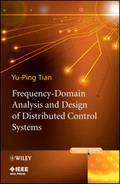
Frequency-Domain Analysis and Design of Distributed Control Systems
This book presents a unified frequency-domain method for the analysis of distributed control systems. The following important topics are discussed by using the proposed frequency-domain method: (1) Scalable stability criteria of networks of distributed control systems; (2) Effect of heterogeneous delays on the stability of a network of distributed control system; (3) Stability of Internet congestion control algorithms; and (4) Consensus in multi-agent systems. This book is ideal for graduate students in control, networking and robotics, as well as researchers in the fields of control theory and networking who are interested in learning and applying distributed control algorithms or frequency-domain analysis methods.
eBook


Signals and Boundaries
Complex adaptive systems (cas), including ecosystems, governments, biological cells, and markets, are characterized by intricate hierarchical arrangements of boundaries and signals. In ecosystems, for example, niches act as semi-permeable boundaries, and smells and visual patterns serve as signals; governments have departmental hierarchies with memoranda acting as signals; and so it is with other cas. Despite a wealth of data and descriptions concerning different cas, there remain many unanswered questions about \"steering\" these systems. In Signals and Boundaries , John Holland argues that understanding the origin of the intricate signal/border hierarchies of these systems is the key to answering such questions. He develops an overarching framework for comparing and steering cas through the mechanisms that generate their signal/boundary hierarchies. Holland lays out a path for developing the framework that emphasizes agents, niches, theory, and mathematical models. He discusses, among other topics, theory construction; signal-processing agents; networks as representations of signal/boundary interaction; adaptation; recombination and reproduction; the use of tagged urn models (adapted from elementary probability theory) to represent boundary hierarchies; finitely generated systems as a way to tie the models examined into a single framework; the framework itself, illustrated by a simple finitely generated version of the development of a multi-celled organism; and Markov processes.
eBook

Systems thinking for social change : a practical guide to solving complex problems, avoiding unintended consequences, and achieving lasting results
\"Donors, leaders of nonprofits, and public policy makers usually have the best of intentions to serve society and improve social conditions. But often their solutions fall far short of what they want to accomplish and what is truly needed. Moreover, the answers they propose and fund often produce the opposite of what they want over time. We end up with temporary shelters that increase homelessness, drug busts that increase drug-related crime, or food aid that increases starvation. How do these unintended consequences come about and how can we avoid them? By applying conventional thinking to complex social problems, we often perpetuate the very problems we try so hard to solve, but it is possible to think differently, and get different results. Systems Thinking for Social Change enables readers to contribute more effectively to society by helping them understand what systems thinking is and why it is so important in their work. It also gives concrete guidance on how to incorporate systems thinking in problem solving, decision making, and strategic planning without becoming a technical expert. Systems thinking leader David Stroh walks readers through techniques he has used to help people end homelessness and increase affordable housing, improve public health, strengthen public education and access to early childhood development services, protect child welfare, reform the criminal justice system, resolve identity-based conflicts, and more. The result is a highly readable, effective guide to understanding systems and using that knowledge to get the results you want\"-- Provided by publisher.
Book
Foundations of complex systems
Complexity is emerging as a post-Newtonian paradigm for approaching a large body of phenomena of concern at the crossroads of physical, engineering, environmental, life and human sciences from a unifying point of view.
eBook


Modeling and Visualization of Complex Systems and Enterprises
Explains multi-level models of enterprise systems and covers modeling methodology This book addresses the essential phenomena underlying the overall behaviors of complex systems and enterprises. Understanding these phenomena can enable improving these systems. These phenomena range from physical, behavioral, and organizational, to economic and social, all of which involve significant human components. Specific phenomena of interest and how they are represented depend on the questions of interest and the relevant domains or contexts. Modeling and Visualization of Complex Systems and Enterprises examines visualization of phenomena and how understanding the relationships among phenomena can provide the basis for understanding where deeper exploration is warranted. The author also reviews mathematical and computational models, defined very broadly across disciplines, which can enable deeper understanding. * Presents a 10 step methodology for addressing questions associated with the design or operation of complex systems and enterprises * Examines six archetypal enterprise problems including two from healthcare, two from urban systems, and one each from financial systems and defense systems * Provides an introduction to the nature of complex systems, historical perspectives on complexity and complex adaptive systems, and the evolution of systems practice Modeling and Visualization of Complex Systems and Enterprises is written for graduate students studying systems science and engineering and professionals involved in systems science and engineering, those involved in complex systems such as healthcare delivery, urban systems, sustainable energy, financial systems, and national security.
eBook