
Catalogue Search | MBRL


Are you sure you want to remove the book from the shelf?

{{itemTitle}}
726
result(s) for
"SELF-HELP / Meditations."
Sort by:
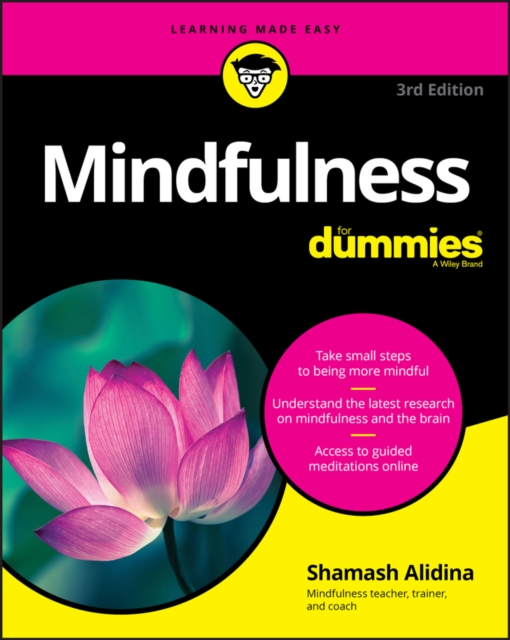
Mindfulness for dummies
Breathe deep, declutter your mind, and start leading a healthier, happier life The worry won't stop.You're feeling stressed out, the day-to-day seems overwhelming, and it seems difficult to do the simplest things.How can you escape this continual negative feedback loop?.
eBook

Physical Activity, Mindfulness Meditation, or Heart Rate Variability Biofeedback for Stress Reduction: A Randomized Controlled Trial
In contemporary western societies stress is highly prevalent, therefore the need for stress-reducing methods is great. This randomized controlled trial compared the efficacy of self-help physical activity (PA), mindfulness meditation (MM), and heart rate variability biofeedback (HRV-BF) in reducing stress and its related symptoms. We randomly allocated 126 participants to PA, MM, or HRV-BF upon enrollment, of whom 76 agreed to participate. The interventions consisted of psycho-education and an introduction to the specific intervention techniques and 5 weeks of daily exercises at home. The PA exercises consisted of a vigorous-intensity activity of free choice. The MM exercises consisted of guided mindfulness meditation. The HRV-BF exercises consisted of slow breathing with a heart rate variability biofeedback device. Participants received daily reminders for their exercises and were contacted weekly to monitor their progress. They completed questionnaires prior to, directly after, and 6 weeks after the intervention. Results indicated an overall beneficial effect consisting of reduced stress, anxiety and depressive symptoms, and improved psychological well-being and sleep quality. No significant between-intervention effect was found, suggesting that PA, MM, and HRV-BF are equally effective in reducing stress and its related symptoms. These self-help interventions provide easily accessible help for people with stress complaints.
Journal Article
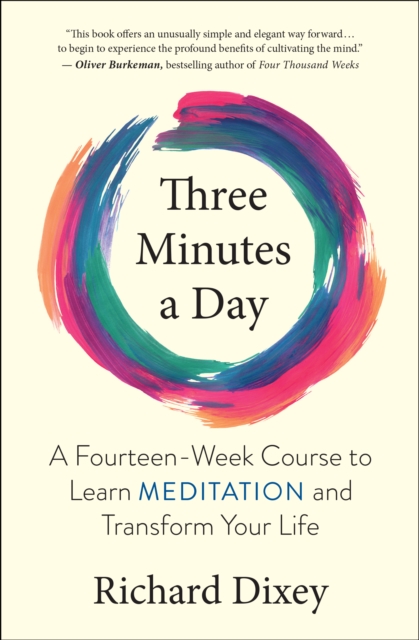
Three Minutes a Day
Three Minutes a Day makes a bold claim: in just three minutes a day, for fourteen weeks -- less than five hours total -- you can generate real insight into personal experience that no amount of reading or learning can replicate.
eBook

Positive Impact of Mindfulness Meditation on Mental Health of Female Teachers during the COVID-19 Outbreak in Italy
The Covid-19 pandemic and subsequent public health measures were shown to impact negatively on people’s mental health. In particular, women were reported to be at higher risk than men of developing symptoms of stress/anxiety/depression, and resilience was considered a key factor for positive mental health outcomes. In the present study, a sample of Italian female teachers (n = 66, age: 51.5 ± 7.9 years) was assessed with self-report instruments one month before and one month after the start of the Covid-19 lockdown: mindfulness skills, empathy, personality profiles, interoceptive awareness, psychological well-being, emotional distress and burnout levels were measured. Meanwhile, they received an 8-week Mindfulness-Oriented Meditation (MOM) course, through two group meetings and six individual video-lessons. Based on baseline personality profiles, analyses of variance were performed in a low-resilience (LR, n = 32) and a high-resilience (HR, n = 26) group. The LR and HR groups differed at baseline in most of the self-report measures. Pre–post MOM significant improvements were found in both groups in anxiety, depression, affective empathy, emotional exhaustion, psychological well-being, interoceptive awareness, character traits and mindfulness levels. Improvements in depression and psychological well-being were higher in the LR vs. HR group. We conclude that mindfulness-based training can effectively mitigate the psychological negative consequences of the Covid-19 outbreak, helping in particular to restore well-being in the most vulnerable individuals.
Journal Article

The psychology of meditation : research and practice
In the past 20 years meditation has grown in popularity across the world - practised by the general public, as well as by an increasing number of psychologists within their daily clinical practice. This book explores the practice of meditation and mindfulness, providing accounts of the cognitive and emotional processes elicited in in meditation.
eBook

An Empathy-Driven, Conversational Artificial Intelligence Agent (Wysa) for Digital Mental Well-Being: Real-World Data Evaluation Mixed-Methods Study
A World Health Organization 2017 report stated that major depression affects almost 5% of the human population. Major depression is associated with impaired psychosocial functioning and reduced quality of life. Challenges such as shortage of mental health personnel, long waiting times, perceived stigma, and lower government spends pose barriers to the alleviation of mental health problems. Face-to-face psychotherapy alone provides only point-in-time support and cannot scale quickly enough to address this growing global public health challenge. Artificial intelligence (AI)-enabled, empathetic, and evidence-driven conversational mobile app technologies could play an active role in filling this gap by increasing adoption and enabling reach. Although such a technology can help manage these barriers, they should never replace time with a health care professional for more severe mental health problems. However, app technologies could act as a supplementary or intermediate support system. Mobile mental well-being apps need to uphold privacy and foster both short- and long-term positive outcomes.
This study aimed to present a preliminary real-world data evaluation of the effectiveness and engagement levels of an AI-enabled, empathetic, text-based conversational mobile mental well-being app, Wysa, on users with self-reported symptoms of depression.
In the study, a group of anonymous global users were observed who voluntarily installed the Wysa app, engaged in text-based messaging, and self-reported symptoms of depression using the Patient Health Questionnaire-9. On the basis of the extent of app usage on and between 2 consecutive screening time points, 2 distinct groups of users (high users and low users) emerged. The study used mixed-methods approach to evaluate the impact and engagement levels among these users. The quantitative analysis measured the app impact by comparing the average improvement in symptoms of depression between high and low users. The qualitative analysis measured the app engagement and experience by analyzing in-app user feedback and evaluated the performance of a machine learning classifier to detect user objections during conversations.
The average mood improvement (ie, difference in pre- and post-self-reported depression scores) between the groups (ie, high vs low users; n=108 and n=21, respectively) revealed that the high users group had significantly higher average improvement (mean 5.84 [SD 6.66]) compared with the low users group (mean 3.52 [SD 6.15]); Mann-Whitney P=.03 and with a moderate effect size of 0.63. Moreover, 67.7% of user-provided feedback responses found the app experience helpful and encouraging.
The real-world data evaluation findings on the effectiveness and engagement levels of Wysa app on users with self-reported symptoms of depression show promise. However, further work is required to validate these initial findings in much larger samples and across longer periods.
Journal Article

A Randomised Controlled Trial of a Brief Online Mindfulness-Based Intervention in a Non-clinical Population: Replication and Extension
Building on previous research, this study compared the effects of two brief, online mindfulness-based interventions (MBIs; with and without formal meditation practice) and a no intervention control group in a non-clinical sample. One hundred and fifty-five university staff and students were randomly allocated to a 2-week, self-guided, online MBI with or without mindfulness meditation practice, or a wait list control. Measures of mindfulness, perceived stress, perseverative thinking and anxiety/depression symptoms within were administered before and after the intervention period. Intention to treat analysis identified significant differences between groups on change over time for all measured outcomes. Participation in the MBIs was associated with significant improvements in all measured domains (all
p
s < 0.05), with effect sizes in the small to medium range (0.25 to 0.37, 95% CIs 0.11 to 0.56). No significant changes on these measures were found for the control group. Change in perseverative thinking was found to mediate the relationship between condition and improvement on perceived stress and anxiety/depression symptom outcomes. Contrary to our hypotheses, no differences between the intervention conditions were found. Limitations of the study included reliance on self-report data, a relatively high attrition rate and absence of a longer-term follow-up. This study provides evidence in support of the feasibility and effectiveness of brief, self-guided MBIs in a non-clinical population and suggests that reduced perseverative thinking may be a mechanism of change. Our findings provide preliminary evidence for the effectiveness of a mindfulness psychoeducation condition, without an invitation to formal mindfulness meditation practice. Further research is needed to confirm and better understand these results and to test the potential of such interventions.
Journal Article
A Randomized Controlled Trial of an Online Self-Help Mindfulness Intervention for Emotional Distress: Serial Mediating Effects of Mindfulness and Experiential Avoidance
Objectives
Internet-based self-help Mindfulness Intervention for Emotional Distress (iMIED) program is a newly developed program targeting essential transdiagnostic factors underlying emotional distress, the effects of which have gained initial support in sub-clinical samples. The current study investigated its effects on the underlying mechanisms by examining mindfulness and experiential avoidance as putative mediators.
Method
Patients with emotional disorders were recruited online. After interviews, 75 patients were randomly allocated to either iMIED (
n
= 37) including treatment as usual (TAU) or TAU-only control group (
n
= 38). Mindfulness, experiential avoidance, and emotional distress (i.e., anxiety, depression, and general emotional distress) were measured before (T0) and after the intervention (T8). During the intervention period, mindfulness was measured weekly (T1–T7); experiential avoidance was measured at Week 2 (T2) and Week 5 (T5).
Results
Intention-to-treat 2 × 2 repeated-measures ANOVAs showed that, compared with the TAU-only group, mindfulness, experiential avoidance, and emotional distress significantly improved in the iMIED + TAU group (Cohen’s
d
= 0.53–0.79). Latent growth curve analyses showed that more than half of the improvement in mindfulness and experiential avoidance occurred at T3 and T5, respectively. Serial mediation analyses found that mindfulness at T3 and experiential avoidance at T5 sequentially mediated the effects of the iMIED program on emotional distress.
Conclusions
The current study, using a randomized controlled trial with multiple time-point measurements, demonstrated that the iMIED program offers a scalable approach for the management of emotional distress by increasing mindfulness and decreasing experiential avoidance.
Preregistration
The current study was preregistered in the Chinese Clinical Trial Registry (
http://www.chictr.org.cn/
, Registration number: ChiCTR2100044480).
Journal Article
The Relationship Between Doses of Mindfulness-Based Programs and Depression, Anxiety, Stress, and Mindfulness: a Dose-Response Meta-Regression of Randomized Controlled Trials
Objectives
Research with mindfulness-based programs (MBPs) has found participating in an MBP to predict beneficial outcomes; however, there is currently mixed research regarding the most helpful dose. This review aimed to determine whether different doses related to MBPs significantly predict outcomes.
Methods
Systematic literature searches of electronic databases and trial registration sites for all randomized controlled trials of MBPs identified 203 studies (
N
= 15,971). Depression was the primary outcome at post-program and follow-up, with secondary outcomes being mindfulness, anxiety and stress. Doses examined related to session numbers, duration and length, facilitator contact and practice. Dose-response relationships were analyzed using meta-regression in R with separate analyses for inactive and active controls.
Results
Initial meta-analyses found significant between-group differences favoring MBPs for all outcomes. Meta-regression results suggested significant dose-response relationships for the mindfulness outcome for doses relating to face-to-face contact (
d
= 0.211; C.I.[0.064,0.358]), program intensity (
d
= 0.895; C.I.[0.315,1.474]) and actual program use (
d
= 0.013; C.I.[0.001,0.024]). The majority of results for psychological outcomes, including depression, were not significant.
Conclusions
This meta-regression examines dose-response relationships for different types and doses relating to MBPs. Considered together, MBPs appeared helpful compared with controls, supporting previous research. Based on meta-regression results, there was no evidence that larger doses are more helpful than smaller doses for predicting psychological outcomes; a finding consistent with some previous research particularly with non-clinical populations. Additionally, greater contact, intensity and actual use of MBPs predicting increased mindfulness correspond with previous research and theory. Potential limitations and recommendations for future research are explored.
Journal Article

Mindfulness-based interventions for binge eating: an updated systematic review and meta-analysis
Mindfulness-based interventions (MBIs) have gained popularity in recent years in treating binge eating. Previous reviews and meta-analyses have found that MBIs demonstrated medium-large to large effects in reducing binge eating. However, as the literature on this topic has been growing rapidly, an updated review on MBIs’ effectiveness is much needed. This study is a 10-year update of the Godfrey, Gallo, & Afari (2015) systematic review and meta-analysis of MBIs for binge eating. PubMED, PsycINFO, and Web of Science were searched using keywords including binge eating, overeating, objective bulimic episodes, acceptance and commitment therapy, dialectical behavior therapy, mindfulness, meditation, and mindful eating. Results indicate there has been a large increase in the number of studies testing MBIs for binge eating in the past 10 years with 54 studies meeting inclusion criteria, compared to 19 ten years ago. The majority of the studies yielded large and medium effect sizes. The random effects meta-analysis of between-group effect sizes yielded medium-large effects for MBIs versus non-psychological intervention controls at post-treatment (mean Hedge’s
g
= − 0.65) and follow-up (mean Hedge’s
g
= − 0.71), and negligible effects for MBIs versus active psychological controls at post-treatment (mean Hedge’s
g
= − 0.05) and follow-up (mean Hedge’s
g
= 0.13). Of all MBIs, DBT had the most studies with large effects. More studies examined MBIs that directly targeted binge eating had larger effects than studies with MBIs targeting other health outcomes (with binge eating as a secondary outcome). New studies included in the current review were internationally-conducted, focused more on participants with overweight or obesity, involved more self-help and technology-based components, and had more novel and innovative interventions components. Future MBIs research should conduct more RCTs comparing MBIs with other psychological interventions, conduct meta-analyses to examine the effectiveness of different types of MBIs and intervention targets, and extend follow-up periods.
Journal Article