
Catalogue Search | MBRL


Are you sure you want to remove the book from the shelf?

{{itemTitle}}
3,972,750
result(s) for
"SITES"
Sort by:


Structure, function and regulation of the hsp90 machinery
Heat shock protein 90 (Hsp90) is an ATP-dependent molecular chaperone which is essential in eukaryotes. It is required for the activation and stabilization of a wide variety of client proteins and many of them are involved in important cellular pathways. Since Hsp90 affects numerous physiological processes such as signal transduction, intracellular transport, and protein degradation, it became an interesting target for cancer therapy. Structurally, Hsp90 is a flexible dimeric protein composed of three different domains which adopt structurally distinct conformations. ATP binding triggers directionality in these conformational changes and leads to a more compact state. To achieve its function, Hsp90 works together with a large group of cofactors, termed co-chaperones. Co-chaperones form defined binary or ternary complexes with Hsp90, which facilitate the maturation of client proteins. In addition, posttranslational modifications of Hsp90, such as phosphorylation and acetylation, provide another level of regulation. They influence the conformational cycle, co-chaperone interaction, and inter-domain communications. In this review, we discuss the recent progress made in understanding the Hsp90 machinery.
Journal Article


Toxic Town
p strongShows the risks of high-tech pollution through a study of an IBM plant's effects on a New York town/strong In 1924, IBM built its first plant in Endicott, New York. Now, Endicott is a contested toxic waste site. With its landscape thoroughly contaminated by carcinogens, Endicott is the subject of one of the nation's largest corporate-state mitigation efforts. Yet despite the efforts of IBM and the U.S. government, Endicott residents remain skeptical that the mitigation systems employed were designed with their best interests at heart. In emToxic Town/em, Peter C. Little tracks and critically diagnoses the experiences of Endicott residents as they learn to live with high-tech pollution, community transformation, scientific expertise, corporate-state power, and risk mitigation technologies. By weaving together the insights of anthropology, political ecology, disaster studies, and science and technology studies, the book explores questions of theoretical and practical import for understanding the politics of risk and the ironies of technological disaster response in a time when IBM's stated mission is to build a \"Smarter Planet.\" Little critically reflects on IBM's new corporate tagline, arguing for a political ecology of corporate social and environmental responsibility and accountability that places the social and environmental politics of risk mitigation front and center. Ultimately, Little argues that we will need much more than hollow corporate taglines, claims of corporate responsibility, and attempts to mitigate high-tech disasters to truly build a smarter planet./p
eBook

Web page design
\"Describes how Web pages are built, how coding languages work together, what content management systems are, and how Internet links work. Young readers are shown how to plan and design their own Web page using templates\"--Amazon.com.
BOOK
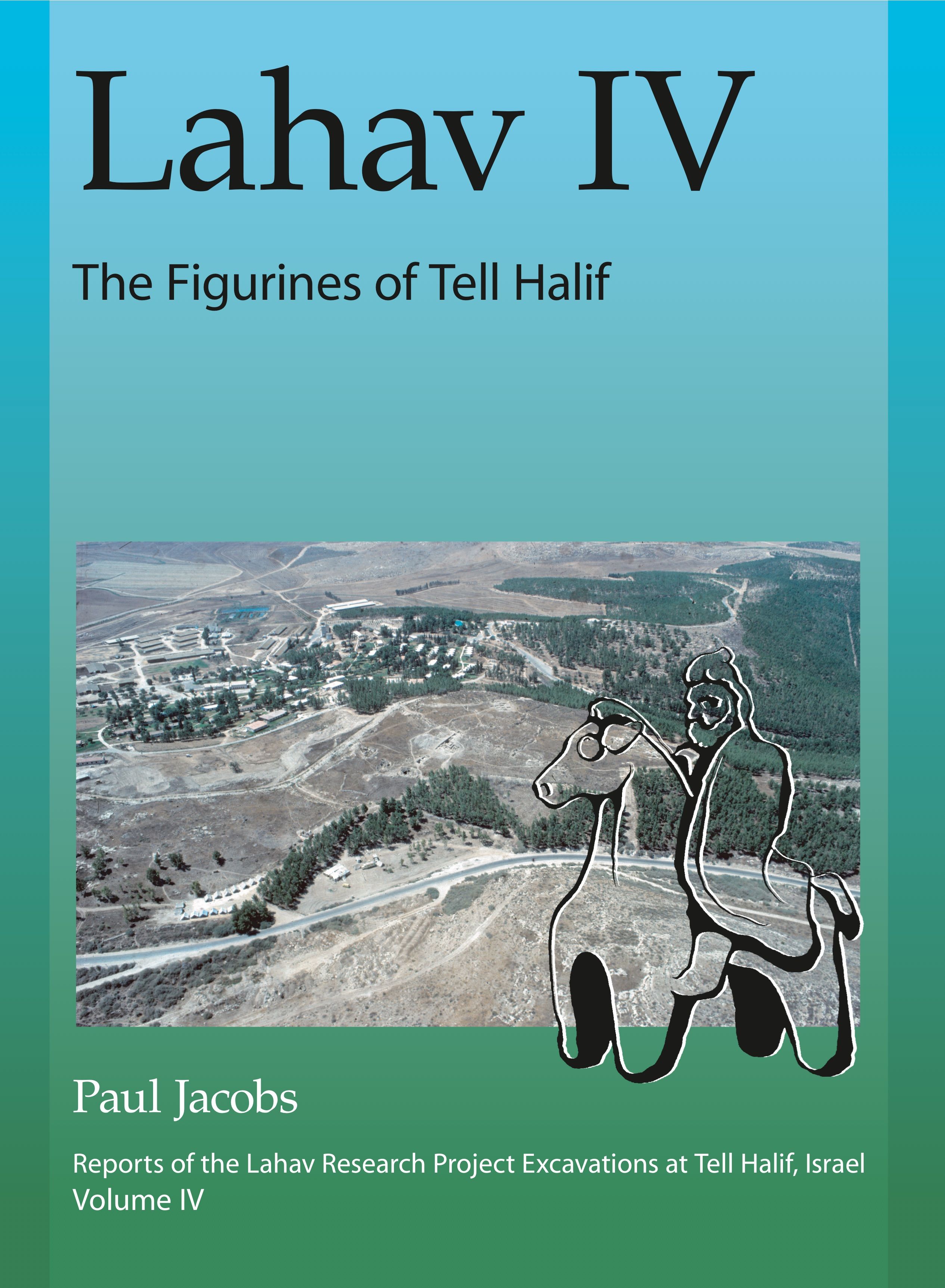
Lahav IV: The Figurines of Tell Halif
This volume appears as the fourth in a series of reports on the investigations of the Lahav Research Project (LRP) at Tell Halif, located near Kibbutz Lahav in southern Israel. The book and CD, also titled The Figurines of Tell Halif, contain the publication of the terra-cotta and stone figurine assemblage discovered in the Phase III excavations by LRP. The book presents the text of the report, including relevant archaeological contexts, while the CD is the primary source for detailed information about the figurines. It presents color photographs of each artifact, as well as artist's drawings and QuickTime movies, along with descriptions and a working typology of the mixed Iron II, Persian, and Hellenistic period terra-cottas. Together, book and CD offer the entire corpus of 794 figurine and statue fragments and provide an invaluable addition to the corpus of Levantine figurines.
eBook


Archaeology, Narrative, and the Politics of the Past
In this innovative work, Julia King moves nimbly among a
variety of sources and disciplinary
approaches—archaeological, historical, architectural,
literary, and art-historical—to show how places take on,
convey, and maintain meanings. Focusing on the beautiful
Chesapeake Bay region of Maryland, King looks at the ways in
which various groups, from patriots and politicians of the
antebellum era to present-day archaeologists and
preservationists, have transformed key landscapes into
historical, indeed sacred, spaces. The sites King examines
include the region’s vanishing tobacco farms; St.
Mary’s City, established as Maryland’s first
capital by English settlers in the seventeenth century; and
Point Lookout, the location of a prison for captured
Confederate soldiers during the Civil War. As the author
explores the historical narratives associated with such places,
she uncovers some surprisingly durable myths as well as
competing ones. St. Mary’s City, for example, early on
became the center of Maryland’s “founding
narrative” of religious tolerance, a view commemorated in
nineteenth-century celebrations and reflected even today in
local museum exhibits and preserved buildings. And at Point
Lookout, one private group has established a Confederate
Memorial Park dedicated to those who died at the prison, thus
nurturing the Lost Cause ideology that arose in the South in
the late 1800s, while nearby the custodians of a 1,000-acre
state park avoid controversy by largely ignoring the
area’s Civil War history, preferring instead to
concentrate on recreation and tourism, an unusually popular
element of which has become the recounting of ghost stories. As
King shows, the narratives that now constitute the public
memory in southern Maryland tend to overlook the region’s
more vexing legacies, particularly those involving slavery and
race. Noting how even her own discipline of historical
archaeology has been complicit in perpetuating old narratives,
King calls for research—particularly archaeological
research—that produces new stories and
“counter-narratives” that challenge old perceptions
and interpretations and thus convey a more nuanced grasp of a
complicated past.
eBook


Activation pathway of a G protein-coupled receptor uncovers conformational intermediates as targets for allosteric drug design
G protein-coupled receptors (GPCRs) are the most common proteins targeted by approved drugs. A complete mechanistic elucidation of large-scale conformational transitions underlying the activation mechanisms of GPCRs is of critical importance for therapeutic drug development. Here, we apply a combined computational and experimental framework integrating extensive molecular dynamics simulations, Markov state models, site-directed mutagenesis, and conformational biosensors to investigate the conformational landscape of the angiotensin II (AngII) type 1 receptor (AT
1
receptor) — a prototypical class A GPCR—activation. Our findings suggest a synergistic transition mechanism for AT
1
receptor activation. A key intermediate state is identified in the activation pathway, which possesses a cryptic binding site within the intracellular region of the receptor. Mutation of this cryptic site prevents activation of the downstream G protein signaling and β-arrestin-mediated pathways by the endogenous AngII octapeptide agonist, suggesting an allosteric regulatory mechanism. Together, these findings provide a deeper understanding of AT
1
receptor activation at an atomic level and suggest avenues for the design of allosteric AT
1
receptor modulators with a broad range of applications in GPCR biology, biophysics, and medicinal chemistry.
G protein-coupled receptors (GPCRs) are a critical target in modern drug development across a wide range of indications. Here the authors provide a comprehensive characterization of a typical GPCR, the angiotensin II (AngII) type 1 receptor (AT1R), and provide insight into its activation mechanism that suggest avenues for the design of allosteric GPCR modulators.
Journal Article