
Catalogue Search | MBRL


Are you sure you want to remove the book from the shelf?

{{itemTitle}}
17,192
result(s) for
"SLAVONIC LANGUAGES"
Sort by:
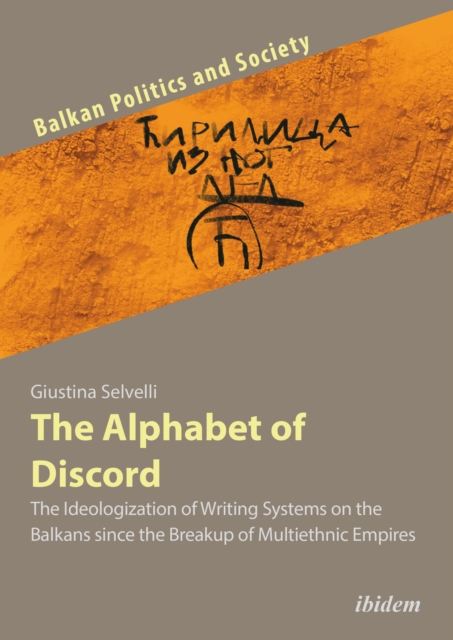
The Alphabet of Discord
What is the relationship between writing systems and nationalism? How can different alphabets coexist in the same country? What is the destiny of the Cyrillic alphabet in Europe?
Giustina Selvelli’s original work provides detailed answers to these far-reaching and potentially divisive questions and many more by examining several intriguing debates on topics of alphabets and national identity in a number of countries from the Balkan area over the course of the last 100 years. Following an encompassing perspective on alphabetic diversity, Selvelli, an expert on Southeast European Studies, reconstructs the ideological context of national discourses connected to the Latin and Cyrillic alphabets, also taking a look at the Arabic and Glagolitic scripts, and interweaving issues on the symbolism of the alphabet with the complex recent history of the region, marked by the parallel influences of the East and the West. She also sheds light on the impact of a range of alphabet policies on ethnolinguistic minorities, proposing a new definition of “alphabetic rights” with special regard to the multiethnic legacy of the former Ottoman and Habsburg empires.
This comprehensive book makes us discover the privileged role that writing systems played in the region’s delicate post-imperial and post-socialist transitions, leaving us captivated by peculiar stories such as that of the utopian “Yugoslav alphabet”.
eBook

Water, Whiskey, and Vodka
A fascinating cultural and linguistic history of the
Slavic languages, exploring the deep connections and distinctions
between them
Water, whiskey, and vodka are three words that seem to have
nothing in common, but each of them comes from the same root.
Water, Whiskey, and Vodka takes a deep dive into the
origins of the Slavic languages, from a common ancestor language
through various cultural and historical shifts to arrive at the
current breadth of languages. The book takes a captivating look at
the unique sociolinguistic context of the Slavic languages and pays
special attention to the cultural subtleties particular to each one
and the people who speak it. Danko Šipka touches on the origins of
the Slavic languages, their linguistic similarities and
differences, word borrowing across them all, and the cultural
importance of languages even within this family of languages.
Water, Whiskey, and Vodka will fascinate
readers-whether or not they speak Slavic languages-interested in
the history and development of one or more Slavic languages.
Writing from the Slavic linguistic tradition, where talking about
language happens in the public sphere, he offers readers a deeper
understanding of various Slavic cultural traditions and historical
events as they are reflected in their languages.
eBook

Trace of Šimon Ondruš in the Etymological Dictionary of the Old Church Slavonic Language
In the
, which contains 2,483 entries, the name Šimon Ondruš appears in 91 of them. Ondruš’s etymological interpretations are original, controversial, often isolated. The specific features of his etymologies, which the
mentions, include in particular the application of laryngeal theory, the Benveniste model of the Indo-European root and the Schwebeablaut, in addition to the method of semantic parallels, the theory of the originally single phoneme
in the Indo-European proto-language, delabialization of Indo-European and Proto-Slavonic consonant groups. For a number of words generally considered to be old borrowings from Romance or Germanic languages, Ondruš preferred their domestic origin, explaining them as autochthonous words. Ondruš’s interest in Old Church Slavonic language was also reflected in the dictionary: for several Old Church Slavonic words, he specified their translation into contemporary Slavonic languages, including Slovak.
Journal Article

Interactions of Vowel Quality and Prosody in East Slavic
This book develops an Optimality-theoretic model of the interaction of phonological tone with segmental sonority, arguing that tone can interact directly with vowel quality without mediating factors such as syllable structure or duration. The proposal is tested against rich and complex patterns of vowel reduction in East Slavic dialects. Though the idea that tone constitutes a part of the phonological system of some Slavic languages has been around for decades, the relationship between tone and vowel reduction has not been systematically explored in previous studies. A tone-based model developed in this book unifies many apparently disparate phenomena by proposing a limited set of constraints, whose minimal re-rankings yield the attested East Slavic vocalic patterns. On the descriptive side, this study formulates novel generalisations and presents linguistic data not previously discussed in generative linguistics. This book will be of use to students and scholars interested in phonology, Slavic languages, and the theory of grammar in general.
eBook
Challenges in Developing a Glagolitic Reverse Dictionary of Croatian Church Slavonic
he Glagolitic script is the oldest Slavic script and one of the two Slavic scripts (the other is Cyrillic). It was actively used in Croatia until the 19th century. Today, the Glagolitic script is a symbol of Croatian national identity. It has significant cultural, artistic, and esthetic value. The goals of the Old Church Slavonic Institute are researching, discovering, recognizing, systematically listing, and editing Glagolitic manuscripts, inscriptions, and printed books. One of the Institute’s main tasks is to create a digital version of the Dictionary of the Croatian Redaction of Church Slavonic. This is a long-term project, and the dictionary has so far only been published in printed form (A to I). In addition to the creation of the digital dictionary, additional web content is being developed (e.g. games), which will provide an additional source and tool for dictionary compilers and users. One of these additional contents is the reverse dictionary, which consists of the headwords written in Glagolitic from the Dictionary. A reverse dictionary is a dictionary in which the words are sorted alphabetically by their final rather than initial letters, i.e. the words are sorted based on their endings. This allows users to look up words by focusing on their final segments. Reverse dictionaries are useful for scientific research, especially for the study of word-formation (e.g. the study of masculine-feminine pairs), but they can also be used for other purposes, such as finding rhymes and compiling educational games. A reverse dictionary for Croatian Church Slavonic is thus a useful tool for further research. The problem is not only that the word search is not done in a classic matter (where the string is searched from the beginning of the word) but also that the Glagolitic script has some specific letters which have to be mapped to certain characters in the Latin script and that the reverse dictionary has headwords in two scripts (Latin and Glagolitic). Currently, no available software solution can accommodate for these problems, so the reverse dictionary is being developed from scratch using a custom code. This paper presents the challenges and solutions in the development of the Croatian Church Slavonic Reverse Dictionary.
Journal Article

Diachronic Slavonic syntax : the interplay between internal development, language contact and metalinguistic factors
The series publishes state-of-the-art work on core areas of linguistics across theoretical frameworks as well as studies that provide new insights by building bridges to neighbouring fields such as neuroscience and cognitive science. The series considers itself a forum for cutting-edge research based on solid empirical data on language in its various manifestations, including sign languages. It regards linguistic variation in its synchronic and diachronic dimensions as well as in its social contexts as important sources of insight for a better understanding of the design of linguistic systems and the ecology and evolution of language.
eBook

Phonetic and Phonemic Laws in Modern Historical and Phonological Studies (Linguistic Historiographical Aspect)
The problem of phonetic and phonemic laws reconstruction in the works of linguists of the 19th–21st centuries was investigated. The study demonstrated the significance of the concepts of sound changes based on the postulate of the phonetic law by E.D. Polivanov (convergent-divergent theory of sound changes), R.O. Jacobson (phonological mutations), which became the foundation of historical phonology, due to which V.K. Zhuravlev completed the construction of the paradigm of historical (diachronic) phonology. It was shown that the phonetic variability and variability of the sound system of the language were considered as a consequence of the action of certain linguistic laws. Definitions of the terms \"phonetic law\" and \"phonemic law\", the establishment of their main differences proved the thesis about the connection of synchrony and diachrony which allowed us to interpret the phenomena of the history of the sound systems of the Proto-Slavonic and East Slavonic languages. V.K. Zhuravlev and Yu.Ya. Burmistrovich's contribution to the study of these issues in relation to the history of East Slavonic languages were described in detail. The work used an actualistic method which allowed us to consider a particular linguistic concept from the point of view of contribution and significance for linguistics in comparison with previous achievements. A.S. Orel presented the material on phonemic laws in works on the sound system history; A.V. Piskunov – the material on the role of phonetic law and analogy, linguistic reconstruction in the works of Kharkiv, Moscow, Kazan schools scientists of; V.A. Glushchenko – the material on understanding the essence of phonetic law in the works of Kharkiv and Moscow schools scientists.
Journal Article
IE -KWE ‘AND; IF’ IN SLAVIC LANGUAGES
The article examines the origin and functional development of the Slavic conjunction ače ‘if; although’ (OPol. acz). The marker of the protasis in conditional clauses was the enclitic *-če, which continues the function of IE *-kwe ‘and; if’. Thus, Sl. *-če ‘if’ is an archaism and may be compared with corresponding forms in Indo-Iranian, Hittite, and Latin. The concessive ače ‘although’ evolved from conditional concessive clauses. TheproposedinterpretationalsoshedslightonthegenesisofOCz.leč‘ifonly’.
Journal Article
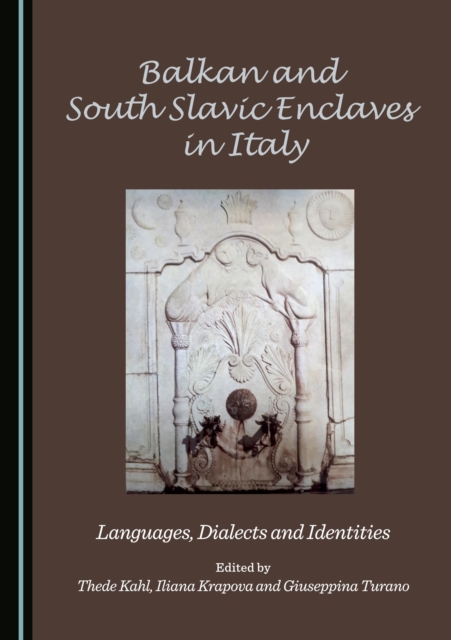
Balkan and South Slavic Enclaves in Italy
This volume is a collection of new writings dealing with some of the Balkan linguistic varieties spoken in north-eastern, central and southern Italy. It brings together twenty-two papers, some of which investigate the mutual influences between each of these Balkan and South Slavic language varieties and their neighbouring Italian dialects. Other contributions study common tendencies which do not just pertain to local contacts, but which are of greater significance for the history of linguistic and cultural contacts in Italy. All of the chapters here present new empirical findings and reflect the breadth and diversity of current research in the fields of areal linguistics, language variation, Balkan dialectology, language contact, types of Balkan convergences, types of structure transfers, the borrowing of structural patterns, and directions of grammaticalisation.
eBook