
Catalogue Search | MBRL


Are you sure you want to remove the book from the shelf?

{{itemTitle}}
570,123
result(s) for
"SOCIAL SCIENCE / Developing "
Sort by:

Development for sustainable agriculture : the Brazilian cerrado
Since the mid-1970s, the tropical savanna, known as Cerrado, has been transformed into one of the world's largest grain-growing regions. This book explores how and by what Brazil achieved inclusive and sustainable growth in the Cerrado.
eBook
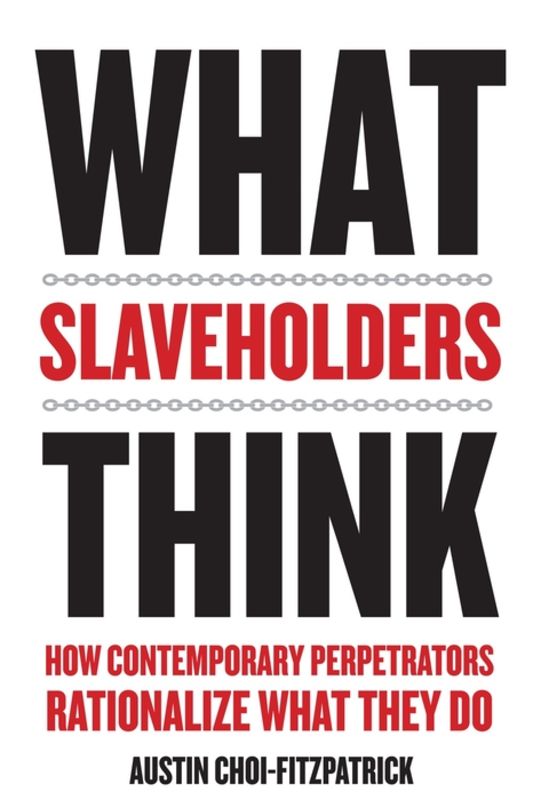
What Slaveholders Think
Drawing on fifteen years of work in the antislavery movement, Austin Choi-Fitzpatrick examines the systematic oppression of men, women, and children in rural India and asks: How do contemporary slaveholders rationalize the subjugation of other human beings, and how do they respond when their power is threatened? More than a billion dollars have been spent on antislavery efforts, yet the practice persists. Why? Unpacking what slaveholders think about emancipation is critical for scholars and policy makers who want to understand the broader context, especially as seen by the powerful. Insight into those moments when the powerful either double down or back off provides a sobering counterbalance to scholarship on popular struggle.
Through frank and unprecedented conversations with slaveholders, Choi-Fitzpatrick reveals the condescending and paternalistic thought processes that blind them. While they understand they are exploiting workers' vulnerabilities, slaveholders also feel they are doing workers a favor, often taking pride in this relationship. And when the victims share this perspective, their emancipation is harder to secure, driving some in the antislavery movement to ask why slaves fear freedom. The answer, Choi-Fitzpatrick convincingly argues, lies in the power relationship. Whether slaveholders recoil at their past behavior or plot a return to power, Choi-Fitzpatrick zeroes in on the relational dynamics of their self-assessment, unpacking what happens next. Incorporating the experiences of such pivotal actors into antislavery research is an immensely important step toward crafting effective antislavery policies and intervention. It also contributes to scholarship on social change, social movements, and the realization of human rights.
eBook

Demystifying Kashmir
The Kashmir issue is typically cast as a \"territorial dispute\" between two belligerent neighbors in South Asia. But there is much more to the story than that. The Jammu and Kashmir state, home to an extraordinary medley of races, tribal groups, languages, and religions, makes up one of the most diverse regions in the subcontinent. \"Demystifying Kashmir\" argues that recognizing the rich, complex, and multi-faceted character of Kashmir is important not only for understanding the structural causes of this conflict but also for providing opportunities to establish a just, viable, and lasting solution. In this remarkable book, Navnita Chadha Behera traces the history of Kashmir from the pre-partition India to the current-day situation. She provides a comprehensive analysis of the philosophical underpinnings and the local, bilateral, and international dynamics of the key players involved in this flashpoint of conflict, including New Delhi, Islamabad, political groups and militant outfits on both sides of the Line of Control, and international powers. The book explores the political and military components of India's and Pakistan's Kashmir strategy, the self-determination debate, and the insurgent movement that began in 1989. The conclusion focuses on what Behera terms the four P's: parameters, players, politics, and prognosis of the ongoing peace process in Kashmir. Behera also reflects on the devastation of the October 2005 earthquake and its implications for the future of the area. Based on extensive field research and primary sources, \"Demystifying Kashmir\" breaks new ground by framing the conflict as a political battle of state-making between India and Pakistan rather than as a rigid and ideological Hindu-Muslim conflict. Behera's work will be an essential guide for journalists, scholars, activists, policymakers, and anyone interested in how to avert a war between these nuclear powers.
eBook
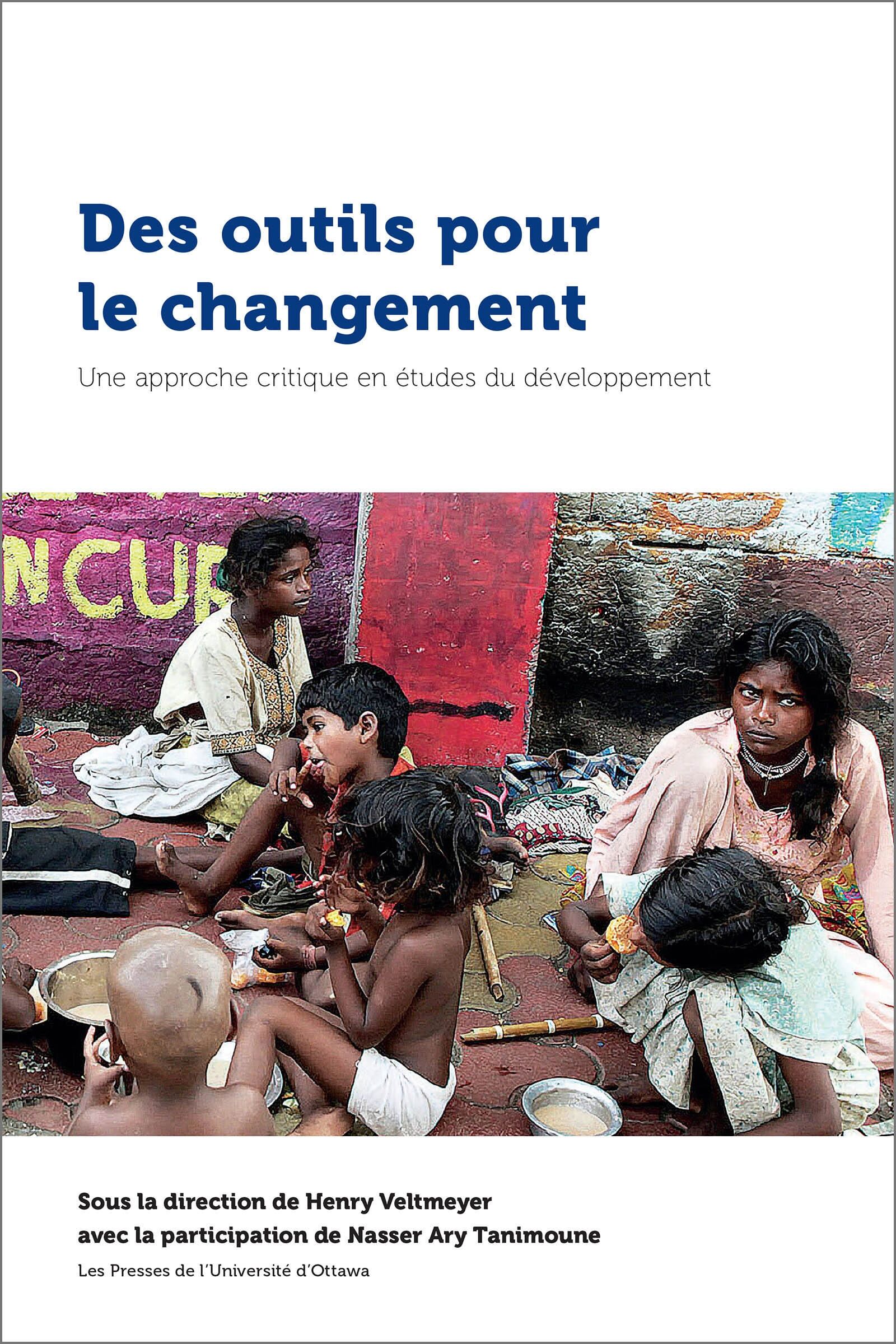
Des outils pour le changement
Le monde se dirige-t-il vers une crise sans précédent où se juxtaposent difficultés économiques, sociales, écologiques et politiques? C'est cette question à facettes multiples qu'examine un collectif de chercheurs de divers horizons. Premier constat: à moins de revoir le modèle de développement actuel et d'y apporter des mesures correctives, les perspectives d'avenir sont plutôt inquiétantes. Cette crise mondiale marquerait, selon ces chercheurs, le point culminant d'une longue période de politiques de développement qui ont en commun d'avoir engendré des bouleversements à travers le monde, notamment dans les pays en développement. Une approche plus proactive et critique aux études en développement international, ainsi qu'à la façon dont le développement s'élabore sur le terrain, s'avère donc essentielle. Publié en anglais d'abord, Des outils pour le changement. Une approche critique en études du développement est une référence incontournable pour le lectorat francophone. Ce recueil comprend 49 brefs modules dont chacun aborde les grands thèmes du développement. Il est destiné tout autant aux théoriciens qu'aux professeurs, étudiants et chercheurs qui s'intéressent à une approche critique en études du développement. Qualifié de réalisation remarquable lors de sa sortie en anglais, cet ouvrage permet de mesurer l'ampleur des études du développement en fonction d'une approche critique. Une conviction commune anime cet ouvrage: il est impératif de procéder à des changements qui favoriseront un progrès véritable et durable.
eBook


Zimbabwe: Mired in Transition
Three years after the advent of Zimbabwe's Inclusive Government in February 2009, the country still awaits the elections that people hope will lead to a more enduring political settlement. Zimbabwe: Mired in Transition reviews the experience of recent years assesses the progress that has been made. What is the public mood, and how has it changed? What steps have been taken to reform the media? How important is a new constitution. Although the economy has stabilised to some extent with the adoption of a multi-currency regime, industrial and agricultural production are depressed, and investment inflows are limited; what spaces exist for fiscal reform? Are local authority structures and the state bureaucracy equipped to handle the tasks that will ne asked of them? In terms of two important areas, the book extends its analysis further back than 2009. First, is the issue of emigration. Estimates of the number of Zimbabweans in the diaspora range from three to four million; what impact us this having on national development, and to what extent might the trend of migration be reversed? The second concerns young people, the chapter on which concludes: 'We already have a \"lost generation\" - those who were once called the \"born frees\". Unless positive changes are made, we will still have another'. This collection of eleven essays examines in detail some of the pressing questions which Zimbabweans must ask as they chart a way forward.
eBook

Development for sustainable agriculture
\"Brazil has become one of today's major producers and net exporters of grains. This was achieved by converting barren land into one of the most productive agricultural regions in the world. Since the mid-1970s, the tropical savanna, known as Cerrado, has been transformed into one of the world's largest grain-growing areas. The transformation of Cerrado is one of the crucial factors that enabled Brazil's impressive poverty reduction both through generating jobs and inclusive growth as well as through increasing food and nutrition security. Innovative technologies and institutions were introduced and developed to uphold environmental and ecological conservation. The experiences of the Cerrado related in this book will be of great value to contemporary developing countries struggling to attain food and nutrition security, value chains, employment and inclusive growth, and sustainable development\"--
Book

Development as modernity, modernity as development
This book analyses the impact of the Western idea of 'modernity' on development and underdevelopment in Africa. It traces the genealogy of the Western idea of modernity from European Enlightenment concepts of the universal nature of human history and development, and shows how this idea was used to justify the Western exploitation and oppression of Africa. It argues that contemporary development, theory and practice is a continuation of the Enlightenment project and that Africa can only achieve real development by rejecting Western modernity and inventing its own forms of modernity. The book is divided into four sections. The first section provides an outline of the theory of modernity in the Enlightenment project. In the second section, an attempt is made to trace the genealogy of the idea of development as modernity and how the African development process gets entangled with it. Here, its evolution is mapped through three periods: early modernity, capitalist modernity and late modernity. Zeroing in on the current era of late or hypermodernity, the book contests the idea that there is something new in globalisation and its neo-liberal development paradigm. The third section turns to the complex but pertinent question of how, at the beginning of the twenty-first century, Africa can transcend the impasse of modernity. The fourth and final section sums up the argument and points the way forward.
eBook

Des outils pour le changement
global crisis - developing countries - international development studies
Le monde se dirige-t-il vers une crise sans précédent où se juxtaposent difficultés économiques, sociales, écologiques et politiques ? C’est cette question à facettes multiples qu’examine un collectif de chercheurs de divers horizons. Premier constat : à moins de revoir le modèle de développement actuel et d’y apporter des mesures correctives, les perspectives d’avenir sont plutôt inquiétantes. Cette crise mondiale marquerait, selon ces chercheurs, le point culminant d’une longue période de politiques de développement qui ont en commun d’avoir engendré des bouleversements à travers le monde, notamment dans les pays en développement. Une approche plus proactive et critique aux études en développement international, ainsi qu’à la façon dont le développement s’élabore sur le terrain, s’avère donc essentielle. Publié en anglais d’abord, Des outils pour le changement. Une approche critique en études du développement est une référence incontournable pour le lectorat francophone. Ce recueil comprend 49 brefs modules dont chacun aborde les grands thèmes du développement. Il est destiné tout autant aux théoriciens qu’aux professeurs, étudiants et chercheurs qui s’intéressent à une approche critique en études du développement. Qualifié de réalisation remarquable lors de sa sortie en anglais, cet ouvrage permet de mesurer l’ampleur des études du développement en fonction d’une approche critique. Une conviction commune anime cet ouvrage : il est impératif de procéder à des changements qui favoriseront un progrès véritable et durable.
eBook