
Catalogue Search | MBRL


Are you sure you want to remove the book from the shelf?

{{itemTitle}}
138,103
result(s) for
"SOCIAL SCIENCE / Social Classes "
Sort by:

Envy Up, Scorn Down
The United States was founded on the principle of equal opportunity for all, and this ethos continues to inform the nation’s collective identity. In reality, however, absolute equality is elusive. The gap between rich and poor has widened in recent decades, and the United States has the highest level of economic inequality of any developed country. Social class and other differences in status reverberate throughout American life, and prejudice based on another’s perceived status persists among individuals and groups. In Envy Up, Scorn Down, noted social psychologist Susan Fiske examines the psychological underpinnings of interpersonal and intergroup comparisons, exploring why we compare ourselves to those both above and below us and analyzing the social consequences of such comparisons in day-to-day life. What motivates individuals, groups, and cultures to envy the status of some and scorn the status of others? Who experiences envy and scorn most? Envy Up, Scorn Down marshals a wealth of recent psychological studies as well as findings based on years of Fiske’s own research to address such questions. She shows that both envy and scorn have distinctive biological, emotional, cognitive, and behavioral characteristics. And though we are all “wired” for comparison, some individuals are more vulnerable to these motives than others. Dominant personalities, for example, express envy toward high-status groups such as the wealthy and well-educated, and insecurity can lead others to scorn those perceived to have lower status, such as women, minorities, or the disabled. Fiske shows that one’s race or ethnicity, gender, and education all correlate with perceived status. Regardless of whether one is accorded higher or lower status, however, all groups rank their members, and all societies rank the various groups within them. We rate each group as either friend or foe, able or unable, and accordingly assign them the traits of warmth or competence. The majority of groups in the United States are ranked either warm or competent but not both, with extreme exceptions: the homeless or the very poor are considered neither warm nor competent. Societies across the globe view older people as warm but incompetent. Conversely, the very rich are generally considered cold but highly competent. Envy Up, Scorn Down explores the nuances of status hierarchies and their consequences and shows that such prejudice in its most virulent form dehumanizes and can lead to devastating outcomes—from the scornful neglect of the homeless to the envious anger historically directed at Tutsis in Rwanda or Jews in Europe. Individuals, groups, and even cultures will always make comparisons between and among themselves. Envy Up, Scorn Down is an accessible and insightful examination of drives we all share and the prejudice that can accompany comparison. The book deftly shows that understanding envy and scorn—and seeking to mitigate their effects—can prove invaluable to our lives, our relationships, and our society.
eBook
Facing Social Class
Many Americans, holding fast to the American Dream and the promise of equal opportunity, claim that social class doesn’t matter. Yet the ways we talk and dress, our interactions with authority figures, the degree of trust we place in strangers, our religious beliefs, our achievements, our senses of morality and of ourselves—all are marked by social class, a powerful factor affecting every domain of life. In Facing Social Class, social psychologists Susan Fiske and Hazel Rose Markus, and a team of sociologists, anthropologists, linguists, and legal scholars, examine the many ways we communicate our class position to others and how social class shapes our daily, face-to-face interactions—from casual exchanges to interactions at school, work, and home. Facing Social Class exposes the contradiction between the American ideal of equal opportunity and the harsh reality of growing inequality, and it shows how this tension is reflected in cultural ideas and values, institutional practices, everyday social interactions, and psychological tendencies. Contributor Joan Williams examines cultural differences between middle- and working-class people and shows how the cultural gap between social class groups can influence everything from voting practices and political beliefs to work habits, home life, and social behaviors. In a similar vein, Annette Lareau and Jessica McCrory Calarco analyze the cultural advantages or disadvantages exhibited by different classes in institutional settings, such as those between parents and teachers. They find that middle-class parents are better able to advocate effectively for their children in school than are working-class parents, who are less likely to challenge a teacher’s authority. Michael Kraus, Michelle Rheinschmidt, and Paul Piff explore the subtle ways we signal class status in social situations. Conversational style and how close one person stands to another, for example, can influence the balance of power in a business interaction. Diana Sanchez and Julie Garcia even demonstrate that markers of low socioeconomic status such as incarceration or unemployment can influence whether individuals are categorized as white or black—a finding that underscores how race and class may work in tandem to shape advantage or disadvantage in social interactions. The United States has one of the highest levels of income inequality and one of the lowest levels of social mobility among industrialized nations, yet many Americans continue to buy into the myth that theirs is a classless society. Facing Social Class faces the reality of how social class operates in our daily lives, why it is so pervasive, and what can be done to alleviate its effects.
eBook
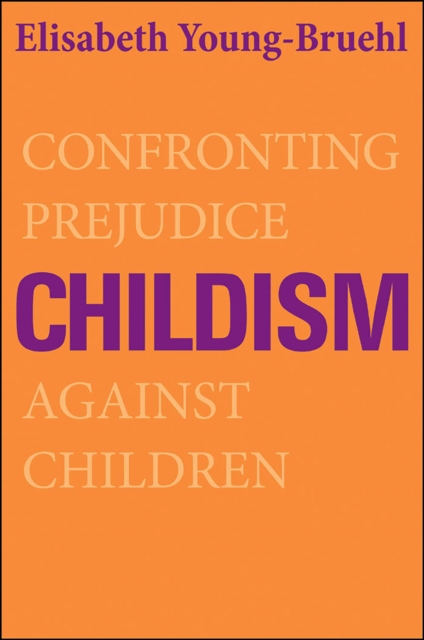
Childism : confronting prejudice against children
In this groundbreaking volume on the human rights of children, acclaimed analyst, political theorist, and biographer Elisabeth Young-Bruehl argues that prejudice exists against children as a groupand that it is comparable to racism, sexism, and homophobia. This prejudicechildismlegitimates and rationalizes a broad continuum of acts that are not in the best interests of children, including the often violent extreme of child abuse and neglect. According to Young-Bruehl, reform is possible only if we acknowledge this prejudice in its basic forms and address the motives and cultural forces that drive it, rather than dwell on the various categories of abuse and punishment.There will always be individuals and societies that turn on their children,\" writes Young-Bruehl, breaking the natural order Aristotle described two and a half millennia ago in his Nichomachean Ethics.\" In Childism, Young-Bruehl focuses especially on the ways in which Americans have departed from the child-supportive trends of the Great Society and of the United Nations Convention on the Rights of the Child.Many years in the making, Childism draws upon a wide range of sources, from the literary and philosophical to the legal and psychoanalytic. Woven into this extraordinary volume are case studies that illuminate the profound importance of listening to the victims who have so much to tell us about the visible and invisible ways in which childism is expressed.
eBook

Identity investments : middle-class responses to precarious privilege in neoliberal Chile
After Pinochet's dictatorship ended in Chile in 1990, the country experienced a rapid decline in poverty along with a quickly growing economy. As a result, Chile's middle class expanded dramatically, echoing trends seen across the Global South as neoliberalism took firm hold in the 1990s and the early 2000s. Identity Investments examines the politics and consumption practices of this vast and varied fraction of the Chilean population, seeking to better understand their value systems and the histories that informed them. Using participant observation, interviews, and photographs, Joel Stillerman develops a unique typology of the middle class, made up of activists, moderate Catholics, pragmatists, and youngsters. This typology allows him to unearth the cultural, political, and religious roots of middle-class market practices in contrast with other studies focused on social mobility and exclusionary practices. The resultant contrast in backgrounds, experiences, and perspectives of these four groups animates this book and extends an emerging body of scholarship focused on the connections between middle-class market choices and politics in the Global South, with important implications for Chile's recent explosive political changes.
eBook

Creating an Opportunity Society
Presents facts and factors that contribute to economic opportunity, looking at how poor, middle class, and rich have fared in recent decades. Proposes a cost-effective agenda for increasing opportunity, consistent with American values, and focuses on improving lives of the young and disadvantaged, emphasizing individual responsibility as indispensable for success.
eBook

Rethinking prison reentry
Rethinking Prison Reentry: Transforming Humiliation into Humility describes a prison-based education pedagogy designed to address a prevalent racial politics of shaming, self-segregation, and transgenerational learned helplessness.
eBook

Contested Welfare States
The welfare state is a trademark of the European social model. An extensive set of social and institutional actors provides protection against common risks, offering economic support in periods of hardship and ensuring access to care and services. Welfare policies define a set of social rights and address common vulnerabilities to protect citizens from market uncertainties. But over recent decades, European welfare states have undergone profound restructuring and recalibration.
This book analyzes people's attitudes toward welfare policies across Europe, and offers a novel comparison with the United States. Occupied with normative orientations toward the redistribution of resources and public policies aimed at ameliorating adverse conditions, the book focuses on the interplay between individual welfare attitudes and behavior, institutional contexts, and structural variables. It provides essential input into the comparative study of welfare state attitudes and offers critical insights into the public legitimacy of welfare state reform.
eBook

The Korean Paekjǒng under Japanese Rule
Traditional Korean society was characterized by a rigid hierarchy. The minority Paekjong were the lowest group of the lowest rank of the shinbun class system, and were treated as outcasts throughout the Choson period (1392-1910). This book deals with their historical and social background, and their struggle for human rights and equality in colonial Korea through the activities of the Hyongpyongsa (Association for an Equitable Society), active from c.1923 to 1935. The Hyongpyongsa was the longest-lasting social movement during the colonial period, and its activities provoked confrontations with fellow Koreans as well as with the Japanese colonial powers. Through analysis of the social environment as well as their actions, this study reveals the complexity of early twentieth century Korea's drive towards modernization.
eBook

An intellectual in public
\"The question of the public intellectual is very much in the air again,\" writes Alan Wolfe. As one of our eminent social commentators, Wolfe should know; he's been writing, with fierce intellectual independence, about American public and private life since the 1960s. In this new collection of essays spanning seven years of contributions to The New Republic, The New Yorker, Atlantic Monthly, and other prominent publications, Wolfe displays the courage necessary to write honestly—yet free of ideology, cant, and piety—about the things Americans take very seriously. Wolfe thinks big; indeed, the essays in An Intellectual in Public confront many of the most controversial issues of our time: country, God, race, sex, material consumption, and left and right. Beginning and ending the book are original essays describing the public intellectual's role, and how Wolfe believes that role ought to be filled. An Intellectual in Public is not only a demonstration of Wolfe's pointed analytical skills but a testament to his belief that \"severely ideological thinking\" is inappropriate for some of our most difficult problems, and that \"neither the right nor the left can speak for all of America.\"
eBook

Elite Cultures
Drawing on a diverse, comparative ethnographic literature, this new volume examines the intimate spaces and cultural practices of those elites who occupy positions of power and authority across a variety of different settings. Using ethnographic case studies from a wide range of geographical areas, including Mexico, Peru, Amazonia, Indonesia, Sri Lanka, Europe, North America and Africa, the contributors explore the inner worlds of meaning and practice that define and sustain elite identities. They also provide insights into the cultural mechanisms that maintain elite status, and into the complex ways that elite groups relate to, and are embedded within, wider social and historical processes.
eBook