
Catalogue Search | MBRL


Are you sure you want to remove the book from the shelf?

{{itemTitle}}
366,345
result(s) for
"SOCIAL SCIENCE / Children"
Sort by:

Cold War Comforts
Cold War Comforts examines Canadian women’s efforts to protect children’s health and safety between the dropping of the first atomic bomb in Hiroshima in 1945 and the end of the Vietnam War in 1975. Amid this global insecurity, many women participated in civil defence or joined the disarmament movement as means to protect their families from the consequences of nuclear war. To help children affected by conflicts in Europe and Asia, women also organized foreign relief and international adoptions. In Canada, women pursued different paths to peace and security. From all walks of life, and from all parts of the country, they dedicated themselves to finding ways to survive the hottest periods of the Cold War. What united these women was their shared concern for children’s survival amid Cold War fears and dangers. Acting on their identities as Canadian citizens and mothers, they characterized with their activism the genuine interest many women had in protecting children’s health and safety. In addition, their activities offered them a legitimate space to operate in the traditionally male realms of defence and diplomacy. Their efforts had a direct impact on the lives of children in Canada and abroad and influenced changes in Canada’s education curriculum, immigration laws, welfare practices, defence policy, and international relations. Cold War Comforts offers insight into how women employed maternalism, nationalism, and internationalism in their work, and examines shifting constructions of family and gender in Cold War Canada. It will appeal to scholars of history, child and family studies, and social policy.
eBook

Taking Responsibility for Children
What do we as a society, and as parents in particular, owe to our children? Each chapter in Taking Responsibility for Children offers part of an answer to that question. Although they vary in the approaches they take and the conclusions they draw, each contributor explores some aspect of the moral obligations owed to children by their caregivers. Some focus primarily on the responsibilities of parents, while others focus on the responsibilities of society and government. The essays reflect a mix of concern with the practical and the philosophical aspects of taking responsibility for children, addressing such topics as parental obligations, the rights and entitlements of children, the responsibility of the state, the role and nature of public education in a liberal society, the best ways to ensure adequate child protection, the licensing of parents, children’s religious education, and children’s health. Taking Responsibility for Children will be of interest to philosophers, advocates for children’s interests, and those interested in public policy, especially as it relates to children and families.
eBook
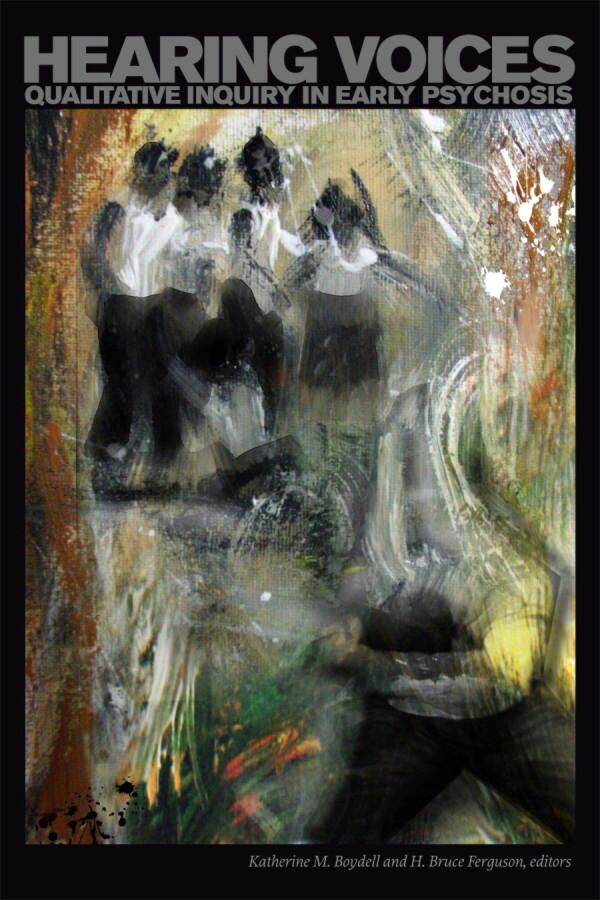
Hearing Voices
Qualitative methods are increasingly useful as psychiatry shifts from a focus on symptom reduction to enabling people to live satisfying and meaningful lives. It becomes important to achieve a deeper understanding of the ways in which mental illness interferes with everyday life and the ways in which people can learn to manage and minimize illness in order to pursue their lives as fully as possible. Although qualitative methods in psychiatry have seen a dramatic upsurge, relatively few published studies use such methods specifically to explore the lives, socio-culturally and experientially, of those with first-episode psychosis. This book highlights qualitative research in early psychosis. The first half of the book centres on the individual lived experience of psychosis—from the perspective of the individual, the family, and the practitioner. The second half moves from the micro level to the macro, focusing on broader system issues, including medical trainees’ encounters with first-episode psychosis in the emergency room and the implementation of first-episode clinics in the UK and Australia. This text is timely, as the proliferation of early-psychosis clinics worldwide demands that we inquire into the subjective experience of those impacted by psychosis and the social contexts within which it occurs and is lived out. Hearing Voices is the first in a series of titles from The Community Health Systems Resource Group at The Hospital for Sick Children. This series will educate researchers, policy-makers, students, practitioners, and interested stakeholders on such topics as early intervention in psychosis, aggressive-behaviour problems, eating-related disorders, and marginalized youth in educational contexts.
eBook

Defining Student Success
The key to success, our culture tells us, is a combination of talent and hard work. Why then, do high schools that supposedly subscribe to this view send students to college at such dramatically different rates? Why do students from one school succeed while students from another struggle? To the usual answer-an imbalance in resources-this book adds a far more subtle and complicated explanation.Defining Student Successshows how different schools foster dissimilar and sometimes conflicting ideas about what it takes to succeed-ideas that do more to preserve the status quo than to promote upward mobility.Lisa Nunn's study of three public high schools reveals how students' beliefs about their own success are shaped by their particular school environment and reinforced by curriculum and teaching practices. While American culture broadly defines success as a product of hard work or talent (at school, intelligence is the talent that matters most), Nunn shows that each school refines and adapts this American cultural wisdom in its own distinct way-reflecting the sensibilities and concerns of the people who inhabit each school. While one school fosters the belief that effort is all it takes to succeed, another fosters the belief that hard work will only get you so far because you have to be smart enough to master course concepts. Ultimately, Nunn argues that these school-level adaptations of cultural ideas about success become invisible advantages and disadvantages for students' college-going futures. Some schools' definitions of success match seamlessly with elite college admissions' definition of the ideal college applicant, while others more closely align with the expectations of middle or low-tier institutions of higher education.With its insights into the transmission of ideas of success from society to school to student, this provocative work should prompt a reevaluation of the culture of secondary education. Only with a thorough understanding of this process will we ever find more consistent means of inculcating success, by any measure.
eBook

Family, school and nation
This seminal work examines the concurrence of childhood rebellion and conformity in Bengali literary texts (including adult texts), a pertinent yet unexplored area, making it a first of its kind. It is a study of the voice of child protagonists across children's and adult literature in Bengali vis-à-vis the institutions of family, the education system, and the nationalist movement in the ninenteenth and twentieth centuries.
eBook

Intimate Geopolitics
Winner of the 2021 Julian Minghi Distinguished Book Award
from the American Association of Geographers 2021
Foreword Indies Finalist - Politics and Social Sciences
Intimate Geopolitics begins with a love story set in the
Himalayan region of Ladakh, in India's Jammu and Kashmir State, but
this is also a story about territory, and the ways that love,
marriage, and young people are caught up in contemporary global
processes. In Ladakh, children grow up to adopt a religious
identity in part to be counted in the census, and to vote in
elections. Religion, population, and voting blocs are implicitly
tied to territorial sovereignty and marriage across religious
boundaries becomes a geopolitical problem in an area that seeks to
define insiders and outsiders in relation to borders and national
identity. This book populates territory, a conventionally abstract
rendering of space, with the stories of those who live through
territorial struggle at marriage and birth ceremonies, in the
kitchen and in the bazaar, in heartbreak and in joy. Intimate
Geopolitics argues for the incorporation of the role of
time-temporality-into our understanding of territory.
eBook

Black Girlhood in the Nineteenth Century
Long portrayed as a masculine endeavor, the African American struggle for progress often found expression through an unlikely literary figure: the black girl. Nazera Sadiq Wright uses heavy archival research on a wide range of texts about African American girls to explore this understudied phenomenon. As Wright shows, the figure of the black girl in African American literature provided a powerful avenue for exploring issues like domesticity, femininity, and proper conduct. The characters' actions, however fictional, became a rubric for African American citizenship and racial progress. At the same time, their seeming dependence and insignificance allegorized the unjust treatment of African Americans. Wright reveals fascinating girls who, possessed of a premature knowing and wisdom beyond their years, projected a courage and resiliency that made them exemplary representations of the project of racial advance and citizenship.
eBook


Immigrants raising citizens
An in-depth look at the challenges undocumented immigrants face as they raise children in the U.S. There are now nearly four million children born in the United States who have undocumented immigrant parents. In the current debates around immigration reform, policymakers often view immigrants as an economic or labor market problem to be solved, but the issue has a very real human dimension. Immigrant parents without legal status are raising their citizen children under stressful work and financial conditions, with the constant threat of discovery and deportation that may narrow social contacts and limit participation in public programs that might benefit their children. Immigrants Raising Citizens offers a compelling description of the everyday experiences of these parents, their very young children, and the consequences these experiences have on their children’s development. Immigrants Raising Citizens challenges conventional wisdom about undocumented immigrants, viewing them not as lawbreakers or victims, but as the parents of citizens whose adult productivity will be essential to the nation’s future. The book’s findings are based on data from a three-year study of 380 infants from Dominican, Mexican, Chinese, and African American families, which included in-depth interviews, in-home child assessments, and parent surveys. The book shows that undocumented parents share three sets of experiences that distinguish them from legal-status parents and may adversely influence their children’s development: avoidance of programs and authorities, isolated social networks, and poor work conditions. Fearing deportation, undocumented parents often avoid accessing valuable resources that could help their children’s development — such as access to public programs and agencies providing child care and food subsidies. At the same time, many of these parents are forced to interact with illegal entities such as smugglers or loan sharks out of financial necessity. Undocumented immigrants also tend to have fewer reliable social ties to assist with child care or share information on child-rearing. Compared to legal-status parents, undocumented parents experience significantly more exploitive work conditions, including long hours, inadequate pay and raises, few job benefits, and limited autonomy in job duties. These conditions can result in ongoing parental stress, economic hardship, and avoidance of center-based child care — which is directly correlated with early skill development in children. The result is poorly developed cognitive skills, recognizable in children as young as two years old, which can negatively impact their future school performance and, eventually, their job prospects. Immigrants Raising Citizens has important implications for immigration policy, labor law enforcement, and the structure of community services for immigrant families. In addition to low income and educational levels, undocumented parents experience hardships due to their status that have potentially lifelong consequences for their children. With nothing less than the future contributions of these children at stake, the book presents a rigorous and sobering argument that the price for ignoring this reality may be too high to pay. HIROKAZU YOSHIKAWA is professor of education in Harvard University’s Graduate School of Education.
eBook

Migrant Youth, Transnational Families, and the State
Each year, more than half a million migrant children journey from countries around the globe and enter the United States with no lawful immigration status; many of them have no parent or legal guardian to provide care and custody. Yet little is known about their experiences in a nation that may simultaneously shelter children while initiating proceedings to deport them, nor about their safety or well-being if repatriated. Migrant Youth, Transnational Families, and the State examines the draconian immigration policies that detain unaccompanied migrant children and draws on U.S. historical, political, legal, and institutional practices to contextualize the lives of children and youth as they move through federal detention facilities, immigration and family courts, federal foster care programs, and their communities across the United States and Central America.Through interviews with children and their families, attorneys, social workers, policy-makers, law enforcement, and diplomats, anthropologist Lauren Heidbrink foregrounds the voices of migrant children and youth who must navigate the legal and emotional terrain of U.S. immigration policy. Cast as victims by humanitarian organizations and delinquents by law enforcement, these unauthorized minors challenge Western constructions of child dependence and family structure. Heidbrink illuminates the enduring effects of immigration enforcement on its young charges, their families, and the state, ultimately questioning whose interests drive decisions about the care and custody of migrant youth.
eBook