
Catalogue Search | MBRL


Are you sure you want to remove the book from the shelf?

{{itemTitle}}
75,605
result(s) for
"SOCIAL SCIENCE / Demography."
Sort by:
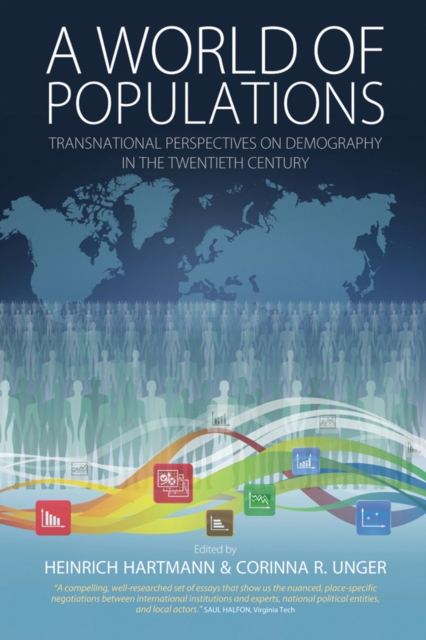
A world of populations
Demographic study and the idea of a \"population\" was developed and modified over the course of the twentieth century, mirroring the political, social, and cultural situations and aspirations of different societies. This growing field adapted itself to specific policy concerns and was therefore never apolitical, despite the protestations of practitioners that demography was \"natural.\" Demographics were transformed into public policies that shaped family planning, population growth, medical practice, and environmental conservation. While covering a variety of regions and time periods, the essays in this book share an interest in the transnational dynamics of emerging demographic discourses and practices. Together, they present a global picture of the history of demographic knowledge.
eBook

Secular Cycles
Many historical processes exhibit recurrent patterns of change. Century-long periods of population expansion come before long periods of stagnation and decline; the dynamics of prices mirror population oscillations; and states go through strong expansionist phases followed by periods of state failure, endemic sociopolitical instability, and territorial loss. Peter Turchin and Sergey Nefedov explore the dynamics and causal connections between such demographic, economic, and political variables in agrarian societies and offer detailed explanations for these long-term oscillations--what the authors call secular cycles. Secular Cycles elaborates and expands upon the demographic-structural theory first advanced by Jack Goldstone, which provides an explanation of long-term oscillations. This book tests that theory's specific and quantitative predictions by tracing the dynamics of population numbers, prices and real wages, elite numbers and incomes, state finances, and sociopolitical instability. Turchin and Nefedov study societies in England, France, and Russia during the medieval and early modern periods, and look back at the Roman Republic and Empire. Incorporating theoretical and quantitative history, the authors examine a specific model of historical change and, more generally, investigate the utility of the dynamical systems approach in historical applications. An indispensable and groundbreaking resource for a wide variety of social scientists, Secular Cycles will interest practitioners of economic history, historical sociology, complexity studies, and demography.
eBook
The Obsolete Self
The Obsolete Self: Philosophical Dimensions of Aging explores the complex interplay between aging and identity, offering a profound critique of the traditional perceptions of aging as mere physical decline or social obsolescence. By delving into the biological, psychological, and sociological aspects of aging, this book challenges the view that growing older inevitably leads to the disintegration of the self. Instead, it argues for a reframing of aging as an integral and meaningful phase of human life, rich with its own potential for growth and insight. Authoritative yet accessible, this work investigates the underlying philosophical assumptions about aging that influence individual and societal attitudes. It examines how aging intersects with notions of personal identity, moral agency, and societal value, proposing that our cultural and social frameworks need to evolve to embrace the dignity and worth of all life stages. With an engaging blend of metaphysical inquiry and practical reflections, The Obsolete Self calls for a shift in both individual perspectives and societal structures to cultivate a deeper understanding and appreciation of aging as an essential part of the human experience. This title is part of UC Press's Voices Revived program, which commemorates University of California Press's mission to seek out and cultivate the brightest minds and give them voice, reach, and impact. Drawing on a backlist dating to 1893, Voices Revived makes high-quality, peer-reviewed scholarship accessible once again using print-on-demand technology. This title was originally published in 1987.
eBook

Data mining for the social sciences
We live in a world of big data: the amount of information collected on human behavior each day is staggering, and exponentially greater than at any time in the past. Additionally, powerful algorithms are capable of churning through seas of data to uncover patterns. Providing a simple and accessible introduction to data mining, Paul Attewell and David B. Monaghan discuss how data mining substantially differs from conventional statistical modeling familiar to most social scientists. The authors also empower social scientists to tap into these new resources and incorporate data mining methodologies in their analytical toolkits. Data Mining for the Social Sciences demystifies the process by describing the diverse set of techniques available, discussing the strengths and weaknesses of various approaches, and giving practical demonstrations of how to carry out analyses using tools in various statistical software packages.
eBook

Global Demographic Change and Its Implications for Military Power
What is the impact of demographics on the prospective production of military power and the causes of war? This monograph analyzes this issue by projecting working-age populations through 2050; assessing the influence of demographics on manpower, national income and expenditures, and human capital; and examining how changes in these factors may affect the ability of states to carry out military missions.
eBook

A portrait of America
Portrait of America describes our nation's changing population and examines through a demographic lens some of our most pressing contemporary challenges, ranging from poverty and economic inequality to racial tensions and health disparities. Celebrated authorJohn Iceland covers various topics, including America's historical demographic growth; the American family today; gender inequality; economic well-being; immigration and diversity; racial and ethnic inequality; internal migration and residential segregation; and health and mortality. The discussion of these topics is informed by several sources, including an examination of household survey data, and by syntheses of existing published material, both quantitative and qualitative. Iceland discusses the current issues and controversies around these themes, highlighting their role in everyday debates taking place in Congress, the media, and in American living rooms. Each chapter includes historical background, as well as a discussion of how patterns and trends in the United States compare to those in peer countries.
eBook

Domesticating Youth
Most of the Muslim societies of the world have entered a demographic transition from high to low fertility, and this process is accompanied by an increase in youth vis-a-vis other age groups. Political scientists and historians have debated whether such a \"youth bulge\" increases the potential for conflict or whether it represents a chance to accumulate wealth and push forward social and technological developments. This book introduces the discussion about youth bulge into social anthropology using Tajikistan, a post-Soviet country that experienced civil war in the 1990s, which is in the middle of such a demographic transition. Sophie Roche develops a social anthropological approach to analyze demographic and political dynamics, and suggests a new way of thinking about social change in youth bulge societies.
eBook

Cycle of Segregation
The Fair Housing Act of 1968 outlawed housing discrimination by race and provided an important tool for dismantling legal segregation. But almost fifty years later, residential segregation remains virtually unchanged in many metropolitan areas, particularly where large groups of racial and ethnic minorities live. Why does segregation persist at such high rates and what makes it so difficult to combat? InCycle of Segregation, sociologists Maria Krysan and Kyle Crowder examine how everyday social processes shape residential stratification. Past neighborhood experiences, social networks, and daily activities all affect the mobility patterns of different racial groups in ways that have cemented segregation as a self-perpetuating cycle in the twenty-first century.Through original analyses of national-level surveys and in-depth interviews with residents of Chicago, Krysan and Crowder find that residential stratification is reinforced through the biases and blind spots that individuals exhibit in their searches for housing. People rely heavily on information from friends, family, and coworkers when choosing where to live. Because these social networks tend to be racially homogenous, people are likely to receive information primarily from members of their own racial group and move to neighborhoods that are also dominated by their group. Similarly, home-seekers who report wanting to stay close to family members can end up in segregated destinations because their relatives live in those neighborhoods. The authors suggest that even absent of family ties, people gravitate toward neighborhoods that are familiar to them through their past experiences, including where they have previously lived, and where they work, shop, and spend time. Because historical segregation has shaped so many of these experiences, even these seemingly race-neutral decisions help reinforce the cycle of residential stratification. As a result, segregation has declined much more slowly than many social scientists have expected.To overcome this cycle, Krysan and Crowder advocate multi-level policy solutions that pair inclusionary zoning and affordable housing with education and public relations campaigns that emphasize neighborhood diversity and high-opportunity areas. They argue that together, such programs can expand the number of destinations available to low-income residents and help offset the negative images many people hold about certain neighborhoods or help introduce them to places they had never considered.Cycle of Segregationdemonstrates why a nuanced understanding of everyday social processes is critical for interrupting entrenched patterns of residential segregation.
eBook
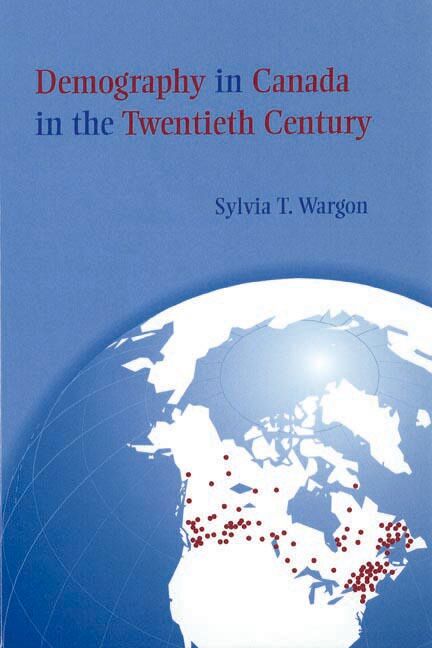
Demography in Canada in the Twentieth Century
Canada is unique among Western nations in possessing population information dating back almost 400 years. Drawing on this rich background, the book offers a social and institutional account of the evolution of demography in Canada focusing on the period from 1913 to 1995, as the discipline unfolded against the changing cultural, social, and political scene. Augmenting published and unpublished sources with information culled from personalized questionnaires sent to key scholars and practitioners, Sylvia Wargon describes and interprets the development of the field. She provides important background information about the origins and history of demography in Europe and Canada from the seventeenth to the nineteenth century, and explains the gradual development and institutionalization of demography in the French- and English-speaking regions of Canada. Important milestones are discussed in the context of their social environment. Based on French- and English-language sources, Demography in Canada in the Twentieth Century is the first and only comprehensive treatment of the subject to date.
eBook
Changing Structures of Inequality
Changing Structures of Inequality examines these questions in a new comparative perspective, covering five national societies - Canada, France, Germany, Spain, and the United States. The authors offer a deed analysis of country-specific research traditions in the fields of class analysis and social stratification, revealing important conceptual differences which have consequences for the diagnoses. They present the results of substantial compa-rative studies on different aspects of inequality in developed societies - the inequality of income and wealth; educational inequalities; status crystallization; migration and inequality; gender inequality and the structuring effect of social class - highlighting similarities as well as substantial differences between the societies under examination. The authors offer a nuanced con-clusion that puts in perspective the different topics of this contemporary debate. Developed societies are now characterized by more dynamic and pluralistic structures of inequalities, where classes have lost some of their previous importance, but to some extent still have a place. Contributors include Howard M. Bahr, Mathias Bös, Gary Caldwell, Salustiano del Campo, Theodore Caplow, Louis Chauvel, Michel Forse, Wolfgang Glatzer, Richard Huaser, Paul W. Kingston, Denise Lemieux, Laura Maratou-Alipranti, and Marion Mohle.
eBook