
Catalogue Search | MBRL


Are you sure you want to remove the book from the shelf?

{{itemTitle}}
96,270
result(s) for
"SOCIAL SCIENCE / Human Geography"
Sort by:

The Wiley-Blackwell companion to cultural geography
**Named a 2014 Choice Outstanding Academic Title** Combining coverage of key themes and debates from a variety of historical and theoretical perspectives, this authoritative reference volume offers the most up-to-date and substantive analysis of cultural geography currently available. * A significantly revised new edition covering a number of new topics such as biotechnology, rural, food, media and tech, borders and tourism, whilst also reflecting developments in established subjects including animal geographies * Edited and written by the leading authorities in this fast-developing discipline, and features a host of new contributors to the second edition * Traces the historical evolution of cultural geography through to the very latest research * Provides an international perspective, reflecting the advancing academic traditions of non-Western institutions, especially in Asia * Features a thematic structure, with sections exploring topics such as identities, nature and culture, and flows and mobility
eBook

The social significance of dining out
The book reports on a major mixed-methods research project on dining out in England. It is a re-study of the populations of three cities – London, Bristol and Preston – based on a unique systematic comparison of behaviour between 2015 and 1995. It reveals social differences in practice and charts the dynamic relationship between eating in and eating out. It addresses topics including the changing frequency and meaning of dining out, patterns of domestic hospitality, changing domestic divisions of labour around food preparation, the variety of culinary experience for different sections of the population, class differences in taste and the pleasures and satisfactions associated with eating out. It shows how the practice of eating out in the three cities has evolved over twenty years. The findings are put in the context of controversies about the nature of taste, the role of social class, the application of theories of practice and the effects of institutional change in the UK. The subject matter is central to many disciplines: Food Studies, Sociology, Anthropology, Cultural Studies, Marketing, Hospitality and Tourism Studies, Media and Communication, Social History, Social and Cultural Geography. It is suitable for scholars, researchers, postgraduate students and advanced undergraduate students in the UK, Europe, North America and East Asia. Academic interest in the book should be accentuated by its theoretical, methodological and substantive aspects. It will also be of interest to the catering trades and a general readership on the back of burgeoning interest in food and eating fostered by mass and social media.
eBook

Practically Invisible
The community of Agua Blanca, deep within the Machalilla National
Park on the coast of Ecuador, found itself facing the twenty-first
century with a choice: embrace a booming tourist industry eager to
experience a preconceived notion of indigeneity, or risk losing a
battle against the encroaching forces of capitalism and
development. The facts spoke for themselves, however, as tourism
dollars became the most significant source of income in the
community.
Thus came a nearly inevitable shock, as the daily rhythms of
life--rising before dawn to prepare for a long day of maintaining
livestock and crops; returning for a late lunch and siesta; joining
in a game of soccer followed by dinner in the evening--transformed
forever in favor of a new tourist industry and the compromises
required to support it. As Practically Invisible
demonstrates, for Agua Blancans, becoming a supposedly \"authentic\"
version of their own indigenous selves required performing their
culture for outsiders, thus becoming these performances within the
minds of these visitors. At the heart of this story, then, is a
delicate balancing act between tradition and survival, a
performance experienced by countless indigenous groups.
eBook

Moving places
Moving Places draws together contributions from Europe, Latin America, Asia, and Africa, exploring practices and experiences of movement, non-movement, and place-making. The book centers on \"moving places\": places with locations that are not fixed but relative. Locations appearing to be reasonably stable, such as home and homeland, are in fact always subject to practices, imaginaries, and politics of movement. Bringing together original ethnographic contributions with a clear theoretical focus, this volume spans the fields of anthropology, human geography, migration, and border studies, and serves as teaching material in related programs.
eBook

Dancing with the river : people and life on the Chars of South Asia
An intimate glimpse into the microcosmic world of \"hybrid landscapes\" and their inhabitants. With this book, Kuntala Lahiri-Dutt and Gopa Samanta offer an intimate glimpse into the microcosmic world of \"hybrid environments.\" Focusing on chars -- the part-land, part-water, low-lying sandy masses that exist within the riverbeds in the floodplains of lower Bengal -- the authors show how, both as real-life examples and as metaphors, chars straddle the conventional categories of land and water, and how people who live on them fluctuate between legitimacy and illegitimacy. The result, a study of human habitation in the nebulous space between land and water, charts a new way of thinking about land, people, and people's ways of life. Kuntala Lahiri-Dutt is a senior fellow in resource management in the Asia-Pacific Program at the College of Asia and the Pacific at the Australian National University. She lives in Canberra. Gopa Samanta is an associate professor in geography at the University of Burdwan. She lives in Golapbag, Burdwan, India.
eBook

Taking-Place: Non-Representational Theories and Geography
Emerging over the past ten years from a set of post-structuralist theoretical lineages, non-representational theories are having a major impact within Human Geography. Non-representational theorisation and research has opened up new sets of problematics around the body, practice and performativity and inspired new ways of doing and writing human geography that aim to engage with the taking-place of everyday life.
Drawing together a range of innovative contributions from leading writers, this is the first book to provide an extensive and in-depth overview of non-representational theories and human geography. The work addresses the core themes of this still-developing field, demonstrates the implications of non-representational theories for many aspects of human geographic thought and practice, and highlights areas of emergent critical debate. The collection is structured around four thematic sections - Life, Representation, Ethics and Politics - which explore the varied relations between non-representational theories and contemporary human geography.
eBook

Advancing Land Change Modeling
People are constantly changing the land surface through construction, agriculture, energy production, and other activities. Changes both in how land is used by people (land use) and in the vegetation, rock, buildings, and other physical material that cover the Earth's surface (land cover) can be described and future land change can be projected using land-change models (LCMs). LCMs are a key means for understanding how humans are reshaping the Earth's surface in the past and present, for forecasting future landscape conditions, and for developing policies to manage our use of resources and the environment at scales ranging from an individual parcel of land in a city to vast expanses of forests around the world.
Advancing Land Change Modeling: Opportunities and Research Requirements describes various LCM approaches, suggests guidance for their appropriate application, and makes recommendations to improve the integration of observation strategies into the models. This report provides a summary and evaluation of several modeling approaches, and their theoretical and empirical underpinnings, relative to complex land-change dynamics and processes, and identifies several opportunities for further advancing the science, data, and cyberinfrastructure involved in the LCM enterprise. Because of the numerous models available, the report focuses on describing the categories of approaches used along with selected examples, rather than providing a review of specific models. Additionally, because all modeling approaches have relative strengths and weaknesses, the report compares these relative to different purposes. Advancing Land Change Modeling's recommendations for assessment of future data and research needs will enable model outputs to better assist the science, policy, and decisionsupport communities.
eBook
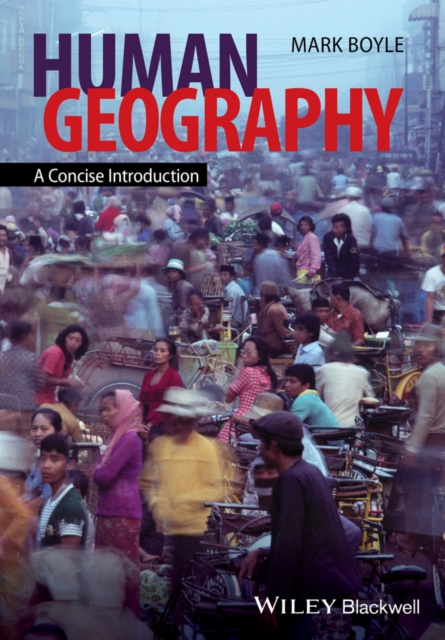
Human geography
Using the story of the \"West and the world\" as its backdrop, this book provides for beginning students a clear and concise introduction to Human Geography, including its key concepts, seminal thinkers and their theories, contemporary debates, and celebrated case studies. Introduces and applies the basic concepts of human geography in clear, concise, and engaging prose Explores the significance of the rise, reign, and faltering of the West from around the fifteenth century in the shaping of the key demographic, environmental, social, economic, political, and cultural processes active in the world today Addresses important thinkers, debates, and theories in an accessible manner with a focus on discerning the inherent Western bias in human geographical ideas Incorporates case studies that explore human geographies which are being made in both Western and non Western regions, including Latin America, Africa and Asia. Is written so as to be accessible to students and contains chapter learning objectives, checklists of key ideas, chapter essay questions, zoom in boxes, guidance for further reading and a book glossary. Accompanied by a website at www.wiley.com/go/boyle featuring, for students, tutorial exercises, bonus zoom in boxes, links to further learning resources and biographies of key thinkers, and for instructors, further essay questions, multiple choice exam questions, and ppt lecture slides for each chapter.
eBook

Assembling Export Markets
Assembling Export Markets explores the new ‘frontier regions’ of the global fresh produce market that has emerged in Ghana over the past decade. -Represents a major and empirically rich contribution to the emerging field of the social studies of economization and marketization -Offers one of the first ethnographic accounts on the making of global commodity chains ‘from below’ -Denaturalizes global markets by unpacking their local engagement, materially entangled construction, need for maintenance, and fragile character -Offers a trans-disciplinary engagement with the construction and extension of market relations in two frontier regions of global capitalism -Critically examines the opportunities and risks for firms and farms in Ghana entering global fresh produce markets
eBook
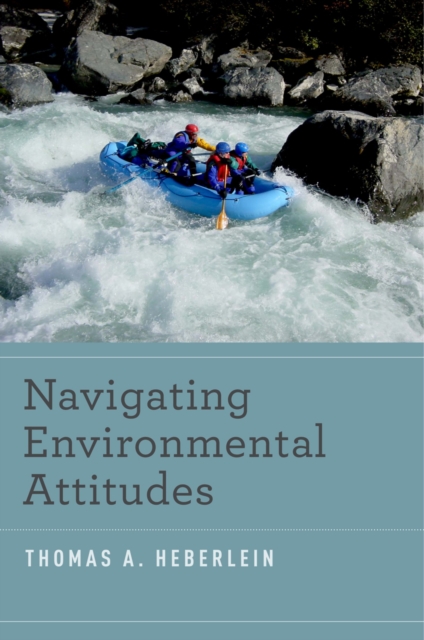
Navigating environmental attitudes
The environment, and how humans affect it, is more of a concern now than ever. We are constantly told that halting climate change requires raising awareness, changing attitudes, and finally altering behaviors among the general public—and doing it fast. New information, attitudes, and actions, it is conventionally assumed, will necessarily follow one from the other. However, this approach ignores much of what is known about attitudes in general and environmental attitudes in particular—a huge gap lies between what we say and what we do. Solving environmental problems requires a scientific understanding of public attitudes. Like rocks in a swollen river, attitudes often lie beneath the surface—hard to see, and even harder to move or change. This book helps us read the water and negotiate its hidden obstacles, explaining what attitudes are, how they change and influence behavior. Rather than trying to change attitudes, we need to design solutions and policies with attitudes in mind. Heberlein illustrates these points by tracing the attitudes of the well-known environmentalist Aldo Leopold, while tying social psychology to real-world behaviors throughout the book. Bringing together theory and practice, this book provides a realistic understanding of why and how attitudes matter when it comes to environmental problems; and how, by balancing natural with social science, we can step back from false assumptions and unproductive, frustrating programs to work toward fostering successful, effective environmental action.
eBook