
Catalogue Search | MBRL


Are you sure you want to remove the book from the shelf?

{{itemTitle}}
6,165
result(s) for
"SOCIAL SCIENCE / Islamic Studies"
Sort by:

Invisible Martyrs
\"Farhana Qazi draws on her background as a pioneering counterterrorism professional and a devout Muslim to offer an insider's view of what drives girls and women to join radical Islamic movements, and identifies what America and the world community can do to keep them from making this terrible choice Why would a girl from Denver join ISIS, a radical movement known for its mistreatment of women? Why would a teenage Iraqi girl strap on a suicide bomb and detonate it? Farhana Qazi, the first Muslim woman to work for the U.S. government's Counterterrorism Center, has been fascinated, even obsessed, by this phenomena for over a decade and has circled the globe searching for answers. What she has found are women, sometimes confused, sometimes taken advantage of, and sometimes as radical and dedicated as their male counterparts, women whose stories she tells. Here is the book that reframes the story so readers can see the female terrorists as they are-- ordinary women co-opted by radical men, other extremist women, or motivated by their own experience of oppression. The untold story of the women of these movements is important to understand and recognize if the world hopes to contain the expansion of these ever present threats\"-- Provided by publisher
eBook

Shades of Sulh
Sulh is a centuries-old Arab-Islamic peacemaking process. InShades of
Sulh, Rasha Diab explores the possibilities of the rhetoric of sulh, as it is used to resolve intrapersonal, interpersonal, communal, national, and international conflicts, and provides cases that illustrate each of these domains. Diab demonstrates the adaptability and range of sulh as a ritual and practice that travels across spheres of activity (juridical, extra-juridical, political, diplomatic), through time (medieval, modern, contemporary), and over geopolitical borders (Cairo, Galilee, and Medina). Together, the cases prove the flexibility of sulh in the discourse of peacemaking-and that sulh has remarkable rhetorical longevity, versatility, and richness.Shades of
Sulhsheds new light on rhetorics of reconciliation, human rights discourse, and Arab-Islamic rhetorics.
eBook
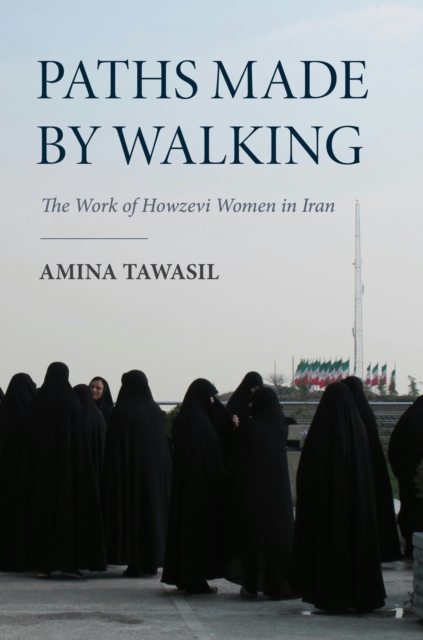
Paths Made by Walking
What can women's scholastic pursuits tell us about what building
an Islamic state looks like for women who are loyal to its project?
And what can an ethnographic study of women who are using Islamic
education to transform their conditions in Iran teach us about our
own humanity?
Paths Made by Walking provides insight into these
questions by examining how Iranian women have participated in
Islamic education since the 1979 revolution. This groundbreaking
ethnography on Iranian howzevi (seminarian) women reveals how
ideologies of womanhood, institutions, and Islamic practices have
played a pivotal role in religiously conservative women's mobility
in the Middle East. Applying over a year of ethnographic fieldwork,
Amina Tawasil analyzes how the Islamic education of seminarian
women has propelled some of them into powerful positions in Iran,
from close ties with the state's supreme leader and chief justice
to membership in the Basij (voluntary military organization). At
the same time, these women often choose to remain \"hidden\" or to
otherwise follow practices that seem inscrutable or illogical from
a framework of politicized resistance. By centering the howzevi
women's senses of self and revealing their complex interpretations
of their beliefs, Tawasil offers a fresh perspective on forms of
feminine identity that do not always mirror supposedly universal
desires for recognition, autonomy, leadership, or authority.
Taking readers into the classrooms, living rooms, and compounds
where howzevi women participate in intellectual discourse,
Paths Made by Walking invites readers to reconsider their
conceptualizations of the women who support the Islamic Republic of
Iran.
eBook

Islam in Hong Kong
More than a quarter of a million Muslims live and work in Hong Kong. Among them are descendants of families who have been in the city for generations, recent immigrants from around the world, and growing numbers of migrant workers. Islam in Hong Kong explores the lives of Muslims as ethnic and religious minorities in this unique post-colonial Chinese city. Drawing on interviews with Muslims of different origins, O'Connor builds a detailed picture of daily life through topical chapters on language, space, religious education, daily prayers, maintaining a halal diet in a Chinese environment, racism, and other subjects. Although the picture that emerges is complex and ambiguous, one striking conclusion is that Muslims in Hong Kong generally find acceptance as a community and do not consider themselves to be victimised because of their religion.
eBook

What is Veiling?
In an environment of increasing conservatism, in a world where a woman's right to wear the headscarf has become a touchstone for issues of all sorts, and at a time when racial and religious profiling has become commonplace, it is our political and social responsibility to gain a deeper understanding of veiling.
eBook

Pragmatism in Islamic Law
InPragmatism in Islamic Law,Ibrahim presents a detailed history of Sunni legal pluralism and the ways in which it was employed to accommodate the changing needs of society. Since the formative period of Islamic law, jurists have debated whether it is acceptable for a law to be selected based on its utility, rather than weighing conflicting articulations of the law to determine the most likely expression of the divine will. Virtually unanimous opposition to the utilitarian approach, referred to as \"pragmatic eclecticism,\" emerged among early Islamic jurists. However, due to a host of changing institutional and socioeconomic transformations, a trend toward the legitimization of pragmatic eclecticism arose in the thirteenth century. Subsequently, the Mamluk authorities institutionalized this pragmatism when Sultan Baybars appointed four chief judges representing the four Sunni schools in Cairo in 1265 CE. After a brief attempt to reverse Mamluk pluralism by imposing the Hanafi school in the sixteenth century, Egypt's new rulers, the Ottomans, embraced this pluralistic pragmatism. In examining over a thousand cases from three seventeenth- and eighteenthcentury Egyptian courts, Ibrahim traces the internal logic of pragmatic eclecticismunder the Ottomans. An array of archival sources documents the manner in which Egyptian society's subaltern classes navigated Sunni legal pluralism as a tool to avoid more austere legal doctrines. The ensuing portrait challenges the assumption made by many modern historians that the utilitarian approaches adopted by nineteenth- and twentieth-century Muslim reformers constituted a clear rupture with early Islamic legal history. In contrast, many of the legal strategiesexercised in Egypt's partial codification of family law in the twentieth century were rooted in premodern Islamic jurisprudence.
eBook

Interreligious Conflict and the Politics of Interfaith Dialogue in Myanmar
Amidst successive episodes of interreligious violence in Myanmar between 2012 and 2014, interfaith dialogue emerged as a crucial conflict resolution and prevention mechanism. The 2011-16 Union Solidarity and Development Party administration often indirectly promoted the use of interfaith dialogue to defuse interreligious tensions and conflicts, though its political will was questionable. Various governmental, intergovernmental, and non-governmental actors have engaged in interfaith dialogue, peace, and harmony initiatives in the past seven years.
eBook

The Promise of Piety
In The Promise of Piety, Arsalan Khan examines the zealous commitment to a distinct form of face-to-face preaching (dawat) among Pakistani Tablighis, practitioners of the transnational Islamic piety movement the Tablighi Jamaat. This group says that Muslims have abandoned their religious duties for worldly pursuits, creating a state of moral chaos apparent in the breakdown of relationships in the family, nation, and global Islamic community. Tablighis insist that this dire situation can only be remedied by drawing Muslims back to Islam through dawat, which they regard as the sacred means for spreading Islamic virtue. In a country founded in the name of Muslim identity and where Islam is ubiquitous in public life, the Tablighi claim that Pakistani Muslims have abandoned Islam is particularly striking. The Promise of Piety shows how Tablighis constitute a distinct form of pious relationality in the ritual processes and everyday practices of dawat and how pious relationality serves as a basis for transforming domestic and public life. Khan explores both the promise and limits of the Tablighi project of creating an Islamic moral order that can transcend the political fragmentation and violence of life in postcolonial Pakistan.
eBook

Queer Muslim diasporas in contemporary literature and film
This book explores the representation of queer migrant Muslims in international literature and film from the 1980s to the present day. Bringing together a variety of contemporary writers and filmmakers of Muslim heritage engaged in vindicating same-sex desire, the book approaches queer Muslims in the diaspora as figures forced to negotiate their identities according to the expectations of the West and of their migrant Muslim communities. The book examines 3 main themes: the depiction of queer desire across racial and national borders, the negotiation of Islamic femininities and masculinities, and the positioning of the queer Muslim self in time and place. This study will be of interest to scholars, as well as to advanced general readers and postgraduate students, interested in Muslims, queerness, diaspora and postcolonialism. It brings nuance and complexity to an often simplified and controversial topic.
eBook

Prospects and challenges in promoting Humanitarian Islam : Nahdlatul Ulama's international social partnerships
Humanitarian Islam refers to the efforts of Nahdlatul Ulama (NU) to promote peaceful coexistence among people of different faiths in the world, with a focus on rahmah (universal love and compassion).The main vehicles for promoting Humanitarian Islam have been North Carolina-registered non-governmental organizations (NGOs), namely Bayt ar-Rahmah (Home of the Divine Grace) and the Center for Shared Civilizational Values. Key advocates of this campaign include current Nahdlatul Ulama (NU) chairman Yahya Cholil Staquf and North Carolina native Holland Taylor.The Humanitarian Islam message promoted under Yahya Cholil Staquf's leadership goes back to the philosophy of Abdurrahman Wahid (Gus Dur) and NU's promotion of Islam Nusantara under Said Aqil Siroj's chairmanship. It focuses on recontextualizing orthodox religious teachings through the establishment of various inter- and intra-religious partnerships globally.NU and Bayt ar-Rahmah leaders have witnessed early-stage successes in promoting the Humanitarian Islam vision to forge ties with other large religious organizations across the world such as the Imam Warith Deen Muhammad (IWDM) community and World Evangelical Alliance through utilizing universal vocabularies such as indigeneity, human dignity and humanitarian Islam.
eBook