
Catalogue Search | MBRL


Are you sure you want to remove the book from the shelf?

{{itemTitle}}
64,345
result(s) for
"SOCIAL SCIENCE / Poverty "
Sort by:

Living with Insecurity in a Brazilian Favela
The residents of Caxambu, a squatter neighborhood in Rio de Janeiro, live in a state of insecurity as they face urban violence. Living with Insecurity in a Brazilian Favela examines how inequality, racism, drug trafficking, police brutality, and gang activities affect the daily lives of the people of Caxambu. Some Brazilians see these communities, known as favelas, as centers of drug trafficking that exist beyond the control of the state and threaten the rest of the city. For other Brazilians, favelas are symbols of economic inequality and racial exclusion. Ben Penglase’s ethnography goes beyond these perspectives to look at how the people of Caxambu themselves experience violence. Although the favela is often seen as a war zone, the residents are linked to each other through bonds of kinship and friendship. In addition, residents often take pride in homes and public spaces that they have built and used over generations. Penglase notes that despite poverty, their lives are not completely defined by illegal violence or deprivation. He argues that urban violence and a larger context of inequality create a social world that is deeply contradictory and ambivalent. The unpredictability and instability of daily experiences result in disagreements and tensions, but the residents also experience their neighborhood as a place of social intimacy. As a result, the social world of the neighborhood is both a place of danger and safety.
eBook

Divided : the perils of our growing inequality
The issue of inequality has irrefutably returned to the fore, riding on the anger against Wall Street following the 2008 financial crisis and the concentration of economic and political power in the hands of the super-rich. The Occupy movement made the plight of the 99 percent an indelible part of the public consciousness, and concerns about inequality were a decisive factor in the 2012 presidential elections. How bad is it? According to Pulitzer Prize-winning journalist David Cay Johnston, most Americans, in inflation-adjusted terms, are now back to the average income of 1966. Shockingly, from 2009 to 2011, the top 1 percent got 121 percent of the income gains while the bottom 99 percent saw their income fall. Yet in this most unequal of developed nations, every aspect of inequality remains hotly contested and poorly understood. Divided collects the writings of leading scholars, activists, and journalists to provide an illuminating, multifaceted look at inequality in America, exploring its devastating implications in areas as diverse as education, justice, health care, social mobility, and political representation. Provocative and eminently readable, here is an essential resource for anyone who cares about the future of America--and compelling evidence that inequality can be ignored only at the nation's peril.
eBook
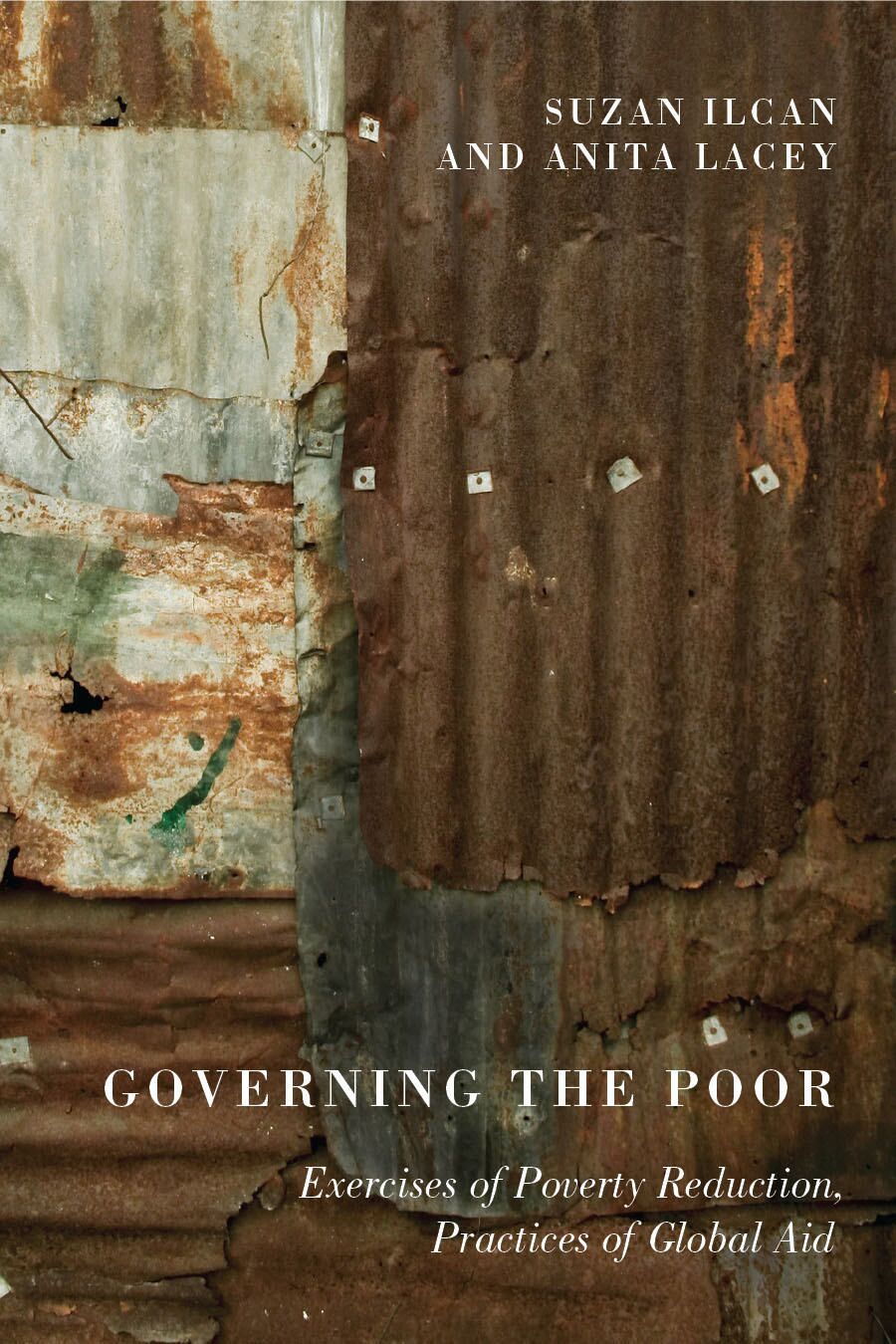
Governing the Poor
Every day, we are barraged by statistics, images, and emotional messages that present poverty as a problem to be quantified, managed, and solved. Global generations present the poor as a heterogeneous group and stress globalized solutions to the problem of poverty. Governing the Poor exposes the ways in which such generalized descriptions and quantifications marginalize the poor and their experiences.
eBook

Confronting Suburban Poverty in America
It has been nearly a half century since President Lyndon Johnson declared war on poverty. Back in the 1960s tackling poverty \"in place\" meant focusing resources in the inner city and in rural areas. The suburbs were seen as home to middle- and upper-class families-affluent commuters and homeowners looking for good schools and safe communities in which to raise their kids. But today's America is a very different place. Poverty is no longer just an urban or rural problem, but increasingly a suburban one as well. InConfronting Suburban Poverty in America, Elizabeth Kneebone and Alan Berube take on the new reality of metropolitan poverty and opportunity in America.
After decades in which suburbs added poor residents at a faster pace than cities, the 2000s marked a tipping point. Suburbia is now home to the largest and fastest-growing poor population in the country and more than half of the metropolitan poor. However, the antipoverty infrastructure built over the past several decades does not fit this rapidly changing geography. As Kneebone and Berube cogently demonstrate, the solution no longer fits the problem.
The spread of suburban poverty has many causes, including shifts in affordable housing and jobs, population dynamics, immigration, and a struggling economy. The phenomenon raises several daunting challenges, such as the need for more (and better) transportation options, services, and financial resources. But necessity also produces opportunity-in this case, the opportunity to rethink and modernize services, structures, and procedures so that they work in more scaled, cross-cutting, and resource-efficient ways to address widespread need. This book embraces that opportunity.
Kneebone and Berube paint a new picture of poverty in America as well as the best ways to combat it.Confronting Suburban Poverty in Americaoffers a series of workable recommendations for public, private, and nonprofit leaders seeking to modernize poverty alleviation and community development strategies and connect residents with economic opportunity. The authors highlight efforts in metro areas where local leaders are learning how to do more with less and adjusting their approaches to address the metropolitan scale of poverty-for example, integrating services and service delivery, collaborating across sectors and jurisdictions, and using data-driven and flexible funding strategies.
\"We believe the goal of public policy must be to provide all families with access to communities, whether in cities or suburbs, that offer a high quality of life and solid platform for upward mobility over time. Understanding the new reality of poverty in metropolitan America is a critical step toward realizing that goal.\"-from Chapter One
eBook
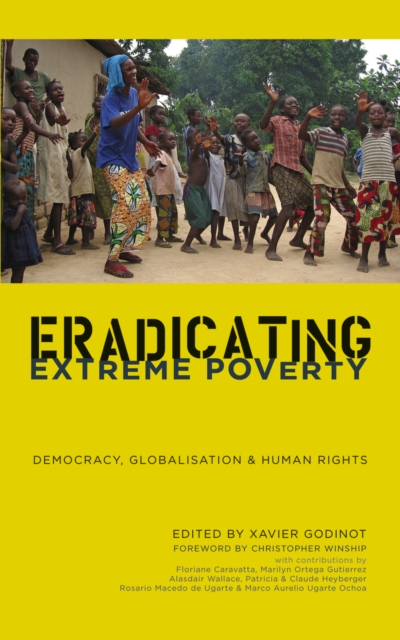
Eradicating Extreme Poverty
The failure of attempts to tackle global poverty have bred cynicism and 'compassion fatigue'. Eradicating Extreme Poverty provides an urgently needed fresh approach which will re-energise action on this issue. Rejecting traditional 'top-down' approaches, Xavier Godinot and his colleagues start from the experiences, capabilities and strategies of the poor themselves. They argue that the first step is a close connection with poor communities followed by a commitment to take action alongside them. Life-stories from Burkina Faso, France, Peru and the Philippines are used to show that the poor must be involved in their own liberation. After decades of failed development policies, this book outlines a radical new approach which will enliven debate amongst policy-makers, researchers, students and academics.
eBook

To Right These Wrongs
When Governor Terry Sanford established the North Carolina Fund in 1963, he saw it as a way to provide a better life for the \"tens of thousands whose family income is so low that daily subsistence is always in doubt.\" Illustrated with evocative photographs by Billy Barnes,To Right These Wrongsoffers a lively account of this pioneering effort in America's War on Poverty.Robert Korstad and James Leloudis describe how the Fund's initial successes grew out of its reliance on private philanthropy and federal dollars and its commitment to the democratic mobilization of the poor. Both were calculated tactics designed to outflank conservative state lawmakers and entrenched local interests that nourished Jim Crow, perpetuated one-party politics, and protected an economy built on cheap labor. By late 1968, when the Fund closed its doors, a resurgent politics of race had gained the advantage, led by a Republican Party that had reorganized itself around opposition to civil rights and aid to the poor.The North Carolina Fund came up short in its battle against poverty, but its story continues to be a source of inspiration and instruction for new generations of Americans.
eBook

Mixed methods research in poverty and vulnerability : sharing ideas and learning lessons
The added value of mixed methods research in poverty and vulnerability is now widely established. Nevertheless, gaps and challenges remain. This volume shares experiences from research in developed and developing country contexts on how mixed methods approaches can make research more credible, usable and responsive to complexity.
eBook

Cycle of Segregation
The Fair Housing Act of 1968 outlawed housing discrimination by race and provided an important tool for dismantling legal segregation. But almost fifty years later, residential segregation remains virtually unchanged in many metropolitan areas, particularly where large groups of racial and ethnic minorities live. Why does segregation persist at such high rates and what makes it so difficult to combat? InCycle of Segregation, sociologists Maria Krysan and Kyle Crowder examine how everyday social processes shape residential stratification. Past neighborhood experiences, social networks, and daily activities all affect the mobility patterns of different racial groups in ways that have cemented segregation as a self-perpetuating cycle in the twenty-first century.Through original analyses of national-level surveys and in-depth interviews with residents of Chicago, Krysan and Crowder find that residential stratification is reinforced through the biases and blind spots that individuals exhibit in their searches for housing. People rely heavily on information from friends, family, and coworkers when choosing where to live. Because these social networks tend to be racially homogenous, people are likely to receive information primarily from members of their own racial group and move to neighborhoods that are also dominated by their group. Similarly, home-seekers who report wanting to stay close to family members can end up in segregated destinations because their relatives live in those neighborhoods. The authors suggest that even absent of family ties, people gravitate toward neighborhoods that are familiar to them through their past experiences, including where they have previously lived, and where they work, shop, and spend time. Because historical segregation has shaped so many of these experiences, even these seemingly race-neutral decisions help reinforce the cycle of residential stratification. As a result, segregation has declined much more slowly than many social scientists have expected.To overcome this cycle, Krysan and Crowder advocate multi-level policy solutions that pair inclusionary zoning and affordable housing with education and public relations campaigns that emphasize neighborhood diversity and high-opportunity areas. They argue that together, such programs can expand the number of destinations available to low-income residents and help offset the negative images many people hold about certain neighborhoods or help introduce them to places they had never considered.Cycle of Segregationdemonstrates why a nuanced understanding of everyday social processes is critical for interrupting entrenched patterns of residential segregation.
eBook
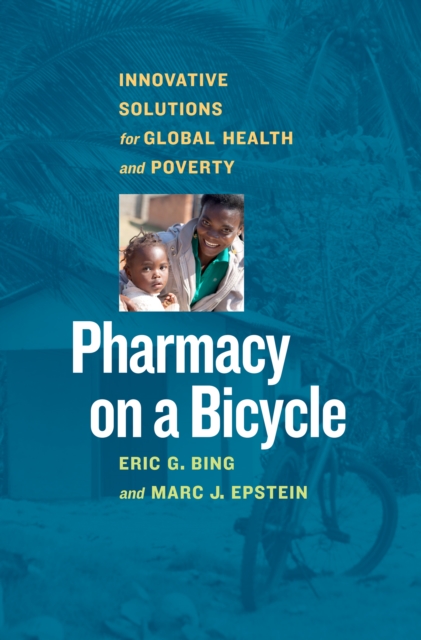
Pharmacy on a bicycle
Traditional pathways to delivering health care to the global poor are failing. Five million children die each year before their fifth birthday due to lack of basic health education, services, or low-cost treatments. Bing and Epstein show how focusing micro-innovations at the level of care is the way to end these grim health statistics.
eBook

Trapped in a Maze
Trapped in a Maze provides a window into families' lived experiences in poverty by looking at their complex interactions with institutions such as welfare, hospitals, courts, housing, and schools. Families are more intertwined with institutions than ever as they struggle to maintain their eligibility for services and face the possibility that involvement with one institution could trigger other types of institutional oversight. Many poor families find themselves trapped in a multi-institutional maze, stuck in between several systems with no clear path to resolution. Tracing the complex and often unpredictable journeys of families in this maze, this book reveals how the formal rationality by which these institutions ostensibly operate undercuts what they can actually achieve. And worse, it demonstrates how involvement with multiple institutions can perpetuate the conditions of poverty that these families are fighting to escape.
eBook