
Catalogue Search | MBRL


Are you sure you want to remove the book from the shelf?

{{itemTitle}}
66,439
result(s) for
"SOCIAL SCIENCE / Regional Studies."
Sort by:

This Could Be the Start of Something Big
For nearly two decades, progressives have been dismayed by the steady rise of the right in U.S. politics. Often lost in the gloom and doom about American politics is a striking and sometimes underanalyzed phenomenon: the resurgence of progressive politics and movements at a local level. Across the country, urban coalitions, including labor, faith groups, and community-based organizations, have come together to support living wage laws and fight for transit policies that can move the needle on issues of working poverty. Just as striking as the rise of this progressive resurgence has been its reception among unlikely allies. In places as diverse as Chicago, Atlanta, and San Jose, the usual business resistance to pro-equity policies has changed, particularly when it comes to issues like affordable housing and more efficient transportation systems. To see this change and its possibilities requires that we recognize a new thread running through many local efforts: a perspective and politics that emphasizes \"regional equity.\"
Manuel Pastor Jr., Chris Benner, and Martha Matsuoka offer their analysis with an eye toward evaluating what has and has not worked in various campaigns to achieve regional equity. The authors show how momentum is building as new policies addressing regional infrastructure, housing, and workforce development bring together business and community groups who share a common desire to see their city and region succeed. Drawing on a wealth of case studies as well as their own experience in the field, Pastor, Benner, and Matsuoka point out the promise and pitfalls of this new approach, concluding that what they term social movement regionalism might offer an important contribution to the revitalization of progressive politics in America.
eBook

The European second generation compared
One of the foremost challenges for contemporary Europe is the integration of new immigrants and their children. The second generation constitutes a rapidly growing and highly visible group of metropolitan youth that faces the dilemma of navigating their ethnic identities in a world that puts a premium on assimilation. This volume examines the lives of the second generation in fifteen European cities, from their educational background to their professional lives to their own cultural and religious identities
\"This book is both theoretically and empirically important, as no other work has been able to compare these second-generation groups along key indices of integration in so many European countries.\"-Miri Song, University of Kent
eBook

Mediations of Social Life in the 21st Century
Since the beginning of the modern age, studies of ongoing transformations of social life, human sociality, and social relations and institutions have been at the forefront of social theory, alongside changes in politics, culture, and economy - and links between all of the above. In the twenty-first century, the speed at which these transformations have been occurring has accelerated precipitously, and it is impossible to predict what human civilization will look and exist like in a few decades. The essays included in this volume illuminate mediations of the individual-society relationship from a variety of angles, both explicitly and implicitly. They highlight the need to consider the consequences of choices made by collective decision-makers, politicians and leaders of organizations; as well as from processes that sustain the functioning and stability of individual nation-states and global society, for better or worse, and to varying degrees. They represent diverse traditions of social theorizing, including sociological and critical theory, analytically as well as normatively oriented theory, and examine the impact of transformations on several dimensions of societal life today
eBook

Public anthropology in a borderless world
Anthropologists have acted as experts and educators on the nature and ways of life of people worldwide, working to understand the human condition in broad comparative perspective. As a discipline, anthropology has often advocated — and even defended — the cultural integrity, authenticity, and autonomy of societies across the globe. Public anthropology today carries out the discipline's original purpose, grounding theories in lived experience and placing empirical knowledge in deeper historical and comparative frameworks. This is a vitally important kind of anthropology that has the goal of improving the modern human condition by actively engaging with people to make changes through research, education, and political action.
eBook
Transnational flows and permissive polities
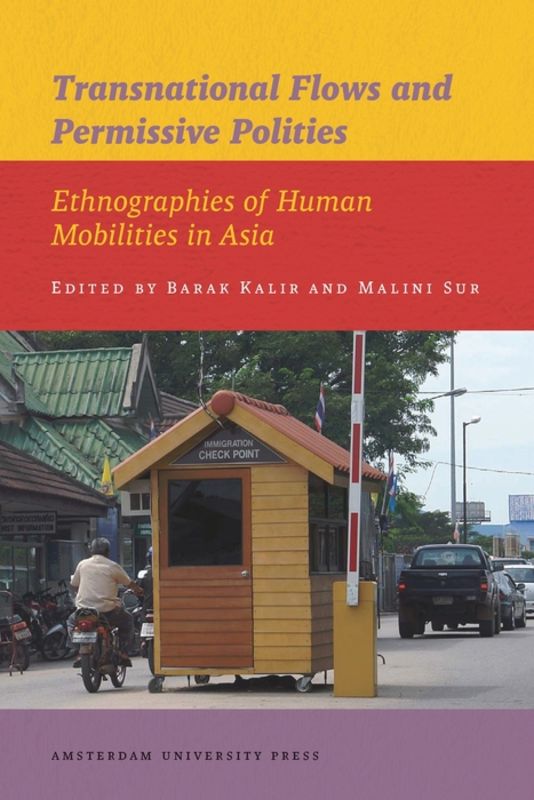
Transnational Flows and Permissive Polities examines how legality and other sources of authority intersect in the regulation of human mobility. The book focuses on the ethnographic exploration of the experiences and views of mobile subjects in the vast and rapidly changing continent of Asia. The contributors analyze tensions between the letter of the law and social legitimation, territorial boundaries and commodity flows, state practices and migrant subjectivities, and labour brokerage and national and international organizations. This volume offers key insights for students of globalization and transnationality and policy relevance for development practitioners, governments, and NGOs.
eBook

Public Policymaking in Hong Kong
Why and how has civic engagement emerged in the policy process of Hong Kong as an Asian semi-democratic state? This book attempts to answer this question through examining six cases that straddle diverse policy domains. It identifies three explanatory factors, namely, the profile of a policy domain, the structure of societal interest, and the strength of the civil society sector as important in shaping the state's strategy in managing society, hence its propensity to engage. These factors affect the outcome through dynamic interaction between the state and societal actors. The findings outlined in the book show that the development of civic engagement in Hong Kong consists of both society-led and state-led cases. Society-led development brought about a high degree of openness and inclusiveness, whereas state-led civic engagement practices tended to be tactics utilized by the state for appeasing or depoliticizing civil society. Compared with other Asian regimes, the use of 'transgressive contention' as a way to compel the state to engage society is a feature that stands out in the liberal autocratic regime in Hong Kong.
eBook

The wherewithal of life
The Wherewithal of Life engages with current developments in the anthropology of ethics and migration studies to explore in empirical depth and detail the life experiences of three young men – a Ugandan migrant in Copenhagen, a Burkina Faso migrant in Amsterdam, and a Mexican migrant in Boston – in ways that significantly broaden our understanding of the existential situations and ethical dilemmas of those migrating from the global south. Michael Jackson offers the first biographically based phenomenological account of migration and mobility, providing new insights into the various motives, tactics, dilemmas, dreams, and disappointments that characterize contemporary migration. It is argued that the quandaries of African or Mexican migrants are not unique to people moving between ‘traditional’ and ‘modern’ worlds. While more intensely felt by the young, seeking to find a way out of a world of limited opportunity and circumscribed values, the experiences of transition are familiar to us all, whatever our age, gender, ethnicity or social status – namely, the impossibility of calculating what one may lose in leaving a settled life or home place; what one may gain by risking oneself in an alien environment; the difficulty of striking a balance between personal fulfillment and the moral claims of kinship; and the struggle to know the difference between ‘concrete’ and ‘abstract’ utopias (the first reasonable and worth pursuing; the second hopelessly unattainable).
eBook

The Mathematical Imagination
This book gives us a more capacious version of critical theory, providing humanists with tools to confront the digital age.This book joins a renaissance of scholarly interest in German-Jewish intellectuals, such as Siegfried Kracauer and Gershom Scholem, offering a unique synthesis of their insights into language, messianism, and cultural critique.This book shows the surprising yet salient contribution of not only mathematics, but also Jewish thought to the project of critical theory.
This book offers an archeology of the undeveloped potential of mathematics for critical theory. As Max Horkheimer and Theodor W. Adorno first conceived of the critical project in the 1930s, critical theory steadfastly opposed the mathematization of thought. Mathematics flattened thought into a dangerous positivism that led reason to the barbarism of World War II.The Mathematical Imagination challenges this narrative, showing how for other German-Jewish thinkers, such as Gershom Scholem, Franz Rosenzweig, and Siegfried Kracauer, mathematics offered metaphors to negotiate the crises of modernity during the Weimar Republic. Influential theories of poetry, messianism, and cultural critique, Handelman shows, borrowed from the philosophy of mathematics, infinitesimal calculus, and geometry in order to refashion cultural and aesthetic discourse.
Drawn to the austerity and muteness of mathematics, these friends and forerunners of the Frankfurt School found in mathematical approaches to negativity strategies to capture the marginalized experiences and perspectives of Jews in Germany. Their vocabulary, in which theory could be both mathematical and critical, is missing from the intellectual history of critical theory, whether in the work of second generation critical theorists such as Jürgen Habermas or in contemporary critiques of technology.The Mathematical Imagination shows how Scholem, Rosenzweig, and Kracauer's engagement with mathematics uncovers a more capacious vision of the critical project, one with tools that can help us intervene in our digital and increasingly mathematical present. The author's prose is lucid, engaging, and accessible, requiring no specialty knowledge of mathematics.This is the first study in English to call into question Horkheimer and Adorno's antagonism toward mathematics and to reveal and recover the lines of critical thought that it covered up.
eBook

Hazardous wastes, industrial disasters, and environmental health risks : local and global environmental struggles
01
02
The sociology of hazardous waste, risk, and disastersis a relatively new discipline with anincreasing volume of empirical research by scholars. Francis O. Adeola focuses this bookon hazardous and toxic wastes releases, industrial toxic disasters, contamination of communities and the environment, and the subsequent adverse health effects among exposed populations.He explains the emerging sociological study of risk, natural, and technological disasters, and he reviews the accumulated body of knowledge in the field up-to-date. This groundbreaking work integrates sociological perspectives with perspectives from other disciplines in the discussion of the problems posed by technological hazards both in advanced industrialized societies and in underdeveloped world.
02
02
The sociology of hazardous waste, risk, and disasters is a relatively new discipline with an increasing volume of empirical research by scholars. Francis O. Adeola focuses this book on hazardous and toxic wastes releases, industrial toxic disasters, contamination of communities and the environment, and the subsequent adverse health effects among exposed populations. He explains the emerging sociological study of risk, natural, and technological disasters, and he reviews the accumulated body of knowledge in the field up-to-date. This groundbreaking work integrates sociological perspectives with perspectives from other disciplines in the discussion of the problems posed by technological hazards both in advanced industrialized societies and in underdeveloped world.
04
02
PART I: HAZARDOUS WASTES, DISASTERS AND HEALTH RISKS Sociology of Hazardous Wastes, Disasters, and Risk Hazardous and Toxic Wastes as Social Problems Taxonomy of Hazardous Wastes PART II: ELECTRONIC WASTES, PERSISTENT ORGANIC POLLUTANTS, AND HEALTH EFFECTS Electronic Waste: The Dark Side of High-Tech Revolution Environmental Health Risks of Persistent Organic Compounds PART III: CONTAMINATED COMMUNITIES AND REGULATORY RESPONSES Communities Contaminated by Toxic Wastes and Industrial Disasters: Selected Cases The Regulatory Frameworks PART IV: CONCLUSION Critical Environmental Justice Movement
13
02
Francis Adeola is a professor of Sociology at University of New Orleans.
eBook
North-East India : land, people and economy
North-East India, comprising the seven contiguous states around Assam, the principal state of the region, is a relatively unknown, yet very fascinating region. The forest clad peripheral mountains, home to indigenous peoples like the Nagas, Mizos and the Khasis, the densely populated Brahmaputra valley with its lush green tea gardens and the golden rice fields, the moderately populated hill regions and plateaus, and the sparsely inhabited Himalayas, form a unique mosaic of natural and cultural landscapes and human interactions, with unparalleled diversity. The book provides a glimpse into the region's past and gives a comprehensive picture of its physical environment, people, resources and its economy. The physical environment takes into account not only the structural base of the region, its physical characteristics and natural vegetation but also offers an impression of the region's biodiversity and the measures undertaken to preserve it. The people of the region, especially the indigenous population, inhabiting contrasting environments and speaking a variety of regional and local dialects, have received special attention, bringing into focus the role of migration that has influenced the traditional societies, for centuries. The book acquaints the readers with spatial distribution, life style and culture of the indigenous people, outlining the unique features of each tribe. The economy of the region, depending originally on primitive farming and cottage industries, like silkworm rearing, but now greatly transformed with the emergence of modern industries, power resources and expanding trade, is reviewed based on authentic data and actual field observations. The epilogue, the last chapter in the book, summarizes the authors' perception of the region and its future.
eBook