
Catalogue Search | MBRL


Are you sure you want to remove the book from the shelf?

{{itemTitle}}
192,504
result(s) for
"SOCIAL SCIENCE / Statistics."
Sort by:
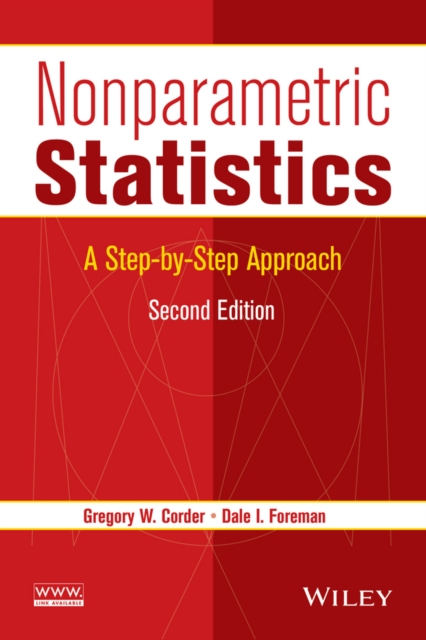
Nonparametric statistics
\"…a very useful resource for courses in nonparametric statistics in which the emphasis is on applications rather than on theory. It also deserves a place in libraries of all institutions where introductory statistics courses are taught.\" –CHOICE This Second Edition presents a practical and understandable approach that enhances and expands the statistical toolset for readers. This book includes: * New coverage of the sign test and the Kolmogorov-Smirnov two-sample test in an effort to offer a logical and natural progression to statistical power * SPSS® (Version 21) software and updated screen captures to demonstrate how to perform and recognize the steps in the various procedures * Data sets and odd-numbered solutions provided in an appendix, and tables of critical values * Supplementary material to aid in reader comprehension, which includes: narrated videos and screen animations with step-by-step instructions on how to follow the tests using SPSS; online decision trees to help users determine the needed type of statistical test; and additional solutions not found within the book.
eBook

Experimental methods in survey research : techniques that combine random sampling with random assignment
A thorough and comprehensive guide to the theoretical, practical, and methodological approaches used in survey experiments across disciplines such as political science, health sciences, sociology, economics, psychology, and marketing This book explores and explains the broad range of experimental designs embedded in surveys that use both.
eBook
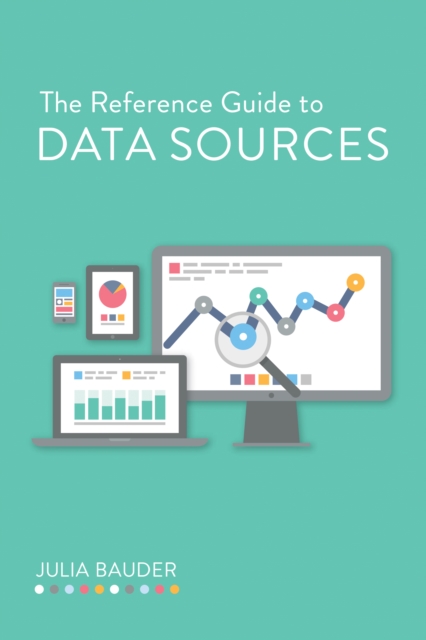
The reference guide to data sources
Questions about statistics have long been a staple at library reference desks. The rise of the Internet and the spread of statistical software packages have blurred the line between statistics reference and data reference. This guide is designed to help you answer basic data reference questions without having to refer to a dedicated data services librarian. This concise sourcebook takes the guesswork out of locating the best sources of data, a process more important than ever as the data landscape grows increasingly cluttered. This thoroughly annotated guide cuts through the data jargon to help librarians and researchers find exactly what they're looking for.
eBook

Cognitive Interviewing Methodology
\"Providing a comprehensive approach to cognitive interviewing in the field of survey methodology, Cognitive Interviewing Methodology delivers a clear guide that draws upon modern, cutting-edge research from a variety of fields. Each chapter begins by summarizing the prevailing paradigms that currently dominate the field of cognitive interviewing. Then underlying theoretical foundations are presented, which supplies readers with the necessary background to understand newly-evolving techniques in the field. The theories lead into developed and practiced methods by leading practitioners, researchers, and/or academics. Finally, the edited guide lays out the limitations of cognitive interviewing studies and explores the benefits of cognitive interviewing with other methodological approaches.\"--
eBook
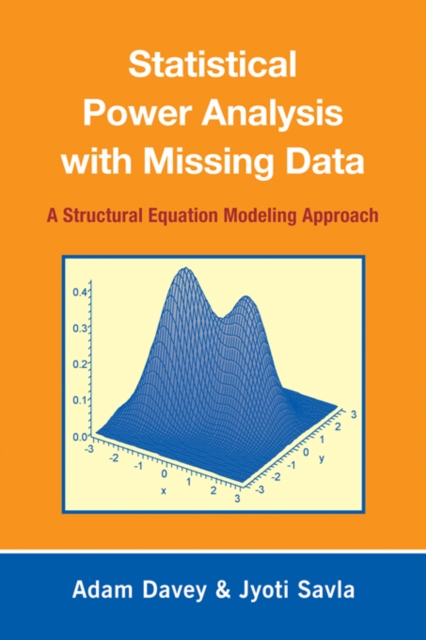
Statistical Power Analysis with Missing Data
Statistical power analysis has revolutionized the ways in which we conduct and evaluate research. Similar developments in the statistical analysis of incomplete (missing) data are gaining more widespread applications. This volume brings statistical power and incomplete data together under a common framework, in a way that is readily accessible to those with only an introductory familiarity with structural equation modeling. It answers many practical questions such as:
How missing data affects the statistical power in a study
How much power is likely with different amounts and types of missing data
How to increase the power of a design in the presence of missing data, and
How to identify the most powerful design in the presence of missing data.
Points of Reflection encourage readers to stop and test their understanding of the material. Try Me sections test one's ability to apply the material. Troubleshooting Tips help to prevent commonly encountered problems. Exercises reinforce content and Additional Readings provide sources for delving more deeply into selected topics. Numerous examples demonstrate the book's application to a variety of disciplines. Each issue is accompanied by its potential strengths and shortcomings and examples using a variety of software packages (SAS, SPSS, Stata, LISREL, AMOS, and MPlus). Syntax is provided using a single software program to promote continuity but in each case, parallel syntax using the other packages is presented in appendixes. Routines, data sets, syntax files, and links to student versions of software packages are found at www.psypress.com/davey. The worked examples in Part 2 also provide results from a wider set of estimated models. These tables, and accompanying syntax, can be used to estimate statistical power or required sample size for similar problems
eBook
Statistical applications for environmental analysis and risk assessment
Statistical Applications for Environmental Analysis and Risk Assessment guides readers through real-world situations and the best statistical methods used to determine the nature and extent of the problem, evaluate the potential human health and ecological risks, and design and implement remedial systems as necessary. Featuring numerous worked examples using actual data and \"ready-made\" software scripts, Statistical Applications for Environmental Analysis and Risk Assessment also includes: Descriptions of basic statistical concepts and principles in an informal style that does not presume prior familiarity with the subject Detailed illustrations of statistical applications in the environmental and related water resources fields using real-world data in the contexts that would typically be encountered by practitioners Software scripts using the high-powered statistical software system, R, and supplemented by USEPA's ProUCL and USDOE's VSP software packages, which are all freely available Coverage of frequent data sample issues such as non-detects, outliers, skewness, sustained and cyclical trend that habitually plague environmental data samples Clear demonstrations of the crucial, but often overlooked, role of statistics in environmental sampling design and subsequent exposure risk assessment.
eBook

Structural Equation Modeling with Mplus
[This book] reviews the basic concepts and applications of SEM using Mplus Version 6. ... The first two chapters introduce the fundamental concepts of SEM and important basics of the Mplus program. The remaining chapters focus on SEM applications and include a variety of SEM models presented within the context of three sections: Single-group analyses, Multiple-group analyses, and other important topics, the latter of which includes the multitrait-multimethod, latent growth curve, and multilevel models. (DIPF/Orig.).
eBook

The variation of the posterior variance and Bayesian sample size determination
We consider Bayesian sample size determination using a criterion that utilizes the first two moments of the posterior variance. We study the resulting sample size in dependence on the chosen prior and explore the success rate for bounding the posterior variance below a prescribed limit under the true sampling distribution. Compared with sample size determination based on the average of the posterior variance the proposed criterion leads to an increase in sample size and significantly improved success rates. Generic asymptotic properties are proven, such as an asymptotic expression for the sample size and a sort of phase transition. Our study is illustrated using two real world datasets with Poisson and normally distributed data. Based on our results some recommendations are given.
Journal Article
