
Catalogue Search | MBRL


Are you sure you want to remove the book from the shelf?

{{itemTitle}}
444,790
result(s) for
"SOCIAL SCIENCE / Technology Studies"
Sort by:

Science Interrupted
Science Interrupted examines
how scientists in China pursue environmental sustainability within
the constraints of domestic and international
bureaucracies. Timothy G. McLellan offers a theoretical
framework for analyzing the formal procedural work of Chinese
bureaucracy-work that is overlooked when China scholars restrict
their gaze to the informal and interpersonal channels through which
bureaucracy is often navigated.
Homing in on an agroforestry research organization in southwest
China, the author takes the experiences of the organization's staff
in navigating diverse international funding regimes and
authoritarian state institutions as entry points for understanding
the pervasiveness of bureaucracy in contemporary science. He asks:
What if we take the tools, sensibilities, and practices of
bureaucracies seriously not only as objects of critique but as
resources for re-thinking scientific practice?
Extending a mode of anthropological research in which
ethnography serves as source of theory as well as source of data,
Science Interrupted thinks with, and not only against,
bureaucracy. McLellan shows that ethnographic engagement with
bureaucracy enables us to imagine more democratic and more
collaborative modes of scientific practice.
eBook

Digital Capital
This work represents the first attempt to position digital capital as cumulative and transferable, independent from, and intertwined with the other five forms of capitals. The book aims to propose a theoretical toolkit and empirical model that can be used by policy makers to tackle social inequalities created by the digital exclusion of citizens.
eBook

Digital Detox: The Politics of Disconnecting
Against a backdrop of increasingly intrusive technologies, Trine Syvertsen explores the digital detox phenomenon and the politics of disconnection from invasive media. With a wealth of examples, the book demonstrates how self-regulation online is practiced and delves into how it has also become an expression of resistance in the 21st century.
eBook

Towards a comprehensive understanding of blockchain technology adoption in various industries in developing and emerging economies: a systematic review
The fast growth and wide range of applications of blockchain (BC) technology in various industries is irrefutable. Generally, BC technology is still in at an infant stage but it has generated significant interests in many sectors and industries. Nonetheless, despite an uptake of interest on the application of BC technology, the extent of its adoption in various industries in many countries remains partially understood. This paper aims to assess the current status of research on adoption of BC technology in various industries, particularly in developing and emerging economies. This study systematically reviewed the applied theories and models, adoption factors considered in each study, benefits, barriers and challenges of BC adoption intention in different industries from 86 articles published in the past five years from 2019 to end of June 2023. Findings showed several popular adoption models such as the Technology Acceptance Model, Unified Theory of Acceptance and Use of Technology and Task Technology Fit in the reviewed articles. Benefits, barriers and challenges were evident from each of the industries, implying the need to further understand BC adoption and application in these industries. This review also identifies a few research gaps and provides recommendations for future researches.
Journal Article

Free Culture and the City
Free Culture and the City
examines how and why free software spread beyond the world
of hackers and software engineers and became the basis for an urban
movement now heralded by scholars as a model for
emulation.
By the late 1990s, digital activists embraced a philosophy of
free software and \"free culture\" in order to take control over
their cities and everyday lives. Free culture, previously tethered
to the digital realm, was cut loose and used to reclaim and
resculpt the city. In Madrid the effects were dramatic. Common
sights in the city were abandoned as industrial factories turned
into autonomous social centers, urban orchards, guerrilla
architectural camps, or community hacklabs.
Drawing on two decades of ethnographic and historical work with
free culture collectives in Madrid, Free Culture and the
City shows how, in its journey from the digital to the urban,
the practice of liberating culture required the mobilization of,
and alliances between, public art centers, neighborhood
associations, squatted social centers, hackers, intellectual
property lawyers, street artists, guerrilla architectural
collectives, and Occupy assemblies.
eBook

The Will to Predict
In The Will to
Predict , Eglė Rindzevičiūtė demonstrates how
the logic of scientific expertise cannot be properly understood
without knowing the conceptual and institutional history of
scientific prediction. She notes that predictions of
future population, economic growth, environmental change, and
scientific and technological innovation have shaped much of
twentieth and twenty-first-century politics and social life, as
well as government policies. Today, such predictions are more
necessary than ever as the world undergoes dramatic environmental,
political, and technological change. But, she asks, what does it
mean to predict scientifically? What are the limits of scientific
prediction and what are its effects on governance, institutions,
and society?
Her intellectual and political history of scientific prediction
takes as its example twentieth-century USSR. By outlining the role
of prediction in a range of governmental contexts, from economic
and social planning to military strategy, she shows that the
history of scientific prediction is a transnational one, part of
the history of modern science and technology as well as governance.
Going beyond the Soviet case, Rindzevičiūtė argues that scientific
predictions are central for organizing uncertainty through the
orchestration of knowledge and action. Bridging the fields of
political sociology, organization studies, and history, The
Will to Predict considers what makes knowledge scientific and
how such knowledge has impacted late modern governance.
eBook
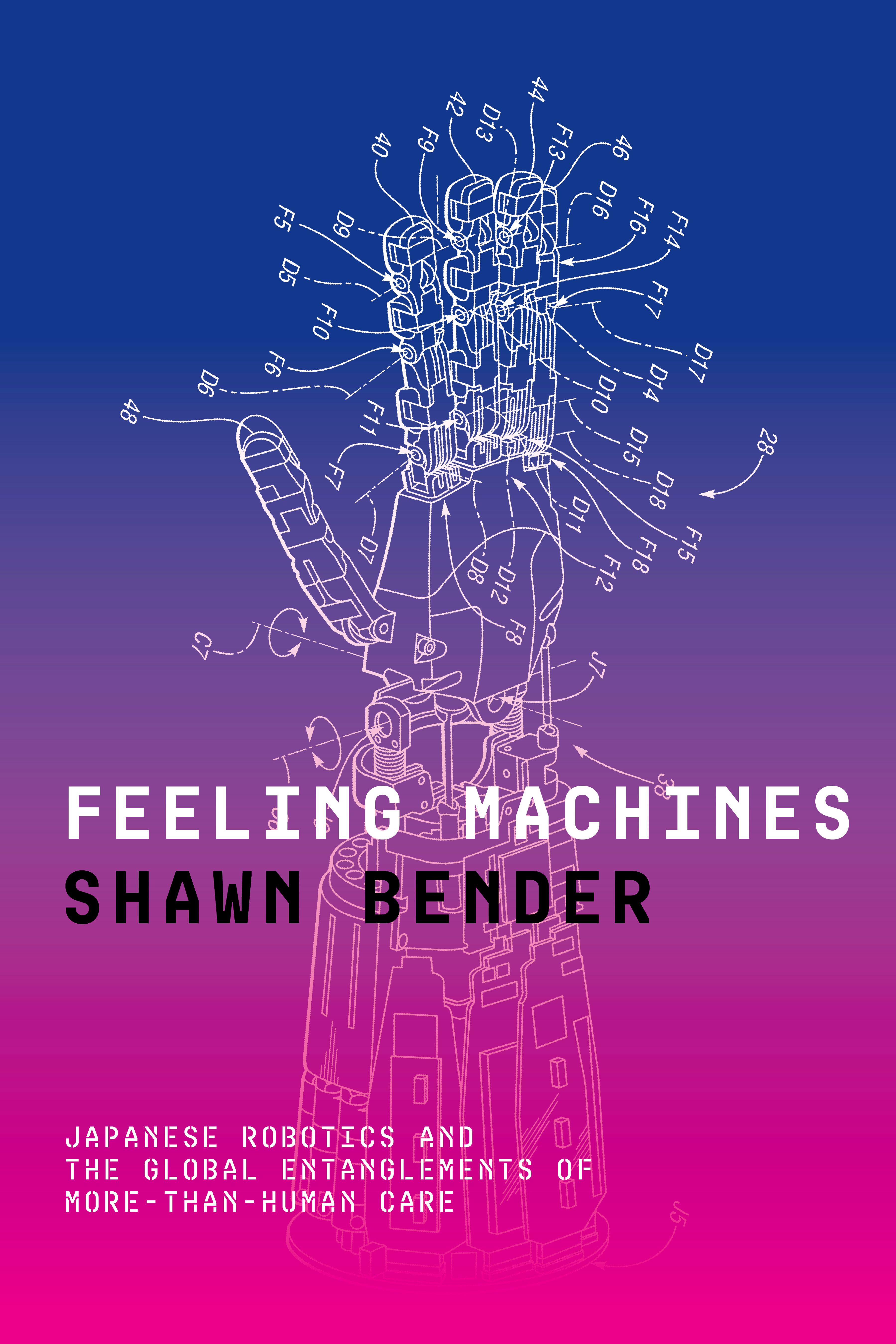
Feeling machines : Japanese robotics and the global entanglements of more-than-human care
In recent years, debates over healthcare have accompanied rapid advances in technology, from the expansion of telehealth services to artificial intelligence driven diagnostics. In this book, Shawn Bender delves into the world of Japanese robots engineered for care. Care robots (kaigo robotto) emerged early in the 21st century, when roboticists began converting assembly line technologies into responsive machines for older adults and people with disabilities. These robots are meant to be felt and programmed to feel. While some greet them with enthusiasm, others fear that they might replace a fundamentally human task. Based on fieldwork in Japan, Denmark, and Germany, Bender traces the emergence of care robots in Japan and examines their impact on therapeutic practice around the world. Social science scholarship on robotics tends to be either speculative—imagining life together with robots—or experimental—observing robot-human interaction in laboratories or through short-term field studies. Instead, Bender follows roboticists developing technologies in Japan, and travels with the robots themselves into everyday sites of care, tracking the integration of robots into institutional care and the connection of care practice to robotics development. By exploring the application of Japanese robotics across the globe, Feeling Machines highlights the entanglements of therapeutic practice and technological innovation in an age of more-than-human care.
eBook
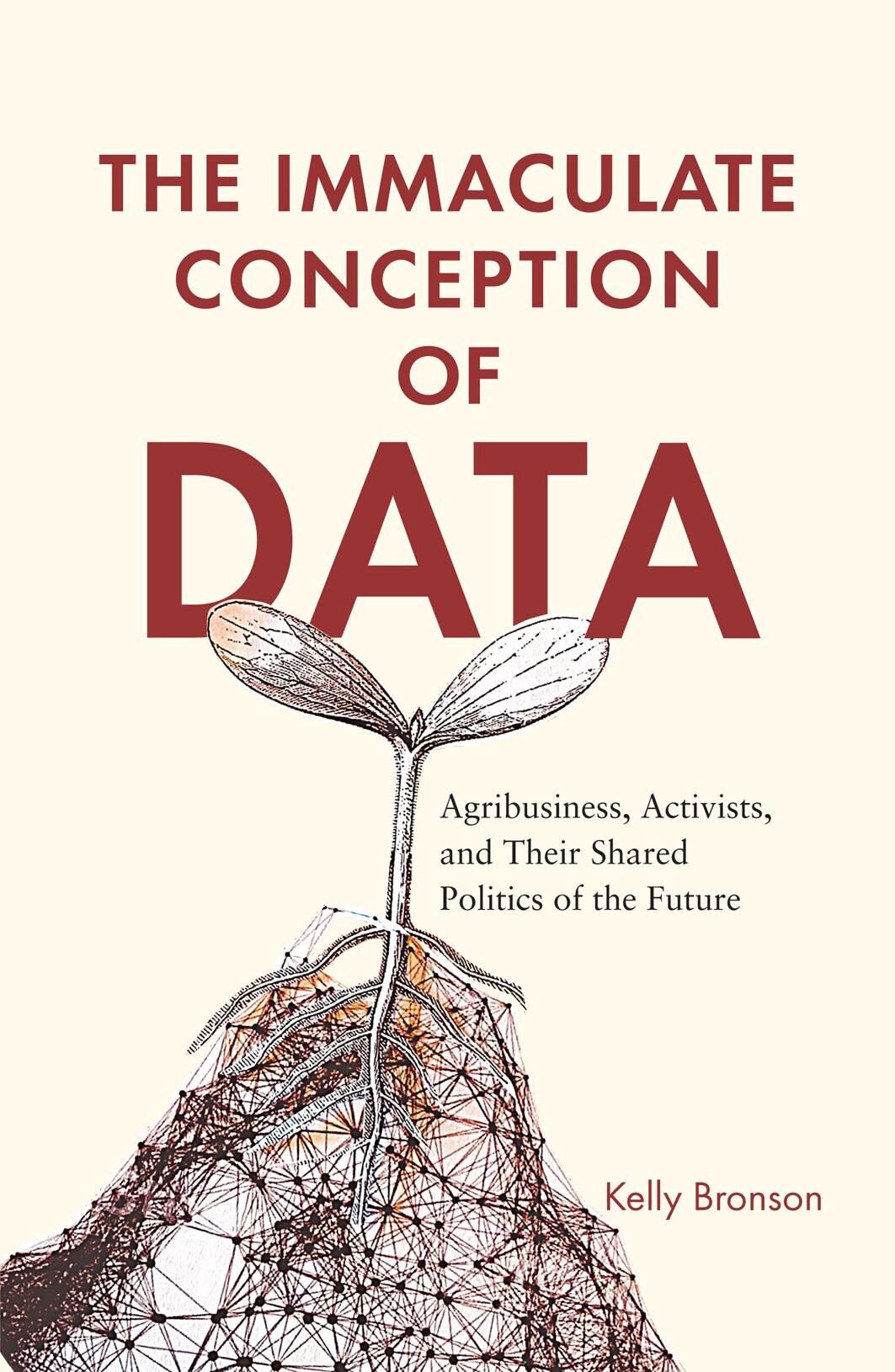
The Immaculate Conception of Data
Every new tractor now contains built-in sensors that collect data and stream it to cloud-based infrastructure. Seed and chemical companies are using these data, and these agribusinesses are a form of big tech alongside firms like Google and Facebook.The Immaculate Conception of Data peeks behind the secretive legal agreements surrounding agricultural big data to trace how it is used and with what consequences. Agribusinesses are among the oldest oligopoly corporations in the world, and their concentration gives them an advantage over other food system actors. Kelly Bronson explores what happens when big data get caught up in pre-existing arrangements of power. Her richly ethnographic account details the work of corporate scientists, farmers using the data, and activist “hackers” building open-source data platforms. Actors working in private and public contexts have divergent views on whom new technology is for, how it should be developed, and what kinds of agriculture it should support. Surprisingly, despite their differences, these groups share a way of speaking about data and its value for the future. Bronson calls this the immaculate conception of data, arguing that this phenomenon is a dangerous framework for imagining big data and what it might do for society.Drawing our attention to agriculture as an important new site for big tech criticism, The Immaculate Conception of Data uniquely bridges science and technology studies, critical data studies, and food studies, bringing to light salient issues related to data justice and a sustainable food system.
eBook

Neuromusculoskeletal Arm Prostheses: Personal and Social Implications of Living With an Intimately Integrated Bionic Arm
People with limb loss are for the first time living chronically and uninterruptedly with intimately integrated neuromusculoskeletal prostheses. This new generation of artificial limbs are fixated to the skeleton and operated by bidirectionally transferred neural information. This unprecedented level of human-machine integration is bound to have profound psychosocial effects on the individuals living with these prostheses. Here, we examined the psychosociological impact on people as they integrate neuromusculoskeletal prostheses into their bodies and lives. Three people with transhumeral amputations participated in this study, all of whom had been living with neuromusculoskeletal prostheses in their daily lives between 2 and 6 years at the time of the interview. Direct neural sensory feedback had been enabled for 6 months to 2 years. Participants were interviewed about their experiences living with the neuromusculoskeletal prostheses in their home and professional daily lives. We analyzed these interviews to elucidate themes using an interpretive phenomenological approach that regards participants' own experiences as forms of expertise and knowledge-making. Our participant-generated results indicate that people adapted and integrated the technology into functional and social arenas of daily living, with positive psychosocial effects on self-esteem, self-image, and social relations intimately linked to improved trust of the prostheses. Participants expressed enhanced prosthetic function, increased and more diverse prosthesis use in tasks of daily living, and improved relationships between their prosthesis and phantom limb. Our interviews with patients also generated critiques of the language commonly used to describe human-prosthetic relations, including terms such as \"embodiment,\" and the need for specificity surrounding the term \"natural\" with regard to control versus sensory feedback. Experiences living with neuromusculoskeletal prostheses were complex and subject-dependent, and therefore future research should consider human-machine interaction as a relationship that is constantly enacted, negotiated, and deeply contextualized.
Journal Article

Streaming Culture
Encouraging us to look beyond the seemingly limitless supply of multimedia content, David Arditi calls attention to the underlying dynamics of instant viewing - in which our access to our favourite binge-worthy show, blockbuster movie or hot new album release depends on any given service's willingness, and ability, to license it.
eBook