
Catalogue Search | MBRL


Are you sure you want to remove the book from the shelf?

{{itemTitle}}
31,801
result(s) for
"SOCIAL SCIENCE - Customs "
Sort by:


Practically Invisible
The community of Agua Blanca, deep within the Machalilla National
Park on the coast of Ecuador, found itself facing the twenty-first
century with a choice: embrace a booming tourist industry eager to
experience a preconceived notion of indigeneity, or risk losing a
battle against the encroaching forces of capitalism and
development. The facts spoke for themselves, however, as tourism
dollars became the most significant source of income in the
community.
Thus came a nearly inevitable shock, as the daily rhythms of
life--rising before dawn to prepare for a long day of maintaining
livestock and crops; returning for a late lunch and siesta; joining
in a game of soccer followed by dinner in the evening--transformed
forever in favor of a new tourist industry and the compromises
required to support it. As Practically Invisible
demonstrates, for Agua Blancans, becoming a supposedly \"authentic\"
version of their own indigenous selves required performing their
culture for outsiders, thus becoming these performances within the
minds of these visitors. At the heart of this story, then, is a
delicate balancing act between tradition and survival, a
performance experienced by countless indigenous groups.
eBook

The Incas
\"The book investigates its extraordinary progress from a small Andean society in southern Peru to its rapid demise little more than a century later at the hands of the Spanish conquerors\"-- Provided by publisher.
Book
Gold
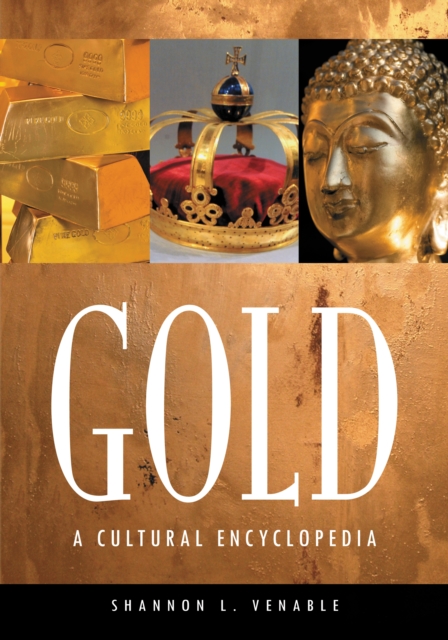
This encyclopedia provides detailed information about the historical, cultural, social, religious, economic, and scientific significance of gold, across the globe and throughout history. Gold has been an intrinsic part of human culture and society throughout the world, both in ancient times and in the modern era. This precious metal has also played a central role in economics and politics throughout history. In fact, the value of gold remains a topic of debate amid the current upheavals of economic conditions and attendant reevaluations of modern financial principles. Gold: A Cultural Encyclopedia consists of more than 130 entries that encompass every aspect of gold, ranging from the ancient metallurgical arts to contemporary economies. The connections between these interdisciplinary subjects are explored and analyzed to highlight the many ways humankind's fascination with gold reflects historical, cultural, economic, and geographic developments. While the majority of the works related to gold focus on economic theory, this text goes beyond that to take a more sociocultural approach to the subject.
eBook

Mr. Burns and other plays
\"\"One of the most spectacularly original plays in recent memory.\"-Entertainment Weekly \"Fascinating and hilarious. With each of its three acts, Mr. Burns grows grander.\"-Village Voice \"When was the last time you met a new play that was so smart it made your head spin?. Mr. Burns has arrived to leave you dizzy with the scope and dazzle of its ideas. with depths of feeling to match its breadth of imagination.\"-The New York Times An ode to live theater and the resilience of The Simpsons, Anne Washburn's apocalyptic comedy Mr. Burns-\"even better than its hype\" (New York Post)-is an imaginative exploration of how the culture of one generation can evolve into the mythology of the next. Following an enthusiastic critical reception from New York critics for its world premiere, Mr. Burns will receive its London premiere in spring 2014. Also included in the collection are The Small, I Have Loved Strangers, and Orestes, all of which, together, develop a theme of destruction, from the personal to the city to civilization and, finally, to the destruction of form. Anne Washburn's plays include The Internationalist, A Devil at Noon, Apparition, The Communist Dracula Pageant, I Have Loved Strangers, The Ladies, The Small, and a transadaptation of Euripides's Orestes. Her awards include a Guggenheim, NYFA Fellowship, Time Warner Fellowship, and a Susan Smith Blackburn finalist. She is a member of 13P, The Civilians, and is a New Georges affiliated artist\"-- Provided by publisher.
Book

Festival Places
Festivals have burgeoned in rural areas, revitalising old traditions and inventing new reasons to celebrate. How do festivals contribute to tourism, community and a rural sense of belonging? What are their cultural, environmental and economic dimensions? This book features contributions from researchers who answer such questions.
eBook

Cuba
\"Written by some of the best-known independent scholars, citizen journalists, and cyber-activists and bloggers living in Cuba today, this book presents a critical, complete, and unbiased overview of contemporary Cuba\"-- Provided by publisher.
Book

Crime and punishment in istanbul
This vividly detailed revisionist history exposes the underworld of the largest metropolis of the early modern Mediterranean and through it the entire fabric of a complex, multicultural society. Fariba Zarinebaf maps the history of crime and punishment in Istanbul over more than one hundred years, considering transgressions such as riots, prostitution, theft, and murder and at the same time tracing how the state controlled and punished its unruly population. Taking us through the city's streets, workshops, and houses, she gives voice to ordinary people—the man accused of stealing, the woman accused of prostitution, and the vagabond expelled from the city. She finds that Istanbul in this period remains mischaracterized—in part by the sensational and exotic accounts of European travelers who portrayed it as the embodiment of Ottoman decline, rife with decadence, sin, and disease. Linking the history of crime and punishment to the dramatic political, economic, and social transformations that occurred in the eighteenth century, Zarinebaf finds in fact that Istanbul had much more in common with other emerging modern cities in Europe, and even in America.
eBook

Food consumption in global perspective : essays in the anthropology of food in honour of Jack Goody
\"The globalization of food consumption has often been equated with the loss of culinary traditions and the homogenization of cuisines. By contrast, the anthropologists, historians and sociologists contributing to this collection reveal both rapid changes and also profound and sometimes surprising continuities in local food consumption practices in the nineteenth, twentieth and twenty-first centuries, and use these to shed light on shifting social boundaries and cultural identities. The volume combines ethnographic, historical and comparative analyses, situating local practices of eating, cooking and sharing food within transnational processes and contexts. In so doing, the volume celebrates and furthers approaches developed in Jack Goody's seminal 1982 book, Cooking, Cuisine and Class: A Study in Comparative Sociology. With studies of China, India, West Africa, South America and Europe, the book provides a truly global perspective on the social dynamics of food consumption in the modern world\"-- Provided by publisher.
Book

To Live and Dine in Dixie
This book explores the changing food culture of the urban American South during the Jim Crow era by examining how race, ethnicity, class, and gender contributed to the development and maintenance of racial segregation in public eating places. Focusing primarily on the 1900s to the 1960s, Angela Jill Cooley identifies the cultural differences between activists who saw public eating places like urban lunch counters as sites of political participation and believed access to such spaces a right of citizenship, and white supremacists who interpreted desegregation as a challenge to property rights and advocated local control over racial issues.
Significant legal changes occurred across this period as the federal government sided at first with the white supremacists but later supported the unprecedented progress of the Civil Rights Act of 1964, which-among other things-required desegregation of the nation's restaurants. Because the culture of white supremacy that contributed to racial segregation in public accommodations began in the white southern home, Cooley also explores domestic eating practices in nascent southern cities and reveals how the most private of activities-cooking and dining- became a cause for public concern from the meeting rooms of local women's clubs to the halls of the U.S. Congress.
eBook