
Catalogue Search | MBRL


Are you sure you want to remove the book from the shelf?

{{itemTitle}}
147
result(s) for
"SOCIAL SCIENCE - Freemasonry."
Sort by:

Templar heresy : a story of Gnostic illumination
\"A tale of initiation, adventure, and romance set within the medieval Crusades. Shares in novel form the mystical rituals and techniques of the Nizari Ismailis (the legendary Assassins) communicated to selected Knights Templar during the Crusades. Shows how the Gnostic traditions of the Cathars and Nizaris were blended to become the core of the \"heretical\" doctrines for which the Templars were later condemned. Sheds light on the contemporary conflict between Islam and the West and offers a natural path of reconciliation between these disparate cultures. Set within the dramatic tableau of the medieval Crusades, this story of initiation, adventure, and romance follows members of the Knights Templar and Assassins as they discover a mystical tradition with the potential to unify, protect, and liberate humankind--the very heresy for which the Knights Templar were later condemned. The tale begins with a young Persian student, Sinan, as he witnesses his teacher deliver the heretical Qiyama proclamation, seeking to abolish Islamic religious law in favor of a more mystical approach to spirituality. After completing his initiation into the revolutionary doctrines and practices of the Assassins--also known as the Nizari Ismailis or Hashishim--Sinan is appointed head of the Nizaris in Syria. Years later, after Sinan has become a wise and respected leader, he encounters Roland de Provence, a young member of the Knights Templar. Impressed by his courage and intelligence, Sinan selects him for initiation into the Nizari tradition. As readers follow Sinan and Roland through the process, they experience firsthand the transmission of these secret teachings and the paranormal, even magical powers of the Assassin adepts. Roland braves hashish journeys, mystical rituals, and divine epiphanies, as well as sexual awakening at the hands of Sinan's beautiful consort Aisha. When Roland completes his education with Sinan, he vows to share the Nizari teachings with his fellow Templars. However, he is met with strong opposition from his Templar commander, and factions within the Order quickly arise. As we follow Roland to southern France, we witness how he blends the Cathar and Nizari traditions to form the core of the \"heresy\" for which the Templars were later arrested and condemned. Now an outlaw, hunted by his Templar brethren, Roland is forced to choose between the beliefs with which he was raised and the realizations of his own personal truths. Bringing to life the historical truths of his expertly researched bestseller The Templars and the Assassins, James Wasserman artfully traces the evolution of the Western Esoteric Tradition during the fertile cultural interactions of the Crusades. His story also sheds light on the modern conflict between Islam and the West--which began a thousand years ago--and offers a natural path of reconciliation between our disparate cultures\"-- Provided by publisher.
BOOK

Initiating Women in Freemasonry
Based on primary sources, this book analyses the historical creation, contents and development of the rituals of the Adoption Rite, with which women were initiated into Freemasonry since 1744. It gives a completely new perspective on this chapter of women's history.
eBook

Hermes Explains
Few fields of academic research are surrounded by so many misunderstandings and misconceptions as the study of Western esotericism. For twenty years now, the Centre for History of Hermetic Philosophy and Related Currents (University of Amsterdam) has been at the forefront of international scholarship in this domain. This anniversary volume seeks to make the modern study of Western esotericism known beyond specialist circles, while addressing a range of misconceptions, biases, and prejudices that still tend to surround it. Thirty major scholars in the field respond to questions about a wide range of unfamiliar ideas, traditions, practices, problems, and personalities that are central to this area of research. By challenging many taken-for-granted assumptions about religion, science, philosophy, and the arts, this volume demonstrates why the academic study of esotericism leads us to reconsider much that we thought we knew about the story of Western culture.
eBook

A Noble Fight
A Noble Fight examines the metaphors and meanings behind the African American appropriation of the culture, ritual, and institution of freemasonry in navigating the contested terrain of American democracy. Combining cultural and political theory with extensive archival research--including the discovery of a rare collection of nineteenth-century records of an African American Freemason Lodge--Corey D. B. Walker provides an innovative perspective on American politics and society during the long transition from slavery to freedom._x000B__x000B_With great care and detail, Walker argues that African American freemasonry provides a critical theoretical lens for understanding the distinctive ways African Americans have constructed a radically democratic political imaginary through racial solidarity and political nationalism, forcing us to reconsider much more circumspectly the complex relationship between voluntary associations and democratic politics._x000B__x000B_Mapping the discursive logics of the language of freemasonry as a metaphoric rendering of American democracy, this study interrogates the concrete forms of an associational culture, revealing how paradoxical aspects of freemasonry such as secrecy and public association inform the production of particular ideas and expressions of democracy in America.
eBook

Brotherly Love
Friendship, an acquired relationship primarily based on choice rather than birth, lay at the heart of Enlightenment preoccupations with sociability and the formation of the private sphere. InBrotherly Love, Kenneth Loiselle argues that Freemasonry is an ideal arena in which to explore the changing nature of male friendship in Enlightenment France. Freemasonry was the largest and most diverse voluntary organization in the decades before the French Revolution. At least fifty thousand Frenchmen joined lodges, the memberships of which ranged across the social spectrum from skilled artisans to the highest ranks of the nobility. Loiselle argues that men were attracted to Freemasonry because it enabled them to cultivate enduring friendships that were egalitarian and grounded in emotion.
Drawing on scores of archives, including private letters, rituals, the minutes of lodge meetings, and the speeches of many Freemasons, Loiselle reveals the thought processes of the visionaries who founded this movement, the ways in which its members maintained friendships both within and beyond the lodge, and the seemingly paradoxical place women occupied within this friendship community. Masonic friendship endured into the tumultuous revolutionary era, although the revolutionary leadership suppressed most of the lodges by 1794. Loiselle not only examines the place of friendship in eighteenth-century society and culture but also contributes to the history of emotions and masculinity, and the essential debate over the relationship between the Enlightenment and the French Revolution.
eBook

Architects of America
Did the Freemasons consciously affect the geographical growth of the USA in order to invest the layout of the states with a deeper, symbolic meaning? The narrative concentrates on the development of Masonic ritual during the eighteenth and nineteenth centuriesespecially their description of the 'ideal building' or Templethe concurrent construction of America and the role Freemasons played in it, and the emergence of a simple but highly symbolic mathematical formula that recurs regularly throughout the history of the Republic. Maps and diagrams illustrate the surprising coherence of the theory.
eBook

Brought to Light
Secret societies are becoming increasingly controversial—thrust into public awareness by popular books, films, the Internet, and a host of recent documentaries. In academia, this exposure finds a parallel in the proliferation of research, institutes, and conferences. Yet the media depictions tend to be caricatures, a playing to pervasive stereotypes for public consumption, while the academic stress historical and philological matters. Indeed, to the extent a sociological focus exists, it largely emphasizes the roles these groups played in social history. And for the societies' members themselves, there has been a paucity of work on the contemporary meaning of these groups—a neglect made mystifying by the vast social changes that have taken place over the past century. In this study, and for the first time by any scholar, Kenney moves beyond history and applies the methods and theoretical tools of contemporary sociology to study the lived world of freemasons in today's society.
To provide a clear portrait of the patterned experiences of contemporary freemasons and the issues faced by \"the Craft\" today, Kenney draws on qualitative data from three primary sources: (1) extensive interviews with 121 contemporary freemasons in Newfoundland and Nova Scotia; (2) video footage shot for a feature film on contemporary freemasonry; and (3) his observations and experiences in nearly fifteen years as a freemason. Brought to Light provides a highly original contribution to sociology, Masonic scholarship, and the social sciences generally.
eBook
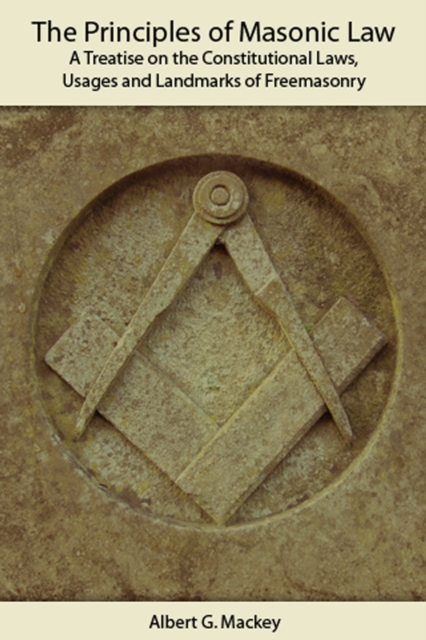
The Principles of Masonic Law
This excellent book about the laws of freemasonry has been specially formatted for today's e-readers. It contains information on laws about the lodge and about individuals, and is a fascinating insight into the world's most famous secret society. Contained within these pages are the masonic laws relating to the organization of lodges, the offices of the lodge, joining the masons, and - of course - the masonic crimes and punishments.
eBook

Voluntary Organizations in the Chinese Diaspora
Do Chinese voluntary organizations continue to have a role in modern societies enmeshed in a globalizing world that questions continuation of the nation-state and ethnic identity? This book argues that Chinese voluntary organizations continue to play a si
eBook

Terror by Quota
This original analysis of the workings of Soviet state security organs under Lenin and Stalin addresses a series of questions that have long resisted satisfactory answers. Why did political repression affect so many people, most of them ordinary citizens? Why did repression come in waves or cycles? Why were economic and petty crimes regarded as political crimes? What was the reason for relying on extra-judicial tribunals? And what motivated the extreme harshness of punishments, including the widespread use of the death penalty?
Through an approach that synthesizes history and economics, Paul Gregory develops systematic explanations for the way terror was applied, how terror agents were recruited, how they carried out their jobs, and how they were motivated. The book draws on extensive, recently opened archives of the Gulag administration, the Politburo, and state security agencies themselves to illuminate in new ways terror and repression in the Soviet Union as well as dictatorships in other times and places.
eBook