
Catalogue Search | MBRL


Are you sure you want to remove the book from the shelf?

{{itemTitle}}
8,616
result(s) for
"SOFTWARE PIRACY"
Sort by:


CRACK99 : the takedown of a $100 million Chinese software pirate /
The \"story of the biggest software piracy case prosecuted by the U.S. Department of Justice\"--Amazon.com.
Book

Explaining Digital Piracy: A Meta-Analysis
Why do users engage in digital piracy? The theoretical explanations are particularistic and the empirical findings are fragmented and divergent. Managers and academics have thus had little guidance on how to explain and combat digital piracy. To help fill this gap, the present paper provides a meta-analysis that synthesizes past research and identifies the key drivers of users’ engagement in digital piracy. The findings identify new measures and revise existing strategies to confront the global threat of digital piracy. Effective anti-piracy measures focus on breaking habits, reducing users’ control, suppressing justifications, and changing attitudes. Breaking habits requires technical control strategies such as impeding access to pirate sites, and should be accompanied by legislative demands. Impairing the attractiveness of pirate websites while providing high quality content on legitimate channels weakens illegal users’ perceived control. Enhanced features and functionality of legal products and websites that are easy accessible strengthens legal users’ perceived control. While many existing anti-piracy campaigns foster positive appeals (e.g., supporting the industry), describing the risks and loss of control seem more promising. As for targeting, psychographics provide a better portrait of pirating users than demographics—they appreciate sharing, are innovative, less risk averse, less susceptible to influence, and of lower integrity. Finally, making more legal copies available to users is discouraged.
Many studies have investigated why users engage in digital piracy. The theoretical explanations are particularistic, and the empirical findings are fragmented, sometimes divergent, and reveal unexplained variations of effects. Managers and academics have thus had little guidance on how to explain and combat digital piracy. To help fill this gap, the present meta-analysis synthesizes past research on digital piracy and accumulates 1,373 effect sizes from 174 studies collected in 36 countries. The meta-analysis identifies the key drivers of users’ engagement in digital piracy and tests a new, comprehensive model that integrates all prior theoretical perspectives—social influence and control, outcome evaluation, dilemma solving, and reinforcement. The model explains 42%–53% of the variance in digital piracy attitudes, intentions, and behaviors and identifies the reinforcement perspective as the strongest theory. A moderator analysis shows that the influence of key drivers varies with cultural dimensions linked to the theoretical perspectives—individualism moderates social influence and control variables, masculinity moderates dilemma-solving variables, and uncertainty avoidance moderates reinforcement variables. These findings provide guidance for future digital piracy research and also have managerial implications in terms of possible revisions to antipiracy measures.
The online appendix is available at
https://doi.org/10.1287/isre.2018.0821
.
Journal Article

Theory of Planned Behavior and Ethics Theory in Digital Piracy: An Integrated Model
Since digital piracy has posed a significant threat to the development of the software industry and the growth of the digital media industry, it has, for the last decade, held considerable interest for researchers and practitioners. This article will propose an integrated model that combines the theory of planned behavior (TPB) and ethics theory, the two theories that are most often used in digital piracy studies. Data were obtained from university students in China, and the model was examined using the structural equation model (SEM). The results show that moral obligation and justice, derived from ethics theories and TPB variables, such as attitude, subjective norms, and perceived behavioral control, influence the behavioral intentions of individuals to commit digital piracy. The attitude of individuals toward digital piracy is also found to be influenced by perceived benefits, perceived risk, and habit.
Journal Article

Determinants of Digital Piracy: An Integrated Model
Digital piracy is a form of copyright infringement and challenges persist in addressing it effectively. Accordingly, understanding why people engage in digital piracy is crucial. Although prior studies have examined digital piracy from multiple perspectives, existing studies on the explanatory factors of digital piracy remain fragmented. To address this research gap, this study develops an integrated model that incorporates key theoretical perspectives, neutralization theory, social learning theory, and the theory of planned behavior (TPB), along with key determinants including gender, age, and the technology factor. Rather than conducting a meta-analysis of previous studies, this study adopts a survey-based approach to examine the effects of these factors on digital piracy. We collected our data through a survey and used t-tests, ANOVA, and logistic regression to analyze it. The results indicate that gender, age, the neutralization factor, and the social learning factor have significant effects on digital piracy. Specifically, gender, the neutralization factor, and the social learning factor play a crucial role in the use of BitTorrent for engaging in digital piracy. In contrast to prior research, this study shows that the technology factor does not have a statistically significant influence on digital piracy. This study advances digital piracy literature by offering an integrated model and a comprehensive analysis of the factors influencing digital piracy, thereby addressing the limitations of prior fragmented research that focused on a narrow set of factors and theoretical perspectives. Practically, by integrating these findings, administrators and policymakers can develop more precise interventions to discourage digital piracy, ultimately reducing digital piracy behaviors.
Journal Article

Central Role of Moral Obligations in Determining Intentions to Engage in Digital Piracy
Piracy is a significant source of concern facing software developers, music labels, and movie production companies, to name a few. Digital goods producers and government entities argue that there are victims of piracy, whereas pirates may perceive their actions to be victimless. Regarding implications of our research, we extend the theory of planned behavior (TPB) by theorizing that attitudes, subjective norms, and perceived behavioral control could influence perceptions of moral obligations as a consequence of the desire to rationalize unethical behavior. Unlike prior literature, we manipulate the rationalization of moral obligations due to the victimless view toward piracy and show how moral obligations become important determinants of piracy behavior. Accordingly, our demonstrated malleability of morals may be an important path through which individuals are able to continue past behaviors. We also conduct a second study to identify the effect of implementing an educational message from a fictitious software company to exogenously nudge the pirate and influence the impact of perceived moral obligations on intentions to pirate. Our results show that the introduction of an exogenous educational message is an effective piracy mitigation strategy.
Journal Article
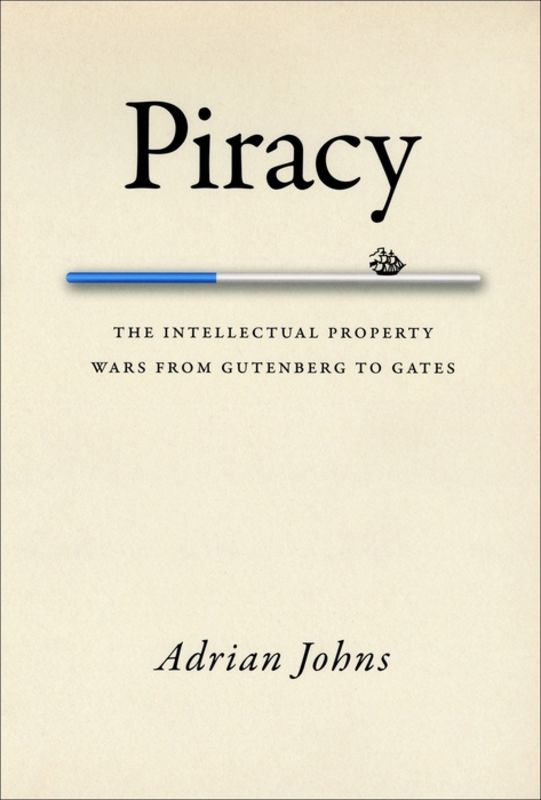
Piracy
Since the rise of Napster and other file-sharing services in its wake, most of us have assumed that intellectual piracy is a product of the digital age and that it threatens creative expression as never before. The Motion Picture Association of America, for instance, claimed that in 2005 the film industry lost
eBook
Exploring Factors Affecting Digital Piracy Using the Norm Activation and UTAUT Models: The Role of National Culture
We develop and use an integrated individual-level model to explain the driving forces behind digital piracy (DP) practice in two nations. The proposed model combines the Norm Activation model and Unified Theory of Acceptance and Use of Technology models. This study also explores the effect of culture on intention (INT) to practice DP in two nations: US (individualistic) and India (collectivistic). A survey instrument was used to collect data from 231 US and 331 Indian participants. Use of the integrated model proves to be a powerful and a viable approach to understanding DP across cultures. In each nation, all 10 path coefficients on the research model are statistically significant thereby establishing the fact that personal norm, together with other factors, influences INT to engage in DP, which in turn, may influence the actual practice. The results reveal a support for cross-cultural generalizability and applicability of the proposed model. Culture clearly plays a strong moderating role in two out of the three paths tested. The implications of the findings are discussed.
Journal Article

Authorship Attribution Methods, Challenges, and Future Research Directions: A Comprehensive Survey
Over the past few decades, researchers have put their effort and paid significant attention to the authorship attribution field, as it plays an important role in software forensics analysis, plagiarism detection, security attack detection, and protection of trade secrets, patent claims, copyright infringement, or cases of software theft. It helps new researchers understand the state-of-the-art works on authorship attribution methods, identify and examine the emerging methods for authorship attribution, and discuss their key concepts, associated challenges, and potential future work that could help newcomers in this field. This paper comprehensively surveys authorship attribution methods and their key classifications, used feature types, available datasets, model evaluation criteria and metrics, and challenges and limitations. In addition, we discuss the potential future research directions of the authorship attribution field based on the insights and lessons learned from this survey work.
Journal Article