
Catalogue Search | MBRL


Are you sure you want to remove the book from the shelf?

{{itemTitle}}
1,269
result(s) for
"SOURIS"
Sort by:

Bat
\"Bats have been misunderstood and maligned in the West for centuries. Unfair associations with demons have seen their leathery wings adorn numerous evil characters, from the Devil to Bram Stoker's Dracula. But these amazing animals are ecological superheroes. In Bat Tessa Laird challenges preconceptions about these amazing animals, combining fascinating facts of bat biology with engaging portrayals of bats in mythology, literature, film, popular culture, poetry, and contemporary art. She also provides a sobering reminder of the risks bats face worldwide, from heatwaves and human harassment to wind turbines and disease. Illustrated with incredible photographs and artistic representations of bats from many different cultures and eras, this celebration of bats contains much to enthral converts and sceptics alike.\"--Provided by publisher.
Book

Bats of Southern and Central Africa: A Biogeographic and Taxonomic Synthesis
This revised edition of Bats of Southern and Central Africa builds on the solid foundation of the first edition and supplements the original account of bat species then known to be found in Southern and Central Africa with an additional eight newly described species, bringing the total to 124.The chapters on evolution, biogeography, ecology and echolocation have been updated, citing dozens of recently published papers. The book covers the latest systematic and taxonomic studies, ensuring that the names and relationships of bats in this new edition reflect current scientific knowledge.The species accounts provide descriptions, measurements and diagnostic characters as well as detailed information about the distribution, habitat, roosting habits, foraging ecology and reproduction of each species. The updated species distribution maps are based on 6 100 recorded localities.A special feature of the 2010 publication was the mode of identification of families, genera and species by way of character matrices rather than the more generally used dichotomous keys. Since then these matrices have been tested in the field and, where necessary, slightly altered for this edition. New photographs fill in gaps and updated sonograms aid with bat identification in acoustic surveys.The bibliography, which now contains more than 700 entries, will be an invaluable aid to students and scientists wishing to consult original research.
eBook


Bats
Bats are highly charismatic and popular animals that are not only fascinating in their own right, but illustrate most of the topical and important concepts and issues in mammalian biology. This book covers the key aspects of bat biology, including evolution, flight, echolocation, hibernation, reproduction, feeding and roosting ecology, social behaviour, migration, population and community ecology, biogeography, and conservation. This new edition is fully updated and greatly expanded throughout, maintaining the depth and scientific rigour of the first edition. It is beautifully illustrated with drawings and colour photographs.
eBook

The Mouse Island marathon
Exercise? Geronimo? Not a chance! So when he accidentally gets signed up to the Mouse Island Marathon, Geronimo can't pull out fast enough. Unfortunately his family has other ideas, and they soon have a whole fitness plan set out for him. Will Geronimo make it across the finish line on the day?
BOOK

Bats in the Changing Boreal Forest: Response to a Megafire by Endangered Little Brown Bats (Myotis lucifugus)
Wildfire is a pervasive disturbance in the boreal forest, and fire size and severity is increasing due to climate change. Yet, wildfire impacts on boreal bats are unknown. Burned forest may be attractive to bats because of an increase in dead trees and a reduction in vegetative clutter. Using ultrasonic detectors, I sampled little brown bat (Myotis lucifugus) activity at lakeshore and upland sites within burned and mature forest. Activity was greater in mature than burned forest at both upland and lakeshore sites. Activity was greater at lakeshores, where some large snags survived fire. The relative use of edges created by fire, lakeshores and roads was also investigated. Bat activity was greater at lakeshores than other edge types. Bats made little use of burned upland areas or fire-created edges. This study provides a first approximation of the effect of a ‘megafire’ on bats in the boreal forest and suggests that large, severe wildfires may have a negative impact. Protection of mature forest containing large dead trees, particularly along lakeshores, may help to mitigate the loss of habitat due to wildfires. Further work, however, is needed to assess bat activity in burns of differing sizes, severity and age.
Journal Article

The hunt for the hundredth key : plus a bonus mini mystery and cheesy jokes!
Geronimo, Thea, and their cousin Trap explore an old castle built by Grant Gentlemouse, the founder of New Mouse City, and when they find one hundred keys and only ninety-nine doors inside, they set off in search of the missing room.
BOOK

Activation of Rice nicotianamine synthase 2 (OsNAS2) Enhances Iron Availability for Biofortification
Because micronutrients in human diets ultimately come from plant sources, malnutrition of essential minerals is a significant public health concern. By increasing the expression of nicotianamine synthase (NAS), we fortified the level of bioavailable iron in rice seeds. Activation of iron deficiency-inducible OsNAS2 resulted in a rise in Fe content (3.0-fold) in mature seeds. Its ectopic expression also increased that content. Enhanced expression led to higher tolerance of Fe deficiency and better growth under elevated pH. Mice fed with OsNAS2-D1 seeds recovered more rapidly from anemia, indicating that bioavailable Fe contents were improved by this increase in OsNAS2 expression.
Journal Article
Geronimo Stilton reporter
Geronimo Stilton, top reporter for The Rodent's Gazette, keeps has a reputation of breaking the top news stories first to the citizens of New Mouse City.
BOOK
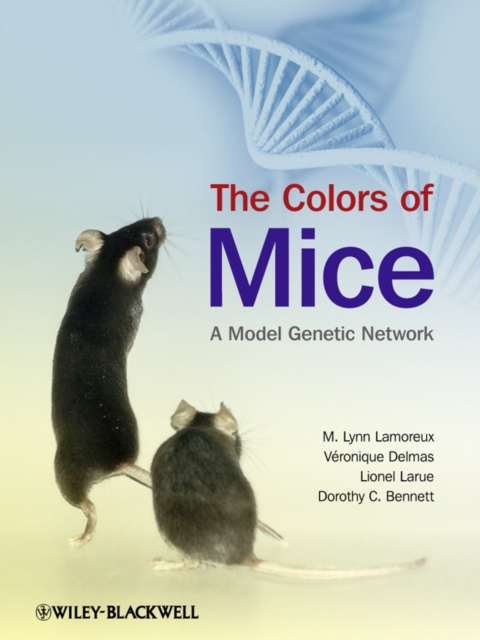
The colors of mice : a model genetic network
Serving the needs of pigment cell biologists, cellular physiologists, developmental geneticists, researchers interested in melanoma and more, this new book showcases a blend of new technologies and new insights in the field of pigmantary genetics of mice, with comparative information on other animals.
eBook