
Catalogue Search | MBRL


Are you sure you want to remove the book from the shelf?

{{itemTitle}}
1,781
result(s) for
"SQUATTER SETTLEMENTS"
Sort by:

Shantytown, USA : forgotten landscapes of the working poor
\"Mention \"shantytowns\" today and the universal assumption is that you'll be talking about exploding slums in a developing nation in Africa, South Asia, or South America. This book adds the United States to the international discourse on shantytowns, tracing their appearance on both the western and urban frontiers of the young nation starting in the 1820s, and tracking them through the urbanization and industrialization that convulsed the country in the decades leading up to and following the Civil War. Drawing on a wealth of unexamined texts, images, popular music, and films, filtered through the lens of scholarship on everyday landscapes, Shantytown USA restores shantytowns to the central place they once occupied in the nation's imagination, and on its landscape.\"--Provided by publisher.
Book

Living with Insecurity in a Brazilian Favela
The residents of Caxambu, a squatter neighborhood in Rio de Janeiro, live in a state of insecurity as they face urban violence. Living with Insecurity in a Brazilian Favela examines how inequality, racism, drug trafficking, police brutality, and gang activities affect the daily lives of the people of Caxambu. Some Brazilians see these communities, known as favelas, as centers of drug trafficking that exist beyond the control of the state and threaten the rest of the city. For other Brazilians, favelas are symbols of economic inequality and racial exclusion. Ben Penglase’s ethnography goes beyond these perspectives to look at how the people of Caxambu themselves experience violence. Although the favela is often seen as a war zone, the residents are linked to each other through bonds of kinship and friendship. In addition, residents often take pride in homes and public spaces that they have built and used over generations. Penglase notes that despite poverty, their lives are not completely defined by illegal violence or deprivation. He argues that urban violence and a larger context of inequality create a social world that is deeply contradictory and ambivalent. The unpredictability and instability of daily experiences result in disagreements and tensions, but the residents also experience their neighborhood as a place of social intimacy. As a result, the social world of the neighborhood is both a place of danger and safety.
eBook

Up came a squatter : Niel Black of Glenormiston, 1839-1880
Niel Black, a Scot from Argyllshire, arrived in Melbourne in September intending to make his fortune. Ambitious and determined, Black became one of the most successful and energetic squatters in the Western District of Victoria - a livestock breeder and a Member of the Legislative Council. He was also a correspondent extraordinaire, and his letters to family, fellow pastoralists, colonial officials, and his chief UK business partner, Thomas Steuart Gladstone (and first cousin of the British prime minister), offer a unique insight into the time. Black's letters and journals, now held at the State Library of Victoria, are the inspiration for this revelatory book written by his great-granddaughter. Battles with local Aboriginal people, other settlers, Commissioners of Crown Lands and bush-fires, along with droughts, family feuds, multiple trips back to Scotland to find a wife and Black's rise to gentrified excess are all vividly brought to life.
Book

Metropolitan preoccupations : the spatial politics of squatting in Berlin
In this, the first book-length study of the cultural and political geography of squatting in Berlin, Alexander Vasudevan links the everyday practices of squatters in the city to wider and enduring questions about the relationship between space, culture, and protest.
* Focuses on the everyday and makeshift practices of squatters in their attempt to exist beyond dominant power relations and redefine what it means to live in the city
* Offers a fresh critical perspective that builds on recent debates about the \"right to the city\" and the role of grassroots activism in the making of alternative urbanisms
* Examines the implications of urban squatting for how we think, research and inhabit the city as a site of radical social transformation
* Challenges existing scholarship on the New Left in Germany by developing a critical geographical reading of the anti-authoritarian revolt and the complex geographies of connection and solidarity that emerged in its wake
* Draws on extensive field work conducted in Berlin and elsewhere in Germany
eBook


Along the Integral Margin
In recent years anthropologists have focused on
informal, unfree, and other nonnormative labor arrangements and
labeled them as \"noncapitalist.\" In Along the Integral
Margin , Stephen Campbell pushes back against this idea and
shows that these labor arrangements are, in fact, important aspects
of capitalist development and that the erroneous \"noncapitalist\"
label contributes to obscuring current capitalist relations.
Through powerful, intimate ethnographic narratives of the lives
and struggles of residents of a squatter settlement in Myanmar,
Campbell challenges narrow conceptions of capitalism and asserts
that nonnormative labor is not marginal but rather centrally
important to Myanmar's economic development. Campbell's narrative
approach brings individuals who are often marginalized in accounts
of contemporary Myanmar to the forefront and raises questions about
the diversity of work in capitalism.
eBook

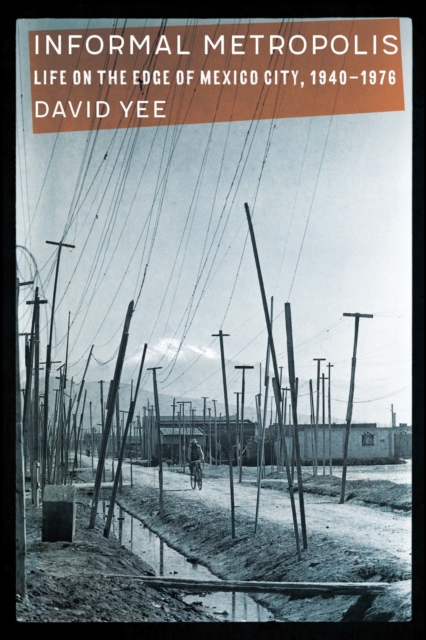
Informal Metropolis
In the 1940s, as Mexican families trekked north to the United
States in search of a better life, tens of millions also left their
towns and villages for Mexico's major cities. In Mexico City
migrant families excluded from new housing programs began to settle
on a dried-out lake bed near the airport, eventually transforming
its dusty plains into an informal city of more than one million
people. In Informal Metropolis David Yee uncovers how this
former lake bed grew into the world's largest shantytown-Ciudad
Nezahualcóyotl-and rethinks the relationship between urban space
and inequality in twentieth-century Mexico. By chronicling the
residents' struggles to build their own homes and gain land rights
in the face of extreme adversity, Yee presents a hidden history of
land fraud, political corruption, and legal impunity underlying the
rise of Mexico City's informal settlements. When urban social
movements erupted across Mexico in the 1970s, Ciudad
Nezahualcóyotl's residents organized to demand land, water, and
humane living conditions. Though guided by demands for basic needs,
these movements would ultimately achieve a more lasting
significance as a precursor to a new urban citizenry in Mexico. In
the first comprehensive history of modern housing in Mexico City,
Yee challenges widely held assumptions about urban inequality and
politics in Mexico.
eBook

We Are 'Nature' Defending Itself
In 2008, as the storms of the financial crash blew, Isabelle Fremeaux and Jay Jordan deserted the metropolis and their academic jobs, traveling across Europe in search of post-capitalist utopias. They wanted their art activism to no longer be uprooted. They arrived at a place French politicians had declared lost to the republic, otherwise know as the zad (the zone to defend): a messy but extraordinary canvas of commoning, illegally occupying 4,000 acres of wetlands where an international airport was planned. In 2018, the 40-year-long struggle snatched an incredible victory, defeating the airport expansion project through a powerful cocktail that merged creation and resistance. Fremeaux and Jordan blend rich eyewitness accounts with theory, inspired by a diverse array of approaches, from neo-animism to revolutionary biology, insurrectionary writings and radical art history. Published in collaboration with the Journal of Aesthetics & Protest.
eBook

Securitization of Property Squatting in Europe
Housing is no longer about having a place to live - but about state pressures to conform, norms and policies regarding citizenship, and practices of surveillance and security. Breaking new ground in the field of urban politics and international relations, Securitization of Property Squatting in Europe examines and critiques legislative initiatives and examines governmental attempts to reframe urban property squatting as a crime and a threat to domestic security.
Using examples from France, Netherlands, Denmark, and Great Britain, Mary Manjikian argues that developments within the European Union - including terrorist attacks in London and Madrid, the rise of right wing extremist parties, and the lifting of barriers to immigration and travel within the EU - have had effects on housing policy, which has become the subject of state security policy in Europe's urban areas. In Denmark, squatting has often had an ideological, anti-state character. In Paris, housing policy can be viewed as a type of identity politics with squatters as transnational actors who pose a transnational security threat. In Great Britain, the role of the press has created a drive to criminalize squatting. Events in the Netherlands present two competing notions of what housing is - a human right, or an economic good produced by the free market.
eBook