
Catalogue Search | MBRL


Are you sure you want to remove the book from the shelf?

{{itemTitle}}
2,438
result(s) for
"STANDARDS OF CONDUCT"
Sort by:

Reclaiming the Human Rights Foundations of the UN Standards of Conduct for Business on Tackling Discrimination against LGBTI People
The business and human rights field and the international LGBTI human rights agenda have evolved almost entirely separately. The United Nations ‘Standards of Conduct for Business on Tackling Discrimination against LGBTI People’ (2017) is the primary effort to bridge this gap. Although drafted in a way that strongly aligns with the second pillar of the United Nations Guiding Principles on Business and Human Rights on corporate responsibility, the dissemination of the Standards has mainly been untethered from the human rights framework and system. This article identifies the need to reassert the human rights foundations of the Standards and leverage their existing momentum to set out a more robust research and policy agenda for meaningfully accounting for sexual orientation, gender identity and expression, and sex characteristics in business and human rights frameworks. To that end, the article sets out priority areas for greater attention from researchers, decision-makers and advocates.
Journal Article

Recommendations for ultrasound examination in ophthalmology. Part I: Ultrabiomicroscopic examination
Range of ultrasounds used in medical imaging is between 2 and 80 MHz. The highest frequencies are applied in medical imaging of an anterior segment of an eyeball. This paper covers the newest method of ultrasound imaging – an ultrabiomicroscopic examination. Its name reflects resolution which has so far been unavailable, and which allows for imaging a structure of the examined tissues. The article includes basic information about the structure and principles of operation of ultrabiomicroscopic examination tools. Moreover, its position among other methods for echographic examination of an eyeball was determined. Examination techniques and the role of standards of conduct at each stage of a diagnostic procedure were discussed. A role of insufficient cooperation between constructors of new ultrasonographic diagnostic tools and software IT specialist with the users of these tools, which results in the lack of consistency between the components of these sets was emphasized. Based on long term experience in ultrabiomicroscopic examinations, the authors shared observations on practical aspects of this method. Finally, indications and contraindications for ultrabiomicroscopic diagnostics were listed. Introduction of an ultrahigh frequency ultrasound probe allowed for the visualization of an post-iridial area of an anterior segment of an eyeball – an area whose diagnosis is impossible with other diagnostic methods. A wide spectrum of diagnostic indications, which covers both diseases and development anomalies of an anterior segment of an eyeball, confirms a special meaning of this method.
Journal Article
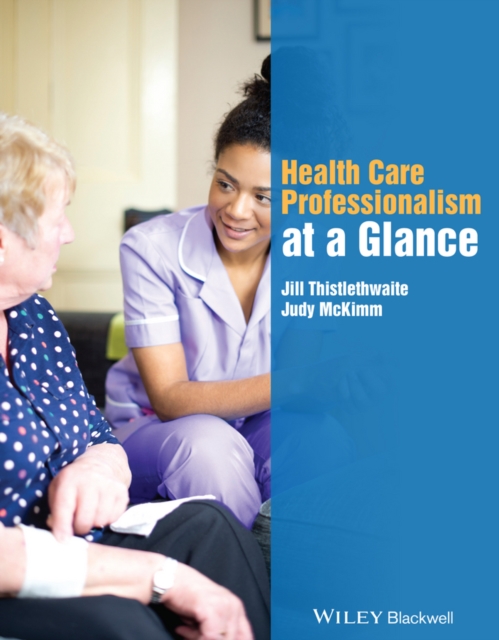
Health care professionalism at a glance
Health Care Professionalism at a Glance offers accessible coverage of an increasingly important aspect of medical and health professional education. This concise text includes how to identify and develop professional behaviours, how they are assessed, and how to challenge unprofessional behaviours.
Health Care Professionalism at a Glance:
• Provides a user-friendly and thought provoking overview of health care professionalism
• Introduces the main topics, key definitions and explores aspects relevant to learners and novice professionals
• Considers fundamental features of professionalism that students are expected to acquire as well as how they are taught, learned and assessed
• Includes summary boxes that highlight important points, reflection points, clinical cases and suggested further reading
• Includes references relevant to different countries' accrediting bodies
This important new book will assist students in understanding the nature of professionalism, its assessment, and the implications for professional practice.
eBook
The Climate Change Dimension of Business and Human Rights: The Gradual Consolidation of a Concept of ‘Climate Due Diligence’
This article makes the case for a ‘holistic’ approach to human rights due diligence, arguing that such a standard must be interpreted in the light of mutually reinforcing principles of environmental law, climate law and human rights law. Through a review of emerging climate change-related litigation, it shows how a concept of ‘climate due diligence’ is gradually consolidating. Building on the United Nations Guiding Principles on Business and Human Rights, the article explores climate due diligence both as a standard of conduct and as a business process, presenting its main features. It argues that corporations should integrate climate due diligence into their processes and policies to be best prepared for likely regulatory and judicial developments, such as the upcoming European Union’s regulation on human rights and environmental due diligence.
Journal Article

Stewardship and Integrity in Health Care: A Role for Organizational Ethics
Media reporting of recent business scandals, ranging from systemic accounting fraud to individual executive greed, has shed new light on the urgent need for organizational ethics in corporate America. The essay argues that organizational ethics can foster virtuous organizations by developing their sense of stewardship and integrity. This approach can inspire the ethical decision-making processes and standards of conduct for personnel throughout the organization. Another crucial role for organizational ethics is to regain lost trust and to recover the confidence of our communities, whether we are discussing the business community or the health care community. Corporate America and organizations in health care need to win back the respect of skeptical customers, disheartened patients, and distrusting communities. But this task can be accomplished properly only when organizations and their business practices have a renewed commitment to ethics. The essay discusses how organizational ethics can permeate the entire organization in order to instill trust and confidence among its constituencies. Although the focus of the essay is upon the role of organizational ethics in health care, the argument also applies to the renewal of business practices in corporations across the nation.
Journal Article

Standards of Conducts for Biostatisticians and Stem Cell Researchers: A Call for Self-formulated Aspirational Ethics Over Built-in Prohibitive Ethics
We proposed the Standards of Conducts to provide a general framework that will serve as the basis for guiding each biostatistician and stem cell researcher to formulate their personal standards, rather than as rules with which they are required to comply. Given the responsibility and characteristics of their work, they are expected to maintain independence and work autonomously as professionals. Each of the Standards of Conducts comprises a preamble, mission and values to uphold, Standards of Conducts (10 items), and background. When one internalizes “self-formulated” standards, to make excuses for oneself would be akin to a self-betrayal; responsible actions can be anticipated. If one begins and continues to consider “who I am and what do I work for,” this will become their inner energy, and a source of motivation and pride to inspire oneself. In addition, this aspirational style might help citizens to recognize the autonomous stance of the professional body and that they share the same values.
Journal Article
Muddying the Waters: The Concept of a ‘Safe Harbour’ in Understanding Human Rights Due Diligence
The concept of a ‘safe harbour’ has been mentioned in several contexts during ongoing discussions around regulatory developments towards mandatory human rights and environmental due diligence (mHREDD) which continue at international, European and national levels. This article analyses the concept of a ‘safe harbour’ and how it relates to human rights due diligence (HRDD) as described in the UN Guiding Principles on Business and Human Rights (UNGPs). It discusses examples of other types of safe harbours which were recognized in legislation and case law; considers that a safe harbour could result in a ‘tick-box’ approach; highlights the implications for access to remedy; and distinguishes a safe harbour exemption from a defence of having undertaken HRDD in accordance with an expected standard of conduct.
Journal Article

The current state of development of the no significant harm principle: How far have we come?
The duty to prevent significant transboundary harm remains a cornerstone principle of international law, and especially of international environmental and water resources law. However, this rule focuses on the conduct of a State where harm originates, rather than on the fact that harm has resulted from such conduct, and thus requires that States exercise due diligence in anticipating and in preventing or mitigating such harm. At a practical level, the due diligence standard of conduct expected of States can be uncertain and difficult to determine, as it must be deduced from the applicable primary rules of international environmental or water resources law, which have traditionally been elaborated in rather vague terms. In addition, the standard of due diligence required under the no-harm rule may be influenced by a range of variable and context-specific factors which might prove relevant in the particular circumstances of any dispute. Such uncertainty is further compounded in the field of international water law by the complex interrelationship between the no-harm rule and the other key norms of international water law, particularly the cardinal principle of equitable and reasonable utilization, which embodies a high degree of flexibility and adaptability and suffers from a corresponding degree of normative indeterminacy. Thankfully, recent developments in international water law and related practice regarding the requirement to protect riverine ecosystems and maintain related ecosystem services lend a welcome measure of clarity as regards the preventive measures expected of watercourse States under international law. Judicial recognition of obligations to maintain minimum environmental flows and to preserve or restore riverine ecosystem services, based on the proliferation of such values in treaty and declarative practice, along with the continuing development of sophisticated technical methodologies for ecosystems assessment and evaluation, do much to inform the due diligence conduct required of States. Such advances can only enhance the practical utility of the no-harm rule, and thus of the entire corpus of international water law, in addressing the challenges emerging globally for water resources management in the twenty-first century.
Journal Article