
Catalogue Search | MBRL


Are you sure you want to remove the book from the shelf?

{{itemTitle}}
60
result(s) for
"Sacred books Fiction."
Sort by:


Editor's Corner. Introduction to 21.1
For those of you who do not know, this is a graphic novel series which as author Heidi Curran Bojorges explains, transports the reader into a satirical, dystopian Earth that is ruled by an ostensibly benevolent, authoritarian group of white men known as \"The Council of Fathers\" or \"the Fathers.\" Next, we are truly blessed with Fart Two of an outstanding interview with Jewish Women's Spirituality leader D'vorah Grenn, conducted by returning Femspec writer Rebecca Vincent, in which together they explore, by examining and conversing about Grenn's many published works such as Lilith 's Fire: Examining Original Sources of Power and Re-defining Sacred Texts as Transformative Theological Practice, how the desire for cultural transformation has been at the core of Grenn's theology. Returning reviewer Patrick Williams then appraises the adult fiction debut of an established YA author, Tochi Onyebuchi, Riot Baby, which Williams says bridges \"past and future, gritty realism and dystopian science fiction.\"
Journal Article

Narrative at Its Boiling Point
Describing her new writing style as elliptical and disencumbered (qtd. in Nyssen 129), her new objective is to write open books in which the reader may couler son livre a lui (129) [cast/write his own book]. [...]the readerly narrative can be compared to \"a vast hermeneutic sentence\" that is \"closed\" (209) with the unveiling of the enigma. [...]the text can be qualified as a whydunit, which refers to narratives that center on the elucidation of the motivations of the murder rather than on finding out who the murderer is. According to him, Good and Evil are the two fundamental forces guiding human existence.
Journal Article

Storytelling in the Works of Bunyan, Grimmelshausen, Defoe, and Schnabel
The modern novel appeared during the period of secularization and intellectual change that took place between 1660 and 1740. This book examines John Bunyan's 'Grace Abounding' and 'The Pilgrim's Progress', Johann Grimmelshausen's 'Simplicissimus', Daniel Defoe's 'Robinson Crusoe', and J. G. Schnabel's 'Insel Felsenburg' as prose works that reflect the stages in this transition. The protagonists in these works try to learn to use language in a pure, uncorrupted way. Their attitudes towards language are founded on their understanding of the Bible, and when they tell their life stories, they follow the structure of the Bible, because they accept it as \"the\" paradigmatic story. Thus the Bible becomes a tool to justify the value of telling \"any\" story. The authors try to give their own texts some of Scripture's authority by imitating the biblical model, but this leads to problems with closure and other tensions. If Bunyan's explicitly religious works affirm the value of individual narratives as part of a single, universal story, Grimmelshausen's and Defoe's protagonists effectively replace the sacred text with their own powerful, authoritative stories. J. G. Schnabel illustrates the extent of the secularization process in 'Insel Felsenburg' when he defends the entertainment value of escapist fiction and uses the Bible as the fictional foundation of his utopian civilization: arguments about the moral value of narrative give way to the depiction of storytelling as an end in itself. But Bunyan, Grimmelshausen, Defoe, and Schnabel all use positive examples of the transfiguring effect of reading and telling stories, whether sacred or secular, to justify the value of their own works. Janet Bertsch teaches at Wolfson and Trinity College, Cambridge.
eBook

Sites of Disquiet
Some of the most important writers of the twentieth century, including Borges, Cortázar, Rulfo, and García Márquez, have explored ambiguous sites of a disquieting nature. Their characters face merging perspectives, deferral, darkness, or emptiness. Such a space is neither a site of projection (as utopia or dystopia) nor a neutral setting (as the topos). For the characters, it is real and active, at once elusive and transforming. Despite the challenges of visualizing such slippery spaces, filmic experimentations in Spanish American cinema since the 1960s have sought to adapt these texts to the screen. Ilka Kressner's Sites of Disquiet examines these representations of alternative dimensions in Spanish American short narratives and their transformations to the cinematic screen. The study is informed by contemporary critical approaches to spatiality, especially the concepts of atopos (non-space), spaces of mobility, sites of différance, of a self-effacing presence, and sonic spaces. Kressner's comparative study of textual and cinematic constructions of non-spaces highlights the potential and limits of inter-arts adaptation. Film not only portrays the sites in ways that are intrinsic to the medium, but during the cinematic translation, it further develops the textual presentations of space. Text and film illuminate each other in their renderings of echoes, gaps, absences, and radical openness. The shared focus of the two media on precarious spaces highlights their awareness of the physical and situational conditions in the works. Therefore, it vindicates the import of space and dwelling, and the often underestimated impact of surroundings on the human body and mind. Despite their heterogeneity, the artistic elaborations of these ambivalent atopoi all share a liberating impulse: they assert creative and open-ended interactions with space where volatility ceases to be a negative term.
eBook
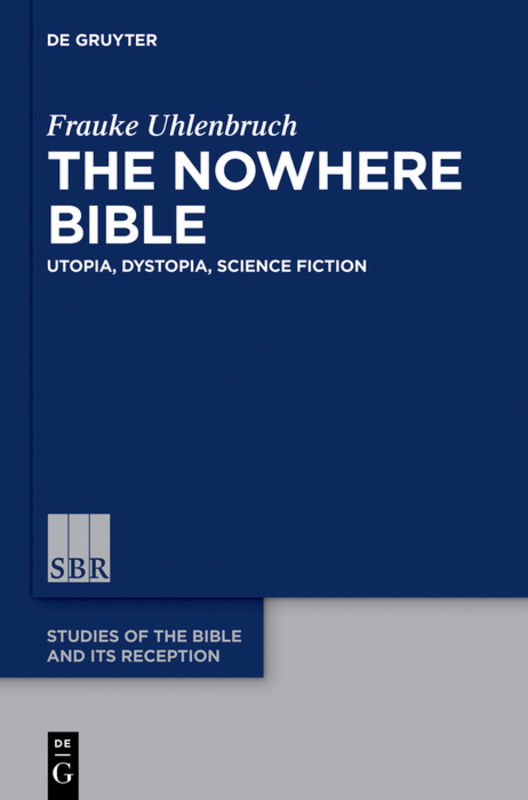
The Nowhere Bible
The Bible contains passages that allow both scholars and believers to project their hopes and fears onto ever-changing empirical realities. By reading specific biblical passages as utopia and dystopia, this volume raises questions about reconstructing the past, the impact of wishful imagination on reality, and the hermeneutic implications of dealing with utopia – \"good place\" yet \"no place\" – as a method and a concept in biblical studies.
A believer like William Bradford might approach a biblical passage as utopia by reading it as instructions for bringing about a significantly changed society in reality, even at the cost of becoming an oppressor. A contemporary biblical scholar might approach the same passage with the ambition of locating the historical reality behind it – finding the places it describes on a map, or arriving at a conclusion about the social reality experienced by a historical community of redactors. These utopian goals are projected onto a utopian text.
This volume advocates an honest hermeneutical approach to the question of how reliably a past reality can be reconstructed from a biblical passage, and it aims to provide an example of disclosing – not obscuring – pre-suppositions brought to the text.
eBook

Kabbalistic Revolution
The set of Jewish mystical teachings known as Kabbalah are often imagined as timeless texts, teachings that have been passed down through the millennia. Yet, as this groundbreaking new study shows, Kabbalah flourished in a specific time and place, emerging in response to the social prejudices that Jews faced.
Hartley Lachter, a scholar of religion studies, transports us to medieval Spain, a place where anti-Semitic propaganda was on the rise and Jewish political power was on the wane.Kabbalistic Revolutionproposes that, given this context, Kabbalah must be understood as a radically empowering political discourse. While the era's Christian preachers claimed that Jews were blind to the true meaning of scripture and had been abandoned by God, the Kabbalists countered with a doctrine that granted Jews a uniquely privileged relationship with God. Lachter demonstrates how Kabbalah envisioned this increasingly marginalized group at the center of the universe, their mystical practices serving to maintain the harmony of the divine world.
For students of Jewish mysticism,Kabbalistic Revolutionprovides a new approach to the development of medieval Kabbalah. Yet the book's central questions should appeal to anyone with an interest in the relationships between religious discourses, political struggles, and ethnic pride.
eBook

Five Fictions in Search of Truth
Fiction, far from being the opposite of truth, is wholly bent on finding it out, and writing novels is a way to know the real world as objectively as possible. In Five Fictions in Search of Truth, Myra Jehlen develops this idea through readings of works by Flaubert, James, and Nabokov. She invokes Proust's famous search for lost memory as the exemplary literary process, which strives, whatever its materials, for a true knowledge. In Salammb, Flaubert digs up Carthage; in The Ambassadors, James plumbs the examined life and touches at its limits; while in Lolita, Nabokov traces a search for truth that becomes a trespass. In these readings, form and style emerge as fiction's means for taking hold of reality, which is to say that they are as epistemological as they are aesthetic, each one emerging by way of the other. The aesthetic aspects of a literary work are just so many instruments for exploring a subject, and the beauty and pleasure of a work confirm the validity of its account of the world. For Flaubert, famously, a beautiful sentence was proven true by its beauty. James and Nabokov wrote on the same assumption--that form and style were at once the origin and the confirmation of a work's truth.
eBook

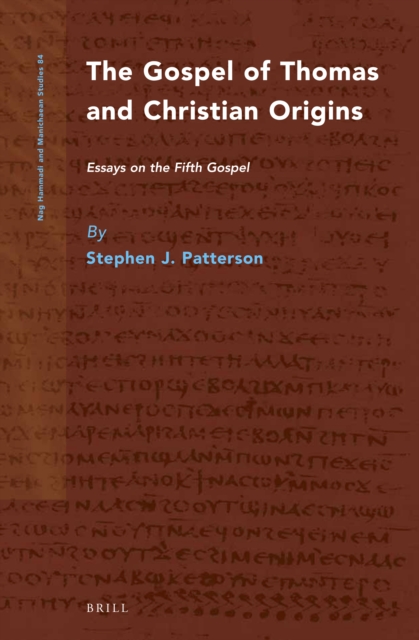
The Gospel of Thomas and Christian Origins
The essays collected in The Gospel of Thomas and Christian Origins offer a series new chapters in the history of Christianity's first century. Stephen J. Patterson, whose work on the Gospel of Thomas has circulated widely for more than two decades, argues that taking this new source seriously will require rethinking a number of basic issues, including the assumed apocalyptic origins of early Christian faith, the supposed centrality of Jesus' death and resurrection, and the role of Platonism in formulation of both orthodox and heterodox Christian theology.
eBook