
Catalogue Search | MBRL


Are you sure you want to remove the book from the shelf?

{{itemTitle}}
16
result(s) for
"Sacred space Jerusalem"
Sort by:
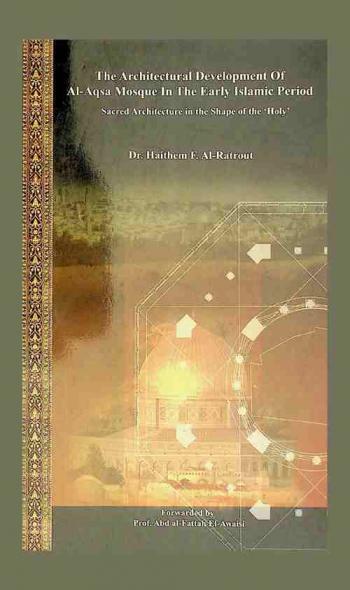

Murabitat al-Aqsa: the new virgins of Palestinian resistance
In the fall of 2015, Israel outlawed the Murabitat, a group of Palestinian Muslim women using their voices and bodies to protect al-Aqsa Mosque from right-wing Jewish incursions into the sacred site. Israel placed blame on the Islamic Movement of Israel, but this explanation lacks substantially. I argue, instead, that the better way to interpret the Murabitat is by focusing on the Murabitat themselves—how they understood their actions and how those actions related to broader social, political, and religious currents within Palestinian society and the Israel-Palestine conflict. The Murabitat demonstrated both continuity and innovation within the field of Palestinian women’s political participation in resistance toward the Israeli occupation. They framed their resistance in well-established, domestic and non-violent terms. But they also innovated by mobilizing these themes for the specific purpose of protecting the Haram al-Sharif. Drawing together the latent, symbolic resonance of ribat language within the discursive tradition of Islam, articulating their attachment to the sacred space through domestic metaphors, and using the phrase “Allahu Akbar” as a ritual of protest, the Murabitat forged new possibilities for women’s participation in political struggle in Palestine. In short, they became the new virgins of the Palestinian resistance.
Journal Article

Sacred Spaces in Transition: A Glimpse into the Situation of the Evangelical (Lutheran) Church A.C. in Romania
For sacred spaces, motion/movement means not only the takeover by other denominations, but also denominational changes, such as the Reformation. The article highlights, with varying intensity, the major movements of sacred spaces in the more than 800-year history of the present-day Evangelical Church A.C. in Romania: the Reformation, the Habsburg rule, the consequences of World War II in Northern Transylvania, and the present – with selective recourse to the tools of Memory Studies (Erinnerungsforschung), in order to trace the paradigm shift caused by the Reformation in relation to sacred space, or to evaluate the mass handover/ transfer of church buildings in Northern Transylvania in the horizon of this analysis, and concluding with a brief art-historical and even homiletic consideration.
Journal Article

Designing Holiness: Architectural Plans for the Design of the Western Wall Plaza After the Six-day War, 1967–1977
It was only after the Six-Day War of 1967 that the Western Wall took on a new political and practical status, when, for the first time in its history, the site and the surrounding plaza came under Jewish and Israeli authority and became accessible to anyone wishing to visit or worship there. The vast quantity of visitors expected at the Western Wall was one of the main factors that hastened the decision to destroy the Mughrebi Quarter, extending to the west of the Western Wall, and build a wide, open plaza. From the moment the open space near the Western Wall was formed, it was considered temporary. A public debate over its permanent design surfaced. We examine the detailed ideas and architectural plans created for the plaza’s design. In conducting this examination, we learn about the controversy that existed over the site’s character: would it become a purely religious site or would it assume national and cultural roles as well? We postulate that the various plans and ideas for the plaza’s design proposed during the first decade after the Six-Day War embodied the tension that was created in Israel during that time, as religious feeling faced off against national sentiment, and as those who saw the Western Wall solely as a place of prayer and reflection squared off against those who valued its historical and national significance.
Journal Article

War on Sacred Grounds
Sacred sites offer believers the possibility of communing with
the divine and achieving deeper insight into their faith. Yet their
spiritual and cultural importance can lead to competition as
religious groups seek to exclude rivals from practicing potentially
sacrilegious rituals in the hallowed space and wish to assert their
own claims. Holy places thus create the potential for military,
theological, or political clashes, not only between competing
religious groups but also between religious groups and secular
actors.
In War on Sacred Grounds, Ron E. Hassner investigates the causes
and properties of conflicts over sites that are both venerated and
contested; he also proposes potential means for managing these
disputes. Hassner illustrates a complex and poorly understood
political dilemma with accounts of the failures to reach settlement
at Temple Mount/Haram el-Sharif, leading to the clashes of 2000,
and the competing claims of Hindus and Muslims at Ayodhya, which
resulted in the destruction of the mosque there in 1992. He also
addresses more successful compromises in Jerusalem in 1967 and
Mecca in 1979. Sacred sites, he contends, are particularly prone to
conflict because they provide valuable resources for both religious
and political actors yet cannot be divided.
The management of conflicts over sacred sites requires
cooperation, Hassner suggests, between political leaders interested
in promoting conflict resolution and religious leaders who can
shape the meaning and value that sacred places hold for believers.
Because a reconfiguration of sacred space requires a confluence of
political will, religious authority, and a window of opportunity,
it is relatively rare. Drawing on the study of religion and the
study of politics in equal measure, Hassner's account offers
insight into the often-violent dynamics that come into play at the
places where religion and politics collide.
Sacred sites offer believers the possibility of communing with
the divine and achieving deeper insight into their faith. Yet their
spiritual and cultural importance can lead to competition as
religious groups seek to exclude rivals from practicing potentially
sacrilegious rituals in the hallowed space and wish to assert their
own claims. Holy places thus create the potential for military,
theological, or political clashes, not only between competing
religious groups but also between religious groups and secular
actors.
In War on Sacred Grounds , Ron E. Hassner investigates
the causes and properties of conflicts over sites that are both
venerated and contested; he also proposes potential means for
managing these disputes. Hassner illustrates a complex and poorly
understood political dilemma with accounts of the failures to reach
settlement at Temple Mount/Haram el-Sharif, leading to the clashes
of 2000, and the competing claims of Hindus and Muslims at Ayodhya,
which resulted in the destruction of the mosque there in 1992. He
also addresses more successful compromises in Jerusalem in 1967 and
Mecca in 1979. Sacred sites, he contends, are particularly prone to
conflict because they provide valuable resources for both religious
and political actors yet cannot be divided.
The management of conflicts over sacred sites requires
cooperation, Hassner suggests, between political leaders interested
in promoting conflict resolution and religious leaders who can
shape the meaning and value that sacred places hold for believers.
Because a reconfiguration of sacred space requires a confluence of
political will, religious authority, and a window of opportunity,
it is relatively rare. Drawing on the study of religion and the
study of politics in equal measure, Hassner's account offers
insight into the often-violent dynamics that come into play at the
places where religion and politics collide.
eBook
Egeria’s Itinerarium and the Development of Sacred Spaces and Edifices in Jerusalem
A Christian pilgrim, Egeria, travelled to Jerusalem and other biblical sites in the 380s and wrote detailed notes about the places she visited and about the liturgical life in Jerusalem. In this article, I will scrutinize Egeria’s view on the holy edi!ces and sacred spaces in Jerusalem, giving special attention to why some places were holy for her; and how Christians related to the holy places of “others,” that is, of pagans and Jews. For Egeria, several factors together made a space holy and worth visiting: biblical events that had occurred there, liturgical celebrations in her own day, and the physical seeing of the place as well as meeting of the holy people living at the site. \"e new sacred topography expressed both continuity and discontinuity with the Old Testament times, but the Roman pagan dominance in Jerusalem was moved to the past.
Journal Article
Encountering the Sacred
This innovative study sheds new light on one of the most spectacular changes to occur in late antiquity—the rise of pilgrimage all over the Christian world—by setting the phenomenon against the wide background of the political and theological debates of the time. Asking how the emerging notion of a sacred geography challenged the leading intellectuals and ecclesiastical authorities, Brouria Bitton-Ashkelony deftly reshapes our understanding of early Christian mentalities by unraveling the process by which a territory of grace became a territory of power. Examining ancient writers' responses to the rising practice of pilgrimage, Bitton-Ashkelony offers a nuanced reading of their thinking on the merits and the demerits of pilgrimage, revealing theological and ecclesiastical motivations that have been overlooked, and questioning the long-held assumption of scholars that pilgrimage was only a popular, not an elite, religious practice. In addition to Greek and Latin sources, she includes Syriac material, which allows her to build a rich picture of the emerging theology of landscape that took shape over the fourth to sixth centuries.
eBook
Tempel, Lehrhaus, Synagoge
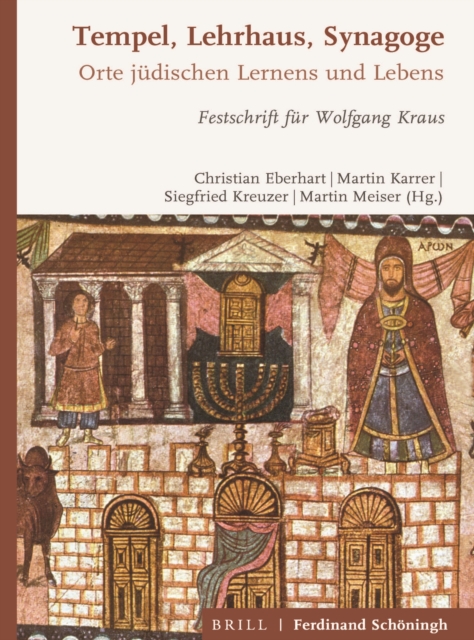
Durch die weite Ausbreitung und Zerstreuung des Judentums entstanden früh Orte des Lehrens und religiösen Lebens neben dem Tempel.Der Band reflektiert die Entstehung der Synagoge, die Gelehrsamkeit und jüdische Versammlung in der Diaspora von Babylonien über Alexandria bis Rom, das Lehrhaus der Weisheit am Beispiel Ben Siras und die Ausbreitung.
eBook

Two Venerated Mothers Separated by a Wall
This article explores the role of sacred places and pilgrimage centers in the context of contemporary geopolitical strife and border disputes. Following and expanding on the growing body of literature engaged with the contested nature of the sacred, this article argues that sacred sites are becoming more influential in processes of determining physical borders. We scrutinize this phenomenon through the prism of a small parcel of land on the two sides of the Separation Wall that is being constructed between Israel and Palestine. Our analysis focuses on two holy shrines that are dedicated to devotional mothers: the traditional Tomb of Rachel the Matriarch on the way to Bethlehem and Our Lady of the Wall, an emergent Christian site constructed as a reaction to the Wall. We examine the architectural (and material) phenomenology, the experience, and the implications that characterize these two adjacent spatialities, showing how these sites are being used as political tools by various actors to challenge the political, social, and geographical order.
Journal Article