
Catalogue Search | MBRL


Are you sure you want to remove the book from the shelf?

{{itemTitle}}
903
result(s) for
"Sacred space."
Sort by:


The Death of Aztec Tenochtitlan, the Life of Mexico City
The capital of the Aztec empire, Tenochtitlan, was, in its era, one of the largest cities in the world. Built on an island in the middle of a shallow lake, its population numbered perhaps 150,000, with another 350,000 people in the urban network clustered around the lake shores. In 1521, at the height of Tenochtitlan's power, which extended over much of Central Mexico, Hernando Cortés and his followers conquered the city. Cortés boasted to King Charles V of Spain that Tenochtitlan was \"destroyed and razed to the ground.\" But was it?Drawing on period representations of the city in sculptures, texts, and maps, The Death of Aztec Tenochtitlan, the Life of Mexico City builds a convincing case that this global capital remained, through the sixteenth century, very much an Amerindian city. Barbara E. Mundy foregrounds the role the city's indigenous peoples, the Nahua, played in shaping Mexico City through the construction of permanent architecture and engagement in ceremonial actions. She demonstrates that the Aztec ruling elites, who retained power even after the conquest, were instrumental in building and then rebuilding the city. Mundy shows how the Nahua entered into mutually advantageous alliances with the Franciscans to maintain the city's sacred nodes. She also focuses on the practical and symbolic role of the city's extraordinary waterworks—the product of a massive ecological manipulation begun in the fifteenth century—to reveal how the Nahua struggled to maintain control of water resources in early Mexico City.
eBook

Rock art and sacred landscapes
Social and behavioral scientists study religion or spirituality in various ways and have defined and approached the subject from different perspectives. In cultural anthropology and archaeology the understanding of what constitutes religion involves beliefs, oral traditions, practices and rituals, as well as the related material culture including artifacts, landscapes, structural features and visual representations like rock art. Researchers work to understand religious thoughts and actions that prompted their creation distinct from those created for economic, political, or social purposes. Rock art landscapes convey knowledge about sacred and spiritual ecology from generation to generation. Contributors to this global view detail how rock art can be employed to address issues regarding past dynamic interplays of religions and spiritual elements. Studies from a number of different cultural areas and time periods explore how rock art engages the emotions, materializes thoughts and actions and reflects religious organization as it intersects with sociopolitical cultural systems.
Book


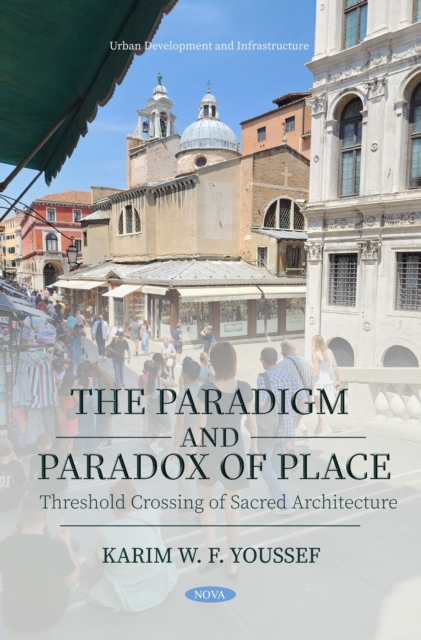
Paradigm and Paradox of Place: Threshold Crossing of Sacred Architecture
The contemporary city needs redemption through the rediscovery of its sacred functions and the architecture of its built form. The contemporary city not only suffers a crisis of representation and imagination but also a crisis of contextualization and identity. The primary task of architecture is not the creation of a pretty building but an impulse for the construction of the human subject, defining what it is to be human. To achieve that, our understanding of architecture needs to rediscover its core. Two converging calls for rediscovery of architecture's core are the return to the architecture of place and to the architecture of the sacred. The architecture of place raises issues of determinants of place such as identity, cohesion, character, and aura of place, issues that problematize the unity of architecture. The architecture of the sacred on the other hand raises issues of memory and imagination, moral virtue, truth, and beauty, issues that raise the symbolic quotient as the core of the sacred. The nature of architecture involves simultaneously a rediscovery of place and the sacred. After exploring the dimensions, properties, aspects, and dynamics of space, the book constructs a framework for sacred architecture based on theories of place, systematics, and our six main mental faculties. Inspired by the theory of human becoming, the framework for sacred architecture brings together several strands of scholarly literature and synthesizes perspectives on the sacred from several disciplines such as psychology, philosophy, and religious studies as well as architecture and urbanism, the latter two of which constitute the focus of the book. Sacred architecture is defined foremost as a place (event) of human becoming created to transform, empower, and originate. The book does not claim to have solved the enigma of sacred architecture, an enigma that harbors dichotomies between the material and the transcendent, the real and the ideal, matter and mind, the instrumental and the communicative. Nevertheless, the book points out the processes underlying the form of sacred architecture to further an understanding of this topic for architectural and urban design students, designers, and practitioners who face the challenge of creating meaningful, communicative, and transformative places.
eBook

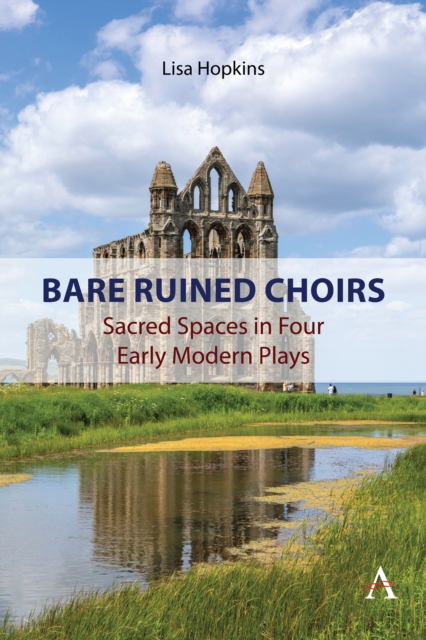
Bare Ruined Choirs
The book discusses the demarcation of secular and sacred territory in early modern English drama. It focuses primarily on four plays, Thorney Abbey, A Knack to Know a Knave, A Shoemaker a Gentleman and The Lovesick King, but puts these in dialogue with Hamlet, Macbeth, King Lear and Doctor Faustus.
eBook
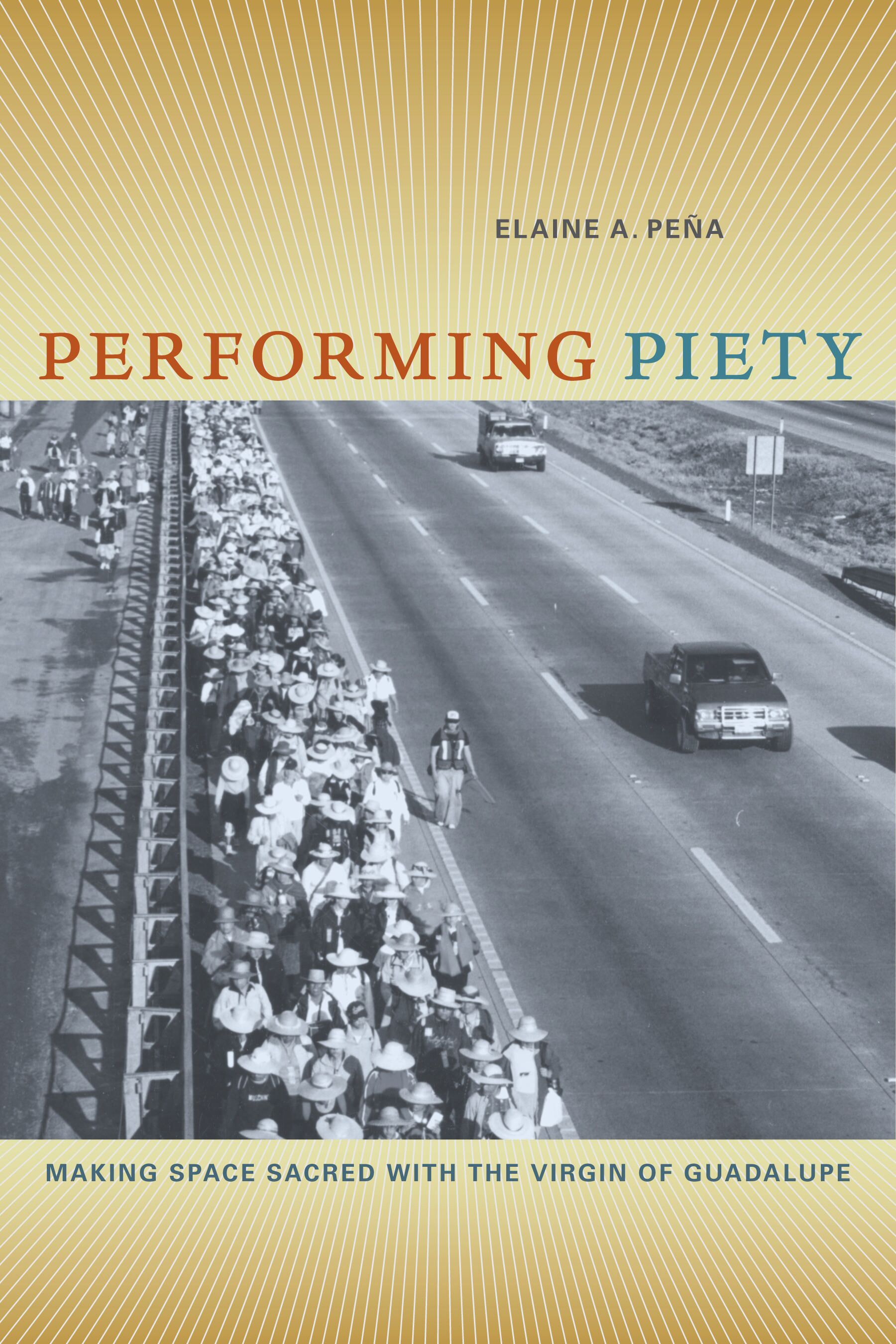
Performing piety
The Virgin of Guadalupe, though quintessentially Mexican, inspires devotion throughout the Americas and around the world. This study sheds new light on the long-standing transnational dimensions of Guadalupan worship by examining the production of sacred space in three disparate but interconnected locations--at the sacred space known as Tepeyac in Mexico City, at its replica in Des Plaines, Illinois, and at a sidewalk shrine constructed by Mexican nationals in Chicago. Weaving together rich on-the-ground observations with insights drawn from performance studies, Elaine A. Peña demonstrates how devotees' rituals--pilgrimage, prayers, and festivals--develop, sustain, and legitimize these sacred spaces. Interdisciplinary in scope, Performing Piety paints a nuanced picture of the lived experience of Guadalupan devotion in which different forms of knowing, socio-economic and political coping tactics, conceptions of history, and faith-based traditions circulate within and between sacred spaces.
eBook