
Catalogue Search | MBRL


Are you sure you want to remove the book from the shelf?

{{itemTitle}}
6,036
result(s) for
"Sacrifice"
Sort by:

Radical sacrifice
A trenchant analysis of sacrifice as the foundation of the modern, as well as the ancient, social order The modern conception of sacrifice is at once cast as a victory of self-discipline over desire and condescended to as destructive and archaic abnegation. But even in the Old Testament, the dual natures of sacrifice, embodying both ritual slaughter and moral rectitude, were at odds. In this analysis, Terry Eagleton makes a compelling argument that the idea of sacrifice has long been misunderstood. Pursuing the complex lineage of sacrifice in a lyrical discourse, Eagleton focuses on the Old and New Testaments, offering a virtuosic analysis of the crucifixion, while drawing together a host of philosophers, theologians, and texts-from Hegel, Nietzsche, and Derrida to the Aeneid and The Wings of the Dove. Brilliant meditations on death and eros, Shakespeare and St. Paul, irony and hybridity explore the meaning of sacrifice in modernity, casting off misperceptions of barbarity to reconnect the radical idea to politics and revolution.
Book

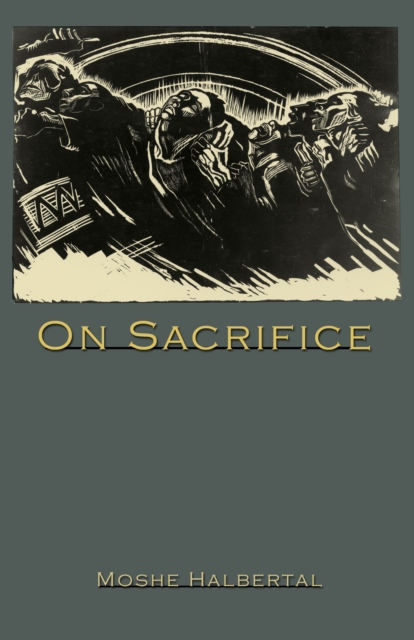
On sacrifice
The idea and practice of sacrifice play a profound role in religion, ethics, and politics. In this brief book, philosopher Moshe Halbertal explores the meaning and implications of sacrifice, developing a theory of sacrifice as an offering and examining the relationship between sacrifice, ritual, violence, and love. On Sacrifice also looks at the place of self-sacrifice within ethical life and at the complex role of sacrifice as both a noble and destructive political ideal. In the religious domain, Halbertal argues, sacrifice is an offering, a gift given in the context of a hierarchical relationship. As such it is vulnerable to rejection, a trauma at the root of both ritual and violence. An offering is also an ambiguous gesture torn between a genuine expression of gratitude and love and an instrument of exchange, a tension that haunts the practice of sacrifice. In the moral and political domains, sacrifice is tied to the idea of self-transcendence, in which an individual sacrifices his or her self-interest for the sake of higher values and commitments. While self-sacrifice has great potential moral value, it can also be used to justify the most brutal acts. Halbertal attempts to unravel the relationship between self-sacrifice and violence, arguing that misguided self-sacrifice is far more problematic than exaggerated self-love. In his exploration of the positive and negative dimensions of self-sacrifice, Halbertal also addresses the role of past sacrifice in obligating future generations and in creating a bond for political associations, and considers the function of the modern state as a sacrificial community.
eBook

On giving up
\"A new book from the acclaimed psychoanalytic writer Adam Phillips on giving up to feel more alive\"-- Provided by publisher.
Book
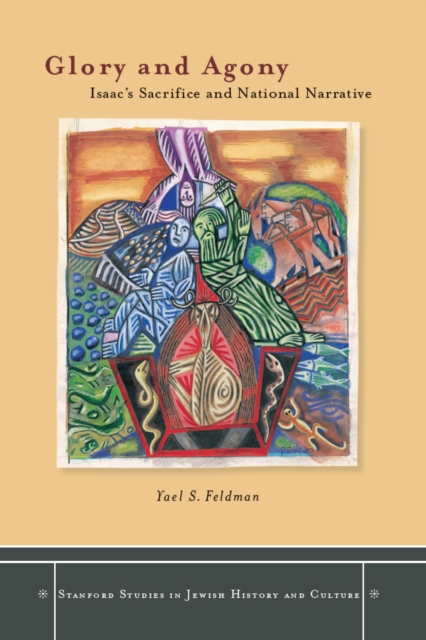
Glory and Agony
Glory and Agony is the first history of the shifting attitudes toward national sacrifice in Hebrew culture over the last century. Its point of departure is Zionism's obsessive preoccupation with its haunting \"primal scene\" of sacrifice, the near-sacrifice of Isaac, as evidenced in wide-ranging sources from the domains of literature, art, psychology, philosophy, and politics. By placing these sources in conversation with twentieth-century thinking on human sacrifice, violence, and martyrdom, this study draws a complex picture that provides multiple, sometimes contradictory insights into the genesis and gender of national sacrifice.
Extending back over two millennia, this study unearths retellings of biblical and classical narratives of sacrifice, both enacted and aborted, voluntary and violent, male and female-Isaac, Ishmael, Jephthah's daughter, Iphigenia, Jesus.Glory and Agony traces the birth of national sacrifice out of the ruins of religious martyrdom, exposing the sacred underside of Western secularism in Israel as elsewhere.
eBook

Executions and sacrifices
This book offers age-appropriate insight into some of history's mysterious and gruesome practices -- from the walls of the Shaanxi Province in China to the murky red waters of Ireland's peat bogs.
Book

Empire of Sacrifice
pIt is widely recognized that American culture is both exceptionally religious and exceptionally violent. Americans participate in religious communities in high numbers, yet American citizens also own guns at rates far beyond those of citizens in other industrialized nations. Since 9/11, United States scholars have understandably discussed religious violence in terms of terrorist acts, a focus that follows United States policy. Yet, according to Jon Pahl, to identify religious violence only with terrorism fails to address the long history of American violence rooted in religion throughout the country's history. In essence, Americans have found ways to consider blessed some very brutal attitudes and behaviors both domestically and globally. In strongEmpire of Sacrifice/strong, Pahl explains how both of these distinctive features of American culture work together by exploring how constructions along the lines of age, race, and gender have operated to centralize cultural power across American civil or cultural religions in ways that don't always appear to be \"religious\" at all. Pahl traces the development of these forms of systemic violence throughout American history, using evidence from popular culture, including movies such as Rebel without a Cause and Reefer Madness and works of literature such as The Narrative of the Life of Frederick Douglass and The Handmaid's Tale, to illuminate historical events. Throughout, Pahl focuses an intense light on the complex and durable interactions between religion and violence in American history, from Puritan Boston to George W. Bush's Baghdad./p
eBook

The marvel of martyrdom : the power of self-sacrifice in a selfish world
\"This text examines the psychological effects of martyrdom and martyrs across the world. The authors discuss martyrdom and martyrs through the lens of current events, iconic historical figures, and popular culture\"-- Provided by publisher.
Book
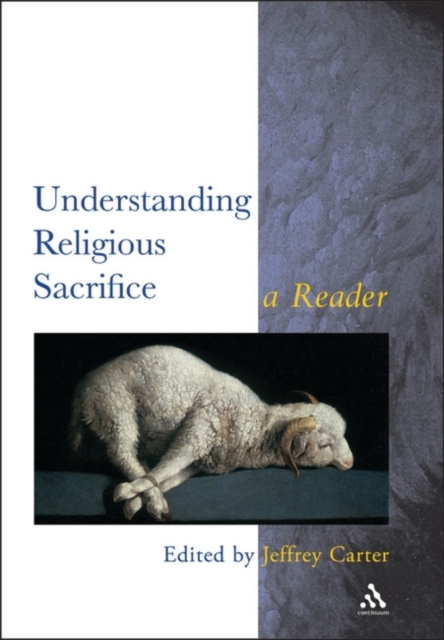
Understanding sacrifice: a reader
This volume provides a thorough introduction to the major classic and modern writings dealing with religious sacrifice. Collected here are twenty five influential selections, each with a brief introduction addressing the overall framework and assumptions of its author. As they present different theories and examples of sacrifice, these selections also discuss important concepts in religious studies such as the origin of religion, totemism, magic, symbolism, violence, structuralism and ritual performance. Students of comparative religion, ritual studies, the history of religions, the anthropology of religion and theories of religion will particularly value the historical organization and thematic analyses presented in this collection.
eBook