
Catalogue Search | MBRL


Are you sure you want to remove the book from the shelf?

{{itemTitle}}
327
result(s) for
"Sadness Fiction."
Sort by:
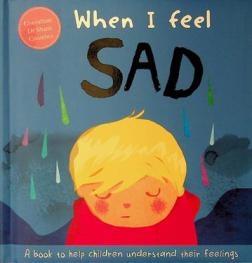
When I feel sad : a book to help children understand their feelings
When I feel sad, I try looking around me at all the bright and colourful things.
Book

A New \Mammy\ in the Age of Digitalization; Human Insecurity Versus Utopian Affective Algorithms in Kazuo Ishiguro's Klara and The Sun
Science fiction has advanced beyond the depiction of artificial intelligence, which is capable of conscious thought to speculate on a future in which machines that feel and initiate feeling in return are created. This article discusses Kazuo Ishiguro's Klara and The Sun (2021) as a textual reference by considering circumstances in which emotional capacity no longer separates humans from machines. In most dystopian literature, political distinctions between humans and less-than-humans are typically used to describe the systems of governance, with the latter constituting the marginalised yet inexorable substratum that supports and normalises the dominant system. Drawing on Affect Literary Theory and its relevance to AI, I argue that, contrary to popular belief, Klara, the AI, can feel emotions such as sadness, grief, sympathy, love, faith, and hope. Nonetheless, rather than being pleased and comfortable, humans represented in Klara and the Sun contest AI's supremacy and use otherness as a defence mechanism to degrade AIs to feel superior and defend themselves from AI's likely rule of the planet. In Klara and the Sun, a disturbing historical parallel to the position of the AIs in the social hierarchy is that of slaves since, like slaves, their existence is reduced to their disposable utility. I can conclude that slavery expands to encompass the entire planet, with androids, genetically modified humans, and the earth itself functioning as sites of human capitalist exploitation. Using Affect Theory, I argue that Ishiguro attempts to elicit humans' sympathy and empathy with Klara, the AI, in order to advocate for a relationship in which humans have never been distinct from machines and conceptions of humanness could not be formulated without technologies.
Journal Article

Bear feels sad
\"Bear spends the day missing his friends until they reunite\"-- Provided by publisher.
BOOK

The ethics of neoaustenism
This article introduces neoaustenism as a metamodern-feminist sensibility rooted in Jane Austen’s fiction and paradigmatically articulated today through Taylor Swift’s songwriting. While other metamodern-rooted discourses such as neoromanticism revive a largely male genealogy of longing and melancholy, neoaustenism retrieves a specifically feminine grammar of irony, self-reflexivity, and relational ethics. Grounded in affect theory and the ethics of care, the concept reframes vulnerability as a shared resource that turns personal wounds into collective agency. The article first situates neoaustenism within metamodern oscillation and the affective turn. It then traces a gendered genealogy of sentiment from Austen’s heroines to Swift’s layered lyrical voices, showing through close reading how Swift’s songwriting translates Austenian irony and care into pop rituals that foster horizontal communities through reflective nostalgia, audience co-authorship, and embodied practices. Finally, this article argues that neoaustenism holds potential beyond Swift and offers a critical horizon for (re)imagining feminine identity and resilience in neoliberal culture, thus inviting further interdisciplinary inquiry.
Journal Article

I'm sad
Flamingo learns that it is okay to be sad sometimes and that her friends, the little girl and Potato, will stand by her no matter how she feels.
Book

Maternal slavery and Gothic melancholy in Abdülhak Hamid Tarhan’s Vâlidem (My Mother) and Mihrünnisa Hanım’s counterpoetics
Late Ottoman writers whose mothers were formerly enslaved were haunted by the mother’s arrested mourning for her lost mother/land in the Caucasus. “Intimate biofiction” by these writers – potential masters and sons of slaves – offers a unique narratorial point of view distinct from first-person slave narratives and third-person abolitionist literature. Abdülhak Hamid Tarhan’s long narrative elegy, Vâlidem (My Mother), written at the time of her death around 1897 and published with a sequel in 1913, triangulates the mother/land, the father/land, and the son on his diplomatic and exilic itinerary. In Ottoman Turkish and aruz meter, Hamid imagines the melancholic crypt of the mother, the paradigmatic child of Gothic literature who remains undead – a phantom haunting her own progeny. In a melancholic inversion of loss, Circassia is reincarnated as the mother/land who lost her. Hamid’s mother is resurrected in a sequel to give birth to the sons of the new fatherland. Her narrative overwritten once again, the same mother appears in Mihrünnisa Hanım’s counterpoetics alongside the nanny who stayed. The metonymic chain of exilic replacement mothers extends even to Hamid’s last, teenage bride from Belgium.
Journal Article

It's still a dog's New York : a book of healing
Miserable after the 9-11 terrorist attacks, New York dogs Pepper and Rover tour the city, and Pepper learns that helping others and expressing his feelings can help to heal.
Book

Darker Shades of Joy: The Role of Negative Emotion in Rich Product Experiences
Examines the possibility of the intentional incorporation of negative experiences into the design of products, analysing why this could produce a benefit for users. Current design theory assumes that users seek only pleasurable experiences, although some designers argue that this does not mirror the richness and wider spectrum of emotions of real life. Existing explanations of why people seek negative emotions in art, entertainment or sports include: the expectation of later benefit; higher pleasurable emotion afterwards; pleasant arousal when the fear is overcome. The authors provide an alternative explanation, that negative emotion can itself be enjoyable, and propose that the combination of bodily and mental effects produced by negative emotions generate a transformed subjective perception of the situation. One factor enabling the enjoyment of negative emotion is the presence of protective mental constructs which distance the user from the experience. Six examples are given of products and activities which elicit enjoyment from negative emotion, and three benefits are outlined: adding engagement and interest to an otherwise boring experience; stimulating engagement in activities they would otherwise avoid; providing strategies for dealing with situations which will always have negative aspects, such as queuing or traffic jams.
Journal Article

J.P. and the bossy dinosaur
\"In his third adventure, JP is excited to be at the water park with his family. But when the bossy dinosaur says he can't go down the waterslide with his sister, JP is sad. Using his vivid imagination and a little help from his family and best friend, JP remembers how to have fun again!\"-- Provided by publisher.
Book

Climate, Trauma, and Resilience: A Comparative Exploration of Omar El Akkad and Richard Powers
A fascinating convergence of climate change, trauma, and resilience emerges in contemporary literature. This convergence is particularly vital for gaining a clearer understanding of the climate crisis and its emotional and psychological impact on people in the modern world. In their novels, Richard Powers and Omar El Akkad explore how environmental deterioration affects individuals' mental and emotional well-being, examining feelings of sadness, trauma, and displacement. These contemporary writers effectively portray the impact of climate change and its subsequent effects on identity and culture in an insightful and compelling manner. The Overstory by Powers and American War by Akkad highlight the significant value of literary analysis in understanding and addressing the global phenomenon of climate change. Their novels explore the complex emotions and psychological responses evoked by climate change, which may contribute to mental health challenges if not addressed. This paper employs qualitative method which includes close reading and textual analysis examine how climate change is addressed and its impact on culture and literature. Additionally, the paper emphasizes how literature can foster empathy and resilience. It aims to shed light on the profound effect this issue has on people's emotions and mental well-being.
Journal Article